

Kesava Temple and Inscriptions, Vasukrishnan57, c. 2016, Photograph.
Mythical composite creatures sculpted on pillars and pilasters across temples in South Asia, yalis, also known as vyalas, are most frequently depicted in late medieval and early modern temples in southern India. A yali is usually shown to have the body of a lion and the head of another animal, such as an elephant (when they are called a gaja yali), a human (known as a nara yali) or a dog (termed a svana yali). When the body is that of a tiger, the creature is called a shardula. It may also have horns and hooves. The term “yali” is derived from the Tamil and Sanskrit words for “fierce monster”.
Among the earliest known yali sculptures were produced in the seventh or eighth centuries during the reign of the Pallava Dynasty of present-day northern Tamil Nadu, usually in temples related to Puranic Hinduism. These early depictions of the creatures positioned them squatting at the base of a column. They were also produced in Buddhist contexts through the early medieval period, where they were known as vyalakas and were usually paired with a makara.
Yalis emerged as a ubiquitous decorative element in South Indian temples during the seventeenth and eighteenth centuries, particularly in temples built by Nayaka polities across Tamil Nadu in the post-Vijayanagara style. Nayaka period yali sculptures are usually two to three metres high, depicted in a rearing position with gaping mouths and bulging eyes and with a rider holding a sword or bow. They are usually shown emerging from composite columns; they may stand on smaller elephants or the mythical makara, or be accompanied by smaller yalis.
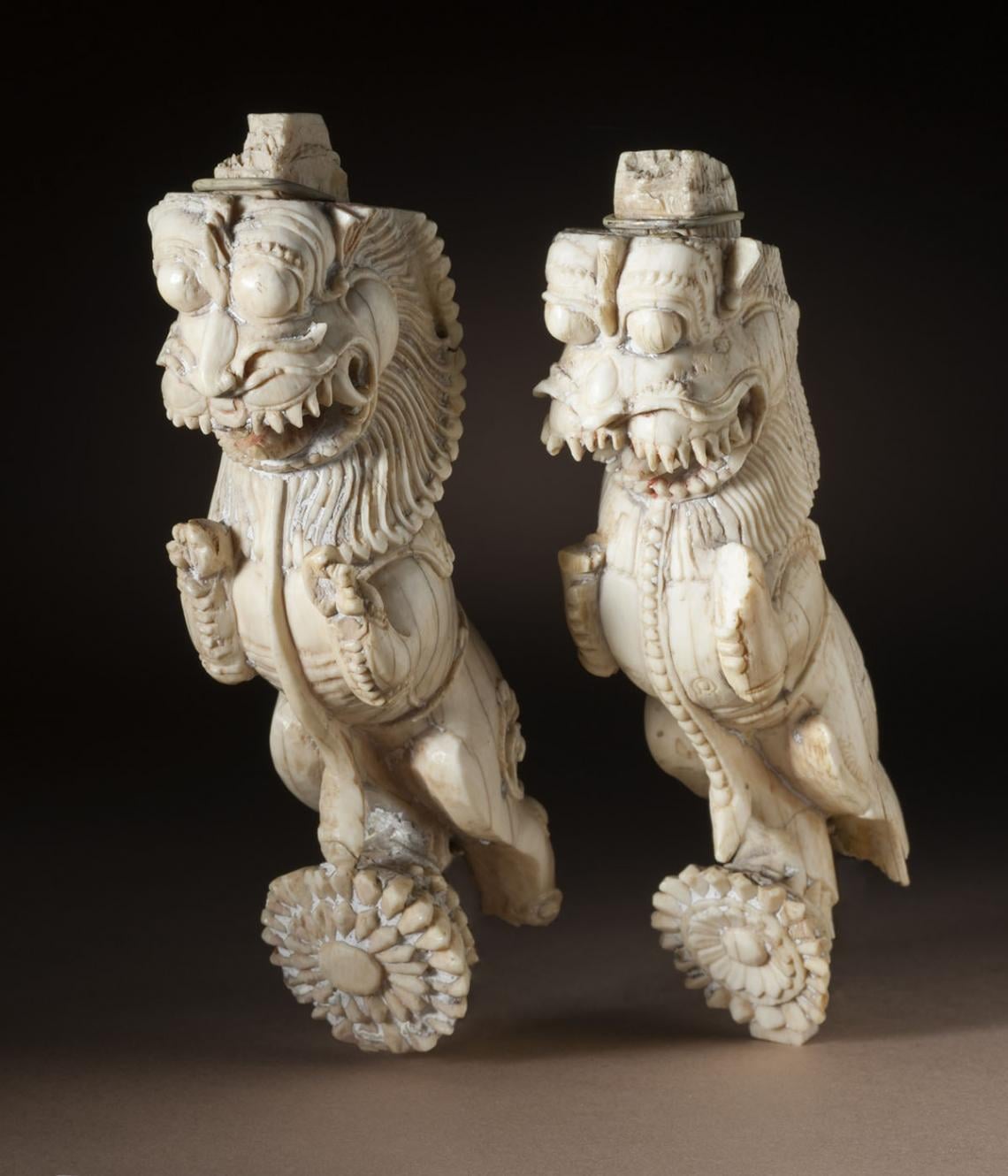
Pair of Architectural Brackets in the Form of Rampant Leonine Creatures (Yali or Vyala), Tamil Nadu, India, c. 17th century, Ivory with traces of paint, 14.61 x 3.18 x 4.45 cm.
Yali figures are considered to be a type of grotesque sculpture, meant to inspire fear and awe, and have iconographies similar to other composite mythological creatures, such as the hippogryph and sphinx of ancient Mesopotamia and Egypt. They are also associated with the mythical griffin. In northern India, yalis are common in the gajasimha (Sanskrit for “elephant-lion”) motif, depicting a fight between a lion and an elephant, showing the lion in a victorious pose.
Yali figures are believed to act as guardians and protectors, shielding a temple from threats. The tame form of the yali, typically shown flanking short stairways attached to temple plinths with waterfalls emerging from their open mouth, is known as the surul-yali. Yalis were also considered divine vehicles for deities, and were used to signify heroism and the elemental forces of nature, tamed and controlled by being incorporated into architecture and sculpture.
Yali figures are found at numerous cave and structural temples across India, including but not limited to the Tiger Cave at Saluvankuppam, the Airavateshvara temple at Dasarum, the Minakshi-Sundareshvara temple at Madurai, the Virupaksha temple at Hampi, Karnataka, the Kailasanatha Temple at Ellora and the Sun Temple at Konark.
This article was originally published by the MAP Academy, an open-access online resource focused on South Asian art and cultural histories.
Advertisement