
Philippines
News

06 Mar 2006
De La Salle University
This study compares men-owned and women-owned businesses - to find out how management style and strategies influence them. The results strongly suggest that certain differences between men and women business owners may be fundamental in nature.
24 Aug 2005
PCAMRD Confers 19th Dr. Elvira O. Tan Memorial Award
11 Aug 2005
Among the topics discussed were: Genetic Engineering, Radiological Emergencies and Nuclear Terrorism, Disaster Management, Marine Microorganisms, Banana Industry, Earthquake and Volcano Hazards and Weather Forecasting.
11 Aug 2005
Awards were given out for research in Mango and Woodwool while PCAMRD presented the latest technology in value-added products from tilapia, giant freshwater prawn, freshwater aquarium fish, vermicomposting, and tilapia broodstock in saline waters.
08 Aug 2005
Among the achievements of the women were outstanding research in harmful algal blooms, shellfish poisoning, red tide, innovative technology adoption and encouragement of women’s participation in fisheries.
08 Aug 2005
The Gawad LIDER shall have two categories: the Exemplary Leadership Award and the Innovation Award.

29 Jul 2005
University of the Philippines Diliman
The Philippine Association for Home Economics in State Colleges and Universities (PAHESCU) Journal is now accepting articles/research papers for its April 2006 publications.
18 Jul 2005
De La Salle University
This paper presents new approach of Genetic algorithm (GA) to solve constrained optimization problem.
18 Jul 2005
De La Salle University
In the Philippines, only a handful of companies have adopted ABC in their strategy formulations and little is known about it. This research focuses on the implementation of ABC, the benefits derived and the problems encountered in using the system.
18 Jul 2005
De La Salle University
The Vision and Praxis of Nothingness and Unity in the Spirituality of Chiara Lubich is a qualitative inquiry using the descriptive and evaluative methodology which takes into account the spiritual, theological and pedagogical dimensions.
18 Jul 2005
De La Salle University
The theories and practices of capitalism in different places and periods produced various theories and practices of welfare which have implications for the understanding and practice of compassion/apathy and solidarities/alienations and capitalism
12 Jul 2005
De La Salle University
This study found that over time and constant communication, texters developed a unique Filipino style of texting. It also found that the texters' age, sex and work were main predictors of texting style.
22 Jun 2005
The annual activity of the Department of Science and Technology showcasing the results of researches conducted and services being offered by the Councils and its attached agencies.
14 Jun 2005
De La Salle University
The project seeks to create a software that can translate texts in the English language to Filipino and vice-versa.
14 Jun 2005
De La Salle University
Professor, Dr. Pag-asa Gaspillo, won this year's grand prize for her research and innovative solutions to reduce water pollution.
12 Jun 2005
Isolation of carrageenase and agarase-producing bacterium from sea urchin
Events
Sorry, no events coming up for this topic.
- « first
- ‹ previous
- 1
- 2
- 3
Researchers
Sorry, no researchers coming up for this topic.
Giants in history

Filipina paediatrician and scientist Perla Santos-Ocampo (25 July 1931 – 29 June 2012) made important contributions to treatments and policies that curbed debilitating and sometimes deadly diarrhoea-related diseases and malnutrition in children.
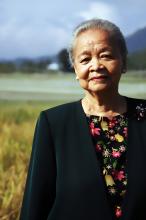
Filipina sociologist Gelia Castillo (1928 – 2017) pioneered the concept of “participatory development,” (which calls for development projects to engage with local communities), and studied the impacts of agriculture in the Philippines on health, gender relations, the environment, and poverty.
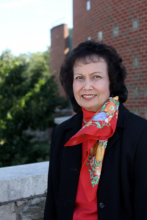
Angelita Castro Kelly (1942-2015) was the first female Mission Operations Manager (MOM) of NASA. She spearheaded and supervised the Earth Observing System missions during its developmental stage.
Through her iconic stories featuring fictional scenes from the history of the Philippines, language teacher and academic Genoveva Matute (3 January 1915 – 21 March 2009) helped strengthen the Filipino identity.

Edgardo Dizon Gomez (7 November 1938 – 1 December 2019) was a Filipino marine biologist who recognized the need to protect marine resources, especially coral reefs, in the Philippines.
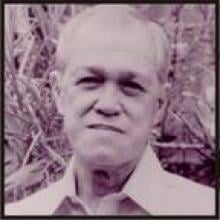
Julian Arca Banzon (13 March 1908 – 13 September 1988) was a biochemist from the Philippines who was a pioneer in alternative fuel research. Banzon investigated the use of indigenous crops as sources of renewable fuels and chemicals.
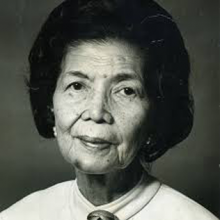
Fe Villanueva del Mundo (27 November 1911 – 6 August 2011) was a Filipina paediatrician who founded the Philippines’ first paediatric hospital.
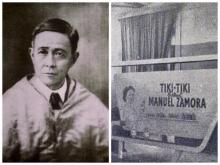
Filipino chemist and pharmacist Manuel A. Zamora (29 March 1870 – 9 July 1929) is best remembered for his discovery of the tiki-tiki formula to combat beriberi, a disease caused by Vitamin B1 deficiency.
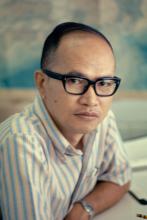
Research by Filipino plant scientist Benito Vergara (23 June 1934 – 24 October 2015) on the physiology of rice led to the development of deep-water and cold-tolerant rice varieties. Vergara also made several contributions to expanding public awareness of rice science.
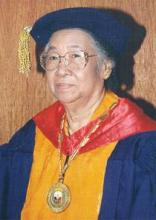
Eminent Filipina scientist and educator Clara Lim-Sylianco (18 August 1925 – 23 July 2013) is remembered for her extensive research on mutagens – often-carcinogenic agents that permanently alter genetic materials such as DNA – antimutagens and bioorganic mechanisms.
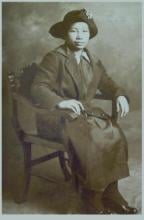
Filipina chemist María Orosa (29 November 1892–13 February 1945) fought malnutrition and food insecurity in the Philippines by devising over 700 culinary creations including Soyalac, a nutrient rich drink made from soybeans, and Darak, rice cookies packed with Vitamin B1, which could prevent beriberi disease caused by Vitamin B1 deficiency. She was also a partisan of the guerrilla movement resisting Japanese occupation during World War II, and died after being struck by shrapnel while working in her laboratory during the Battle of Manila.
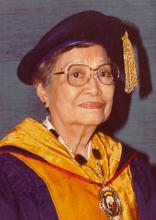
The research of Filipino pharmaceutical chemist Luz Oliveros-Belardo (3 November 1906 – 12 December 1999) focussed on essential oils and other chemicals derived from native Philippine plants.
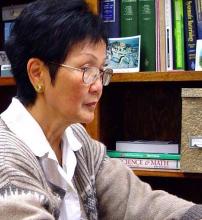
Roseli Ocampo-Friedmann (23 November 1937 – 4 September 2005) was a Filipino-American scientist whose research focused on cyanobacteria and microorganisms that inhabit extreme environments.
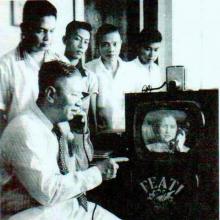
Gregorio Y. Zara (8 March 1902 – 15 October 1978) was a Filipino engineer and physicist best remembered for inventing the first two-way video telephone. Zara’s video telephone invention enabled the caller and recipient to see each other while conversing, laying the foundation for video-conferencing