

Biology Molecular biology
News
28 May 2021
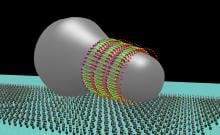
In collaboration with Kanazawa University, researchers from Osaka City University used high-speed atomic force microscopy (HS-AFM) to visualize at the nanometer level the movement of individual particles within the parasitic bacterium Mycoplasma mobile. After confirming the outline on the surface of the cell structure in an immobilized state with previous data gathered from electron microscopy, the team succeeded in visualizing the real-time movements of the internal structure by scanning the outside of the cell with HS-AFM.
28 May 2021
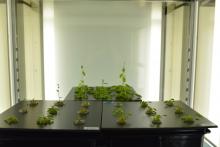
Scientists from Japan, Europe and the USA have described a pathway leading to the accelerated flowering of plants in low-nitrogen soils. These findings could eventually lead to increases in agricultural production.

14 May 2021
Researchers have observed DNA spooling and unspooling in real time using CRISPR to attach fluorescent tags to very specific DNA points in living cells.

22 Apr 2021
A mitochondrial peptide called MOCCI has a surprising sidekick, and they work together to regulate inflammation and immunity, Singapore researchers reveal.
13 Apr 2021
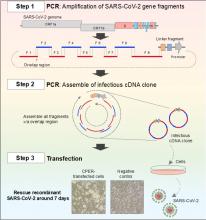
Researchers from Osaka University and Hokkaido University develop a system for analyzing mutations in SARS-CoV-2 that is much simpler and faster than existing methods.
30 Mar 2021
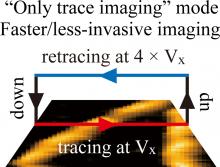
Researchers at Kanazawa University report in Review of Scientific Instruments a newly developed atomic force microscopy approach for imaging biological samples and processes. The method offers higher frame rates and less disturbance of samples.

19 Mar 2021
On March 19, 2021, Hokkaido University, Robotic Biology Institute Inc., iLAC Co., Ltd., and Shionogi & Co., Ltd. have entered into a memorandum of understanding (MOU) toward the establishment of an automated system for the analysis of the novel coronavirus (SARS-CoV-2) in wastewater.
25 Feb 2021
This article is an excerpt from the Hokkaido University research magazine “Tackling Global Issues vol.3 Fighting the menace of zoonosis" (link below).
11 Feb 2021
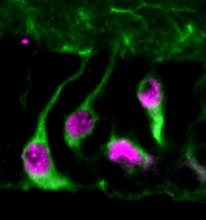
A brain enzyme activates dormant neural stem cells, revealing how defects in its gene could lead to neurodevelopmental disorders.
09 Feb 2021
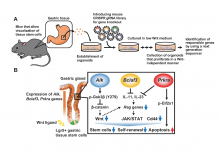
Tissue stem cells can self-renew and differentiate, supplying cells necessary for tissues at various developmental stages. However, detailed analysis in vivo is difficult, so the molecular mechanisms underlying the stemness of gastric tissue stem cells have remained a mystery. Here, by using organoids that mimic tissue structure and function in vivo and GeCKO screening to inactivate arbitrary genes, Alk, Bclaf3 and Prkra have been identified as genes regulating stemness.
04 Feb 2021
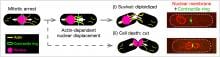
Cells replicate their genetic material and divide into two identical clones to perpetuate life. Some cells pause in the process with a single, undivided nucleus. When the cell resumes division after such a pause, the nucleus can become caught in the fissure, splitting violently, and killing both cells. But that is not always the case. Researchers from Hiroshima University in Japan are starting to understand how active nuclear displacement rescues cell death.
28 Jan 2021
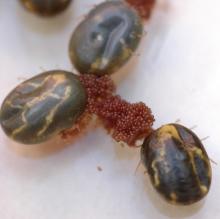
A tick saliva study reveals immune responses that could lead to better protection for cattle.

28 Dec 2020
Investigations of a cellular protein have uncovered a possible link with schizophrenia.
28 Dec 2020
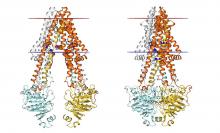
iCeMS scientists have revealed how a transporter protein twists and squeezes compounds out of cells, including chemotherapy drugs from some cancer cells.

23 Dec 2020
A transporter protein that regulates cell membrane cholesterol likely played an important role in vertebrate evolution, according to a review published by iCeMS researchers in the journal FEBS Letters.
19 Nov 2020
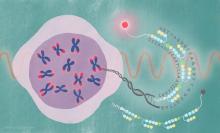
A repetitive DNA sequence that causes health risks when it malfunctions can now be watched inside living cells using a synthetic tool

06 Oct 2020
Researchers at Kanazawa University report in Nature Communications the mechanism making some lung-cancer patients resistant to the drug osimertinib. In addition, they suggest a combined drug treatment resolving osimertinib resistance in the case of cancer cells expressing low amounts of AXL, a protein belonging to the class of receptor tyrosine kinases.
28 Sep 2020
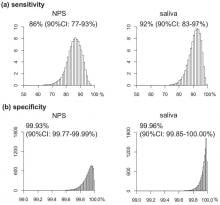
Testing self-collected saliva samples could offer an easy and effective mass testing approach for detecting asymptomatic COVID-19.
15 Sep 2020
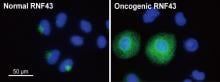
A team of scientists has unraveled the molecular mechanism behind one of the causes of colorectal cancer, and a treatment target.
08 Sep 2020
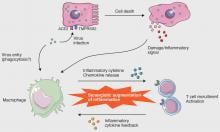
Scientists review macrophage activation syndrome — a feature of the cytokine storm that kills patients with severe cases of COVID-19, as well as possible treatments.

07 Sep 2020
Researchers at Kanazawa University report in Nature Communications the discovery that in the developing fly brain, neurons stemming from the same parent cell experience repulsion. This lineage-dependent repulsion is regulated by a protein known as Dscam1.
26 Aug 2020
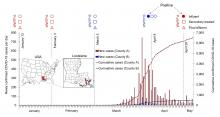
A group of scientists have detected genetic material from SARS-CoV-2 in untreated wastewater samples collected in April 2020 from two wastewater treatment plants in Louisiana, USA.
21 Aug 2020
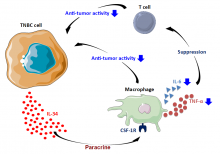
Hokkaido University scientists have shown that Interleukin-34 is a prognostic marker and drug target for Triple Negative Breast Cancer.
12 Aug 2020
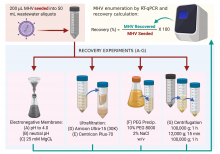
A group of researchers have demonstrated that, from seven methods commonly used to test for viruses in untreated wastewater, an adsorption-extraction technique can most efficiently detect SARS-CoV-2. This gives us another tool to detect the presence and spread of the COVID-19 pandemic
18 Jun 2020
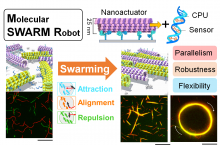
Scientists are looking for ways to make millions of molecule-sized robots swarm together so they can perform multiple tasks simultaneously.
18 May 2020
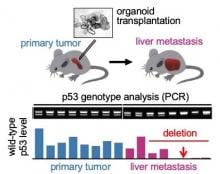
Research at Kanazawa University, Theragen Etex Bio Institute and Seoul National University as reported in Nature Communications points towards pathways for the metastasis and malignant transitions that result from changes in the protein p53. The results suggest that the cooperative development of mutations in the proteins helps tumours spread and metastasis.

12 May 2020
In a recent study published in Molecular Cell, researchers at Kanazawa University report the role of cellular structures called PML bodies in regulating gene function
12 May 2020
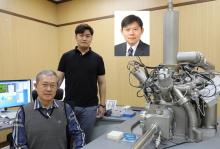
Researchers from Daegu Gyeongbuk Institute of Science and Technology(DGIST) have developed an innovative method that allows them to visualize up to tens of different proteins simultaneously in the same cell. This technology could help scientists elucidate the complex protein interactions involved in degenerative diseases such as Alzheimer’s, deepening our understanding of their mechanisms and allowing for early detection and treatment.
07 Feb 2020
A calf was born from an embryo lacking cells which form a large part of the placenta, providing new insight into the regenerative capacity of mammalian embryos.
07 Feb 2020
Researchers at Kanazawa University report in the Journal of Thoracic Oncology a promising novel approach for a combined treatment of the most common type of lung cancer and associated secondary cancers in the central nervous system. The approach lies in combining two cancer drugs, with one compensating for a resistance side effect of the other.
Events
Sorry, nothing coming up for this discipline
Researchers
Sorry, nothing coming up for this discipline
Giants in history
Sorry, nothing coming up for this discipline