

Brain
News
24 Feb 2021
The Chinese University of Hong Kong (CUHK)
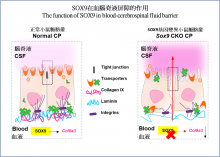
A research team from the School of Life Sciences at The Chinese University of Hong Kong (CUHK) has recently discovered that SOX9 protein is an essential regulatory factor of choroid plexus function that ensures the correct composition of cerebrospinal fluid (CSF). The finding, recently published in the prestigious scientific journal Proceedings of the National Academy of Sciences of the United States of America (PNAS), has provided the scientific community a novel understanding to the molecular regulatory mechanisms behind the function of the blood-CSF barrier and lays the groundwork for developing novel therapeutic strategies for preventing and treating neurodevelopmental disorders.

11 Feb 2021
City University of Hong Kong (CityUHK)
Research co-led by academics at City University of Hong Kong (CityU) has discovered that the phenomenon of human self-organisation known as synchronisation forms spontaneously to avoid inter-person collisions when the safety distance between pedestrians seems insufficient. The findings provided insights in preventing pedestrian synchronisation-induced wobbling effect in structures, ensuring pedestrian and transportation safety.
11 Feb 2021
Duke-NUS Medical School
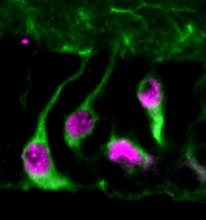
A brain enzyme activates dormant neural stem cells, revealing how defects in its gene could lead to neurodevelopmental disorders.
03 Feb 2021
Hong Kong Baptist University (HKBU)
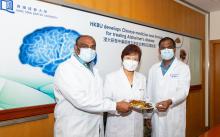
Researchers from the School of Chinese Medicine (SCM) at Hong Kong Baptist University (HKBU) have developed a Chinese medicine formula named NeuroDefend that offers a potential novel treatment for Alzheimer’s disease (AD). Mouse model experiment results showed that the formula reduces the levels of amyloid-beta (Aβ) and insoluble hyperphosphorylated-tau protein, which are the major hallmarks of AD, in mice brains. It also improves cognitive function and memory in mice.
19 Jan 2021
Tohoku University
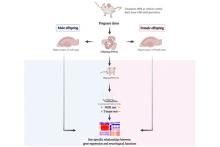
Autism has a higher prevalence in males than females. Bisphenol A (BPA) is a common chemical found in plastics, our food, and even the human placenta. Higher prenatal exposure to BPA is thought to increase the risk of autism. Researchers have, for the first time, identified autism candidate genes that may be responsible for the sex-specific effects of BPA.

24 Dec 2020
Tohoku University
Researchers at Tohoku University have developed the first all-in-one miniature pH probe for real-time investigations of intrinsic extracellular pH dynamics in the deep brain structures.
21 Dec 2020
Hiroshima University
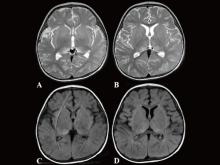
Researchers baffled by an infant’s rare encephalitis case unusual in children found unheard-of mutations and a new way to examine the “immunity gene.”
16 Dec 2020
Daegu Gyeongbuk Institute of Science and Technology (DGIST)
Daegu Gyeongbuk Institute of Science and Technology (DGIST) researchers gain deeper insight into a cell membrane channel, with potential implications for drug development.
16 Dec 2020
Tohoku University
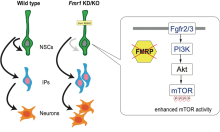
A research team used next-generation sequencing to illustrate the possible molecular mechanisms that cause the Fragile X syndrome in fetal brains.
15 Dec 2020
Hiroshima University
An AI might soon help stroke survivors get the right treatment by detecting a patient’s post-stroke depression type, a frequently seen neuropsychiatric manifestation after a stroke that could impair functional recovery.
20 Nov 2020
Ulsan National Institute of Science and Technology (UNIST)
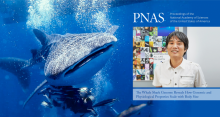
A research team, affiliated with South Korea's Ulsan National Institute of Science and Technology (UNIST) has presented the whole-genome sequence and analyses of the endangered whale shark (Rhincodon typus), the largest extant fish on Earth.

20 Nov 2020
Daegu Gyeongbuk Institute of Science and Technology (DGIST)
A new mechanism of action by which misfolded proteins cause indirect damage to neurons

02 Nov 2020
Daegu Gyeongbuk Institute of Science and Technology (DGIST)
DGIST scientists are learning more about the molecular processes involved in the formation of well-communicating nerve fibres.
14 Sep 2020
Daegu Gyeongbuk Institute of Science and Technology (DGIST)
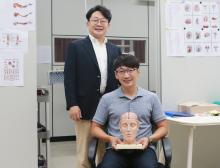
Scientists at Daegu Gyeongbuk Institute of Science and Technology, Korea, show that it is possible to distinguish between left-handed and right-handed people by noninvasively monitoring just their brain activity during passive tactile stimulation. These results are key in haptic research (the study of sensory systems) and have various important implications for brain–computer interfaces, augmented reality, and even artificial intelligence.
09 Sep 2020
The Chinese University of Hong Kong (CUHK)
Running is a fundamental mode of human movement that most of us perform effortlessly without conscious thought. Some may run regularly for exercise, or even undergo serious, professional training for completing marathons. This apparent ease of running belies the enormous biomechanical complexity of running, the coordinated control of which is accomplished by an intricate neuronal network in the brain and spinal cord.
01 Sep 2020
Tohoku University
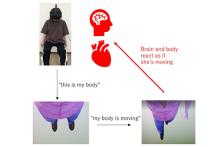
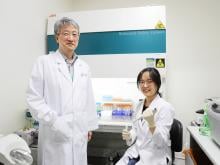
Researchers at the Smart-Aging Research Center (IDAC) at Tohoku University have developed an innovative training protocol that, utilizing immersive virtual reality (IVR), leads to real physical and cognitive benefits.
11 Aug 2020
Daegu Gyeongbuk Institute of Science and Technology (DGIST)
Scientists from the Daegu Gyeongbuk Institute of Science and Technology, Republic of Korea, discover a new way to diagnose Alzheimer’s disease by analyzing the levels of specific proteins in nasal discharge. This simple and inexpensive method could help in timely diagnosis of Alzheimer’s disease, in order to start treatment as soon as possible, thus delaying disease progression.
30 Jul 2020
Tohoku University
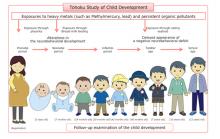
A study conducted over the past 18 years has found differences between lead exposure effects in young Japanese boys versus girls.

29 Jul 2020
Music training does not have a positive impact on children’s cognitive skills, such as memory, and academic achievement, such as maths, reading or writing, according to a study published in Memory & Cognition.
27 Jul 2020
Hokkaido University
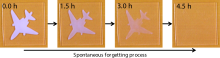
Hokkaido University researchers have found a soft and wet material that can memorize, retrieve, and forget information, much like the human brain. They report their findings in the journal Proceedings of the National Academy of Sciences (PNAS).
07 Jul 2020
Horizon Journals
The JUL 2020 regular issue of the Journal of Humanities & Social Sciences Research (JHSSR), Volume 2 (1) JUL. 2020 has been published ahead of time on 30 Jun 2020 and is now live at the Journal’s webpage.
12 Jun 2020
International Institute for Integrative Sleep Medicine (WPI-IIIS), University of Tsukuba
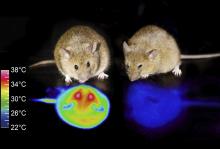
Researchers at the University of Tsukuba and RIKEN in Japan spark a hibernation-like state in mice—a species that does not naturally hibernate
04 Jun 2020
International Institute for Integrative Sleep Medicine (WPI-IIIS), University of Tsukuba
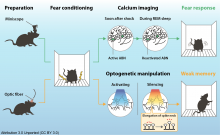
Researchers from University of Tsukuba and the University of Tokyo identify neurons responsible for memory consolidation during REM sleep
03 Jun 2020
Institute for Integrated Cell-Material Sciences (iCeMS) at Kyoto University
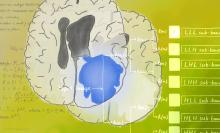
A highly accurate machine learning tool could help doctors tailor individualized treatments for people with glioma brain tumours.

19 May 2020
Tohoku University
Scientists say some myelin-damaging disorders have a distinctive pathology that groups them into a unique disease entity.
13 May 2020
City University of Hong Kong (CityUHK)
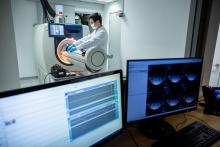
Diagnosis of Alzheimer's disease, the most common type of dementia, is not easy for its overlapping signs with normal ageing. A collaborative research by City University of Hong Kong (CityU) and Johns Hopkins University has developed a new non-invasive molecular imaging approach based on Magnetic Resonance Imaging (MRI) to dynamically measure glucose level changes in the brain lymphatic system. Their discovery may help in identifying Alzheimer's disease at early stages so that treatments can start as soon as possible.
21 Apr 2020
Tohoku University
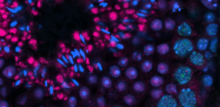
It is no secret that genetic factors play a role in determining whether children have neurodevelopmental disorders. Maternal exposure to drugs and viral or bacterial illnesses can be detrimental too.
27 Mar 2020
Hokkaido University
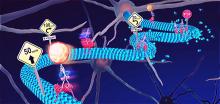
A new technique allows researchers to test how the deformation of tiny train track-like cell proteins affects their function. The findings could help clarify the roles of deformed “microtubules” in traumatic brain injuries and in neurological diseases like Parkinson’s.
03 Mar 2020
Daegu Gyeongbuk Institute of Science and Technology (DGIST)
DGIST joint research team identified the roles of 'Somatostatin,' which mediates the functions of GABAergic synaptic protein

25 Feb 2020
Ulsan National Institute of Science and Technology (UNIST)
Mayor Cheol-ho Song (Ulsan, South Korea) visited the startup facilities of Ulsan National Institute of Science and Technology (UNIST) on January 4, 2020.
Events
Sorry, no events coming up for this topic.
Researchers
Sorry, no researchers coming up for this topic.
Giants in history

Singaporean physician Oon Chiew Seng (1916 – 31 March 2022) advanced dementia care and research in Singapore, and co-founded the Apex Harmony Lodge, the nation’s first nursing home for residents with dementia.

David T. Wong (born 1936) is a Hong Kong-born American neuroscientist who is best known for discovering the antidepressant drug fluoxetine, better known as Prozac.