

Brain
News

21 Jan 2022
Tohoku University
Our brain maps out our body to facilitate accurate motor control. For a century, the body map has been thought to have applied to all types of motor actions. Now, a research group has revealed that the body relies on multiple maps based on the choice of motor system.
22 Dec 2021
Kanazawa University
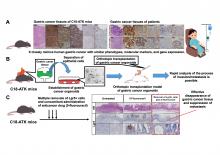
We have succeeded in establishing a mouse model that develops gastric cancer closely resembling advanced human gastric cancer. Using this model, we have discovered gastric cancer stem cells, i.e. Lgr5+ gastric cancer cells, essential for the development, maintenance, and metastasis of cancer. Our study provides an experimental system that enables detailed analysis of highly malignant gastric cancer and is expected to lead to the development of a breakthrough treatment for advanced human gastric cancer.

09 Dec 2021
Asia Research News
Micro-plastics cross blood brain barrier, Stomach cancer atlas, Omicron variant isolated, 120-year-old reaction turned on its head and Reporting through the coup, all in the December Editor's Choice. Plus our latest podcast: Decentralization and Democracy in Myanmar.

23 Nov 2021
Daegu Gyeongbuk Institute of Science and Technology (DGIST)
A joint research team at the Division of Biotechnology, DGIST, confirmed that microplastics(MPs) ingested orally accumulate in the brain and act as neurotoxic substances.
22 Nov 2021
Daegu Gyeongbuk Institute of Science and Technology (DGIST)
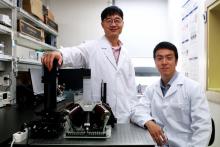
The joint research team of Prof. Hongsoo Choi(DGIST) & Prof. Sung Won Kim(Seoul St. Mary’s Hospital), developed an hNTSC-based microrobot for minimally invasive delivery into the brain tissue via the intranasal pathway
19 Nov 2021
Hiroshima University
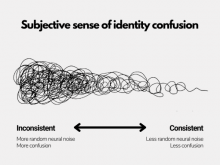
Feeling unsure of yourself? Your brain’s background noise may be interfering with the long memory signals communicated by your neurons’ electrical chatter.

13 Oct 2021
Asia Research News
Miniature brains mimic critical features of Parkinson's disease, better weather forecasting with satellite data, light does the twist for quantum computing, new insights into embryonic development & elevating women leaders in Myanmar in the October Editor's Choice. Plus don't forget submissions for Asia Research News 2022!
01 Oct 2021
Daegu Gyeongbuk Institute of Science and Technology (DGIST)
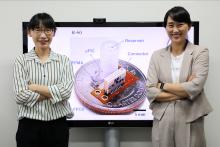
Novel design of brain chip implant allows for measuring neuronal activity while simultaneously delivering drugs to the implant site

01 Oct 2021
Paris, 29 September — UNESCO and the L'Oréal Foundation are unveiling the winners of this year’s International Prize for Women in Science, which honours five eminent women scientists with exceptional careers from the five regions of the world, as it has done annually since 1998.
24 Sep 2021
Singapore University of Technology and Design
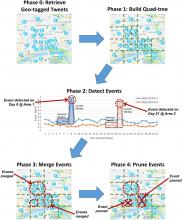
An algorithm that detects events occurring across different time and geographical scales on social media could enable a more timely response to emerging events.

15 Sep 2021
Daegu Gyeongbuk Institute of Science and Technology (DGIST)
New research published in Stem Cell Reports has found elevated cholesterol supply from astrocytes to neurons in the model of Alzheimer's disease (AD) brains, suggesting that modulating brain cholesterol could be explored in the search of treatment options for the devastating, degenerative disease.
09 Sep 2021
International Institute for Integrative Sleep Medicine (WPI-IIIS), University of Tsukuba
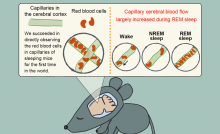
Researchers from the University of Tsukuba and Kyoto University find that capillary blood flow in the brain, which is important for delivering oxygen and nutrients and removing waste products, is increased in mice during the dream-active phase of sleep.
07 Sep 2021
Duke-NUS Medical School
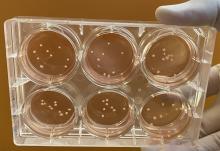
Recreating major pathological features of Parkinson’s disease in a lab-grown, human mini-brain will help researchers to explore new treatments. This is the first time that Lewy bodies, a hallmark of Parkinson’s disease in patients’ brains, have been produced in the laboratory, offering new insights into the disease.
06 Sep 2021
Daegu Gyeongbuk Institute of Science and Technology (DGIST)
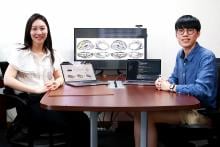
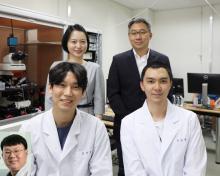
Neuroscientists develop a new approach to better understand the neural mechanism underlying deductive and inductive reasoning
12 Aug 2021
Daegu Gyeongbuk Institute of Science and Technology (DGIST)
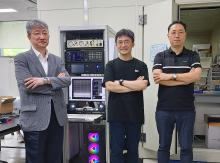
Experiments conducted on genetically modified mice clarify the role of a protein in regulating properties of specific hippocampal neural circuits
10 Aug 2021
Daegu Gyeongbuk Institute of Science and Technology (DGIST)
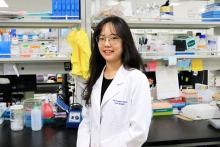
A new, energy-efficient method of electrical brain stimulation developed by researchers from the Daegu Gyeongbuk Institute of Science and Technology could aid stroke rehabilitation and has few side effects.
12 Jul 2021
Daegu Gyeongbuk Institute of Science and Technology (DGIST)
- Gowoon Son, DGIST, to earn a Doctorate from Maastricht University

08 Jul 2021
Hokkaido University
Our brain has no lymphatic system; however, it does have fluid flow, which is believed to play a role in removing waste from the brain. However, the fluid's point of origin and fluid flow is still unclear. The “multi-scale stable isotopes imaging” project in Hokkaido University aims to solve this mystery using advanced technology.
“We would not have been able to perform this study without Hokkaido University’s MRI technology and the isotope microscope,” said the project’s PI, Professor Kohsuke Kudo of the Department of Radiology, Faculty of Medicine.

08 Jul 2021
Asia Research News
ARN's July newsletter features research about a promising treatment candidate to reverse dementia, a newly discovered climate pattern, using starch in tiny energy devices, exploring earth Earth ecosystems and the photo of the month.

17 Jun 2021
Duke-NUS Medical School
Cryo-electron microscopy and computer simulations uncover how a cellular protein helps transport omega-3 fatty acids to the brain and eye, with implications for drug development.
22 May 2021
Hokkaido University
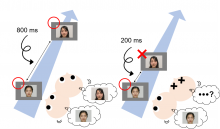
Chuo University and Hokkaido University researchers have found that infants take less than a second to completely process visual information and have the same temporal limitation in processing visual information as seen in adults.
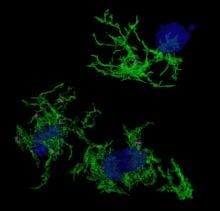
21 May 2021
Duke-NUS Medical School
Single-cell gene studies are clarifying the roles of the brain’s specialised immune cell in Alzheimer’s disease and offer new avenues for treatment of this incurable condition.
09 Apr 2021
Asia Research News
ARN's April Newsletter features research on COVID-19 antibodies, cancer-fighting hydrogels, how the brain organizes information, the 'poor man's q-bit' and the photo of the month!
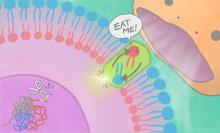
26 Mar 2021
Institute for Integrated Cell-Material Sciences (iCeMS) at Kyoto University
An ‘eat-me’ signal displayed on cell surfaces requires activation of a lipid-scrambling protein by a nuclear protein fragment.
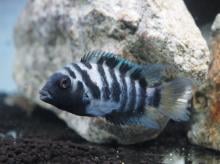
19 Mar 2021
Osaka City University
Through a series of prosocial choice tasks, researchers reveal prosocial and antisocial characteristics in male convict cichlid fish. The fish distinguish between female breeding partners, unknown females, and rival males by adjusting their actions to either provide food for both them and the females or avoid providing food for the rival males.
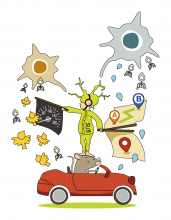
10 Mar 2021
Osaka City University
Researchers reveal the path of information received by the hippocampus. Using optogenetics during large-scale recordings of rat subiculum, they discovered that the subiculum distributes information from the hippocampus to 4 downstream regions of the brain. They observed that the theta and sharp-wave/ripples in the subiculum controlled information transmission with millisecond precision according to the target region. This provides the foundation for a comprehensive understanding of the hippocampal memory system.
03 Mar 2021
Osaka City University
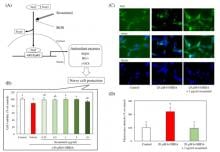
Osaka City University finds that the chemical sesaminol, naturally occurring in sesame seeds, protects against Parkinson’s disease by preventing neuronal damage that decreases the production of dopamine. In vitro experiments show sesaminol handle oxidative stress in cells by regulating the production of reactive oxygen species and the movement of antioxidants. In vivo experiments reveal that a diet of sesaminol increases production of dopamine and significantly improve motor functions in mice.
28 Feb 2021
The Chinese University of Hong Kong (CUHK)
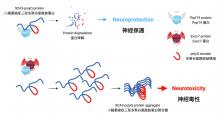
Spinocerebellar ataxia type 3 (SCA3), also known as Machado-Joseph Disease (MJD), describes the most common form of dominantly inherited ataxia in many populations worldwide, including Hong Kong and mainland China. SCA3 or MJD patients often present problems with gait and balance, blurred vision, and speech difficulties. The symptoms are progressive, and patients may eventually decline into a bed-ridden state. To date, SCA3 or MJD remains an incurable disorder.
Collaborating with the University of Oxford, Professor Ho Yin Edwin Chan’s research team from the School of Life Sciences of The Chinese University of Hong Kong (CUHK) recently unveiled the counteracting relationship between pre-mRNA-processing factor 19 (Prpf19) and exocyst complex component 7 (Exoc7) in controlling the degradation of disease protein and neurodegeneration of the rare hereditary ataxia. The research findings have been published in the prestigious scientific journal, Cell Death & Disease.
25 Feb 2021
Daegu Gyeongbuk Institute of Science and Technology (DGIST)
New study shows that uneven accumulation of amyloid β is linked to olfactory dysfunction or partial loss of smell, an early symptom of Alzheimer’s disease
24 Feb 2021
Tohoku University
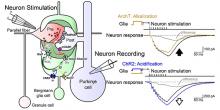
Scientists have revealed glial cells act as amplifiers for synaptic signals and artificial control of the glial state can potentially be used for enhanced memory function of the brain.
Events
Sorry, no events coming up for this topic.
Researchers
Sorry, no researchers coming up for this topic.
Giants in history

Singaporean physician Oon Chiew Seng (1916 – 31 March 2022) advanced dementia care and research in Singapore, and co-founded the Apex Harmony Lodge, the nation’s first nursing home for residents with dementia.

David T. Wong (born 1936) is a Hong Kong-born American neuroscientist who is best known for discovering the antidepressant drug fluoxetine, better known as Prozac.