
Brain
News
18 Feb 2020
Daegu Gyeongbuk Institute of Science and Technology (DGIST)
- Participants of 'International SYNAPSE Project', DGIST & POSTECH sign an MOU to build a joint cooperation system
14 Feb 2020
Daegu Gyeongbuk Institute of Science and Technology (DGIST)
DGIST Professor Cheil Moon’s research team identified the molecular mechanism of innate olfactory behaviors. Clarified sensory defect accompanying neurodevelopmental disorder and cancer; will contribute to early diagnosis and improving anti-cancer drug side effects

23 Jan 2020
Hokkaido University
West Nile virus (WNV) inhibits autophagy — an essential system that digests or removes cellular constituents such as proteins — to induce the aggregation of proteins in infected cells, triggering cell death and brain inflammation (encephalitis), according to Hokkaido University researchers.
22 Jan 2020
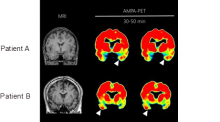
A new compound could help doctors detect epileptic foci in the living human brain as well as further the understanding of psychiatric disease.
21 Jan 2020
Asia Research News
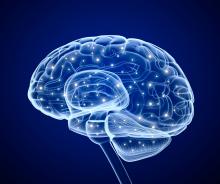
A resource for journalists to find stories and sources. Focus On: Brain highlights research and experts exploring questions ranging from basic structure and function, to technology, diseases and treatments.
15 Jan 2020
Duke-NUS Medical School
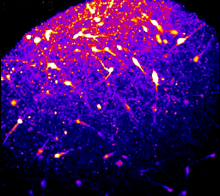
First-of-its-kind study led by Duke-NUS Medical School and National Neuroscience Institute (NNI) applies experimental methodology using human neural cells and brain organoids to investigate mechanism underlying epileptic seizures in Angelman syndrome, an autism spectrum disorder.
13 Jan 2020
Universiti Malaysia Sarawak
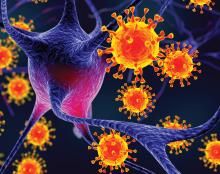
A hyperactive gene response to Japanese encephalitis virus infection ultimately leads to brain inflammation.

12 Jan 2020
Hokkaido University
The drugs helped mice and humans recall long-term object memories.
10 Jan 2020
Korea Advanced Institute of Science and Technology (KAIST)
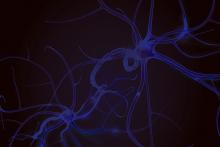
An implantable device has the potential to revolutionize how neuroscientists study the brain and treat diseases.
09 Jan 2020
The Chinese University of Hong Kong (CUHK)
A small molecule could hold the key to tackling the protein build-up in nerve cells that occurs in several devastating neurological disorders.

08 Jan 2020
Universiti Teknologi MARA (UiTM)
Much-needed insight into raising young children with autism in Malaysia highlights the need to improve local research, awareness, acceptance and support services.

08 Jan 2020
Ulsan National Institute of Science and Technology (UNIST)
New findings could lead the way towards treatments for intellectual disability in Down syndrome.

20 Dec 2019
The Chinese University of Hong Kong (CUHK)
Over 70% of rare disease patients and non-patients are aware of the patient registry but the participation rate accounted for less than 30%, according to a recent survey of the public’s acknowledgement of and participation in the rare disease patient registry.
28 Nov 2019
Duke-NUS Medical School
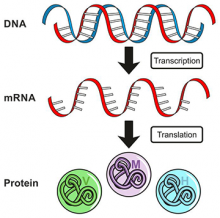
Despite great investments, an effective drug-based treatment for Alzheimer’s disease, the most common form of dementia among the elderly, remains elusive. Scientists led by Duke-NUS Medical School, in collaboration with Monash University, have published an online atlas of gene expressions at single-cell level in Alzheimer’s disease brains, aiming to boost to efforts to identify gene targets for drug development.
23 Oct 2019
Korea Advanced Institute of Science and Technology (KAIST)
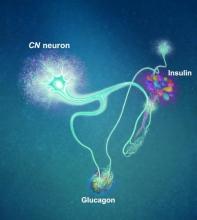
When a fly eats sugar, a single brain cell sends simultaneous messages to stimulate one hormone and inhibit another to control glucose levels in the body. Further research into this control system with remarkable precision could shed light on the neural mechanisms of diabetes and obesity in humans.

26 Sep 2019
Hokkaido University
Hokkaido University researchers have shown how chronic pain leads to suppression of the brain reward system.
19 Sep 2019
Daegu Gyeongbuk Institute of Science and Technology (DGIST)
Professor Eun-Kyoung Kim’s team in the Department of Brain and Cognitive Sciences discovered the mechanism underlying the regulation of energy metabolism by hypothalamic tanycyte. Proposed a new research direction to develop an enhanced obesity treatment.
17 Sep 2019
Duke-NUS Medical School
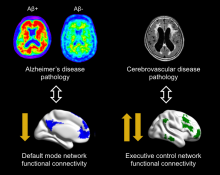
Differential changes in brain functional network connectivity in people with mild cognitive impairment may aid early tracking of Alzheimer’s disease and cerebrovascular disease.
12 Sep 2019
National University of Singapore
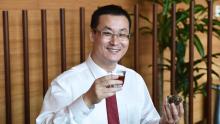
A recent study led by researchers from the National University of Singapore revealed that regular tea drinkers have better organised brain regions compared to non-tea drinkers.
27 Aug 2019
Ulsan National Institute of Science and Technology (UNIST)
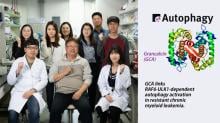
An international team of researchers, affilated with UNIST has identified a new gene that causes drug resistance against Novartis’s breakthrough cancer drug, Gleevec (Active ingredient: imatinib).
27 Aug 2019
Ulsan National Institute of Science and Technology (UNIST)
A recent study, affiliated with South Korea's Ulsan National Institute of Science and Technology (UNIST) has demonstrated new solvent-free, single lithium-ion conducting COF.
16 Aug 2019
Ulsan National Institute of Science and Technology (UNIST)
The protein that revives injured nerve cells was discovered. It is expected to present a new direction in the development of therapeutic agents for regenerating damaged brain or spinal cord nerves.
09 Aug 2019
Daegu Gyeongbuk Institute of Science and Technology (DGIST)
Chronic stress induces autophagic death of adult hippocampal neural stem cells (NSCs). Expected to offer new opportunities for development of early treatment options for stress-associated brain diseases.

29 Jul 2019
Duke-NUS Medical School
As people age, the way different areas of their brain communicate with one another change, affecting thought processes and attention span.
18 Jun 2019
Duke-NUS Medical School
Researchers in Singapore have discovered the mechanism behind how neural stem cells in fruit flies are activated to stimulate the generation of new brain cells.
24 May 2019
Daegu Gyeongbuk Institute of Science and Technology (DGIST)
A research team in South Korea has clarified the expression of antidepressant efficacy by modulating hippocampal mossy cells. It is expected to provide a basis to understand the mechanism of existing anti-depressants and contribute greatly to the development of next generation depression treatment.
21 May 2019
Tohoku University
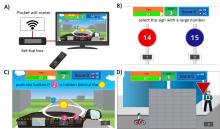
Researchers at Tohoku University have developed a new cognitive training game aimed at improving road safety among elderly drivers. The game, "Cognitive Training for Car Driving" (CTCD), requires only a set top box and a TV, and for users to play it regularly.
02 May 2019
Duke-NUS Medical School
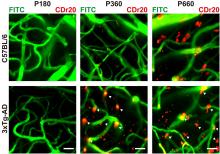
Researchers in South Korea and Singapore have, for the first time, developed a chemical probe that enables live-imaging of a type of immune cells in the brain, known as microglia, in a live animal brain.
30 Apr 2019
Duke-NUS Medical School
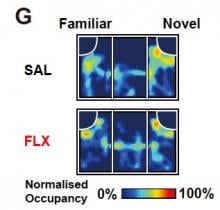
Exposure to antidepressants in the womb leads to autistic-like behaviour in full-grown offspring in an animal model, according to a new study led by Duke-NUS Medical School.

10 Apr 2019
Daegu Gyeongbuk Institute of Science and Technology (DGIST)
Designated as a KELAF and held signboard hanging ceremony as organized by the Ministry of Drug and Food Safety. To lay the foundation for advanced bio research by securing the reliability and ethicality of animal experiments
Events
Sorry, no events coming up for this topic.
Researchers
Sorry, no researchers coming up for this topic.
Giants in history

Singaporean physician Oon Chiew Seng (1916 – 31 March 2022) advanced dementia care and research in Singapore, and co-founded the Apex Harmony Lodge, the nation’s first nursing home for residents with dementia.

David T. Wong (born 1936) is a Hong Kong-born American neuroscientist who is best known for discovering the antidepressant drug fluoxetine, better known as Prozac.