

Covid-19
News
19 Jul 2022
Osaka Metropolitan University
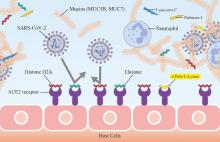
Saliva and oral cells are important routes for transmission and infection by the novel coronavirus COVID-19. A research group led by Associate Professor Misako Matsubara and Specially Appointed Professor Katsutoshi Yoshizato of Osaka Metropolitan University hypothesized that the body's innate immune system may protect against SARS-CoV-2 infection. The onset and severity of COVID-19 are age-dependent, as are parts of the innate immune system like saliva production and quality, which are significantly reduced in the elderly. They found that saliva from healthy individuals prevented the binding of the SARS-CoV-2 spike protein S1 on the viral envelope to the angiotensin-converting enzyme 2 (ACE2) receptor present on the plasma membrane of human cells in a concentration-dependent manner.

15 Jul 2022
Asia Research News
Asia Research News monitors the latest research news in Asia. Some highlights that caught our attention this week are a robotic fish that can eat up microplastics, a bioinformatic platform that can test the efficacy of vaccines against COVID, and a new method of removing phosphorus from water using bacteria.

05 Jul 2022
Asia Research News Partnerships
23 Gold awarded at MTE 2022: COVID-19 International Innovation Awards and Advanced Healthcare & Life Sciences International Innovation Awards
01 Jul 2022
Institute of Industrial Science, The University of Tokyo (UTokyo-IIS)
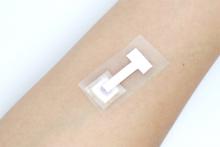
Researchers report a new, minimally invasive, antibody-based detection method for SARS-CoV-2 that could lead to the blood sample-free detection of many diseases
28 Jun 2022
Horizon Journals
I am pleased to announce that a Regular Issue, JUL 2022 of the Journal of Humanities & Social Sciences Research, Vol. 4 (1) Jul. 2022 has been published ahead of time on 15 Jun 2022 and is now live at the Journal’s webpage. Explore this Issue at https://www.horizon-jhssr.com/current-issue.php
27 Jun 2022
The University of Osaka
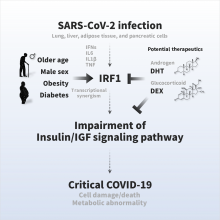
Researchers from Osaka University have found that infection with SARS-CoV-2 activates the expression of IRF1, a key regulator of insulin/IGF signaling in multiple tissues, leading to disruption of blood sugar metabolism and, in some cases, new onset of diabetes. Treating infected cells with hormonal factors that decreased IRF1 expression enhanced insulin/IGF signaling, suggesting that this approach could be used to mitigate some of the more severe side effects of COVID-19 in the future.
22 Jun 2022
Lingnan University
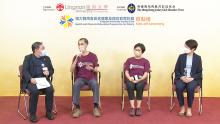
Lingnan University (LU) in Hong Kong held a kick-off ceremony for its “LU Jockey Club Health and Financial Education Programme for Elderly” today (21 June), attracting more than 300 programme participants, representatives of partner institutions and friends of LU to join. Funded by The Hong Kong Jockey Club Charities Trust, the three-year programme aims to strengthen and promote older adults’ knowledge of consumer behaviour, financial management skills, and healthcare management by offering them a series of training and inter-generational communication activities.
17 Jun 2022
Osaka Metropolitan University
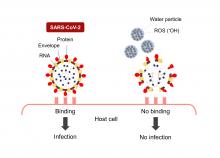
A research group led by Osaka Metropolitan University and Panasonic Corporation Living Appliances and Solutions Company discovered how nano-sized electrostatic atomized water particles disinfect SARS-CoV-2. The nano-sized electrostatic atomized water particles developed by Panasonic Corporation have an electron rich nano-sized water shell that contains reactive oxygen species. The researchers showed that the water particles damage the viral envelope, protein, and RNA. They also revealed that the damaged virus did not bind to host cells. These phenomena are considered the main inactivation mechanism of the nano-sized electrostatic atomized water particles on SARS-CoV-2.
11 Jun 2022
Duke-NUS Medical School
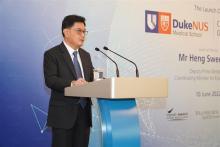
Duke-NUS is working with the Bill and Melinda Gates Foundation to develop the Asia Pathogen Genomics Initiative (APGI) to improve regional genomic surveillance and sequencing capacity. New Centre for Outbreak Preparedness will support APGI and work closely with national and global partners to enhance regional capacity to predict, prepare and respond to future health threats.

20 May 2022
Asia Research News
Asia Research News monitors the latest research news in Asia. Some highlights that caught our attention this week are smart contact lenses, cat communication, elephant mourning, and a hitchhiking drone.
18 May 2022
Hiroshima University
A study by Japanese researchers showed that getting a mild case of COVID-19 doesn’t translate to lower chances of becoming a long-hauler. And that sex and the presence of long-term symptoms are risk factors for post-COVID psychological distress.

13 May 2022
Asia Research News
Molecular robots work cooperatively in swarms, LED lights made from rice husk, Muonic x-rays safely see inside samples, Making a luminescent material shine brighter and How to counter vaccine hesitancy, Read all in the May Editor's Choice and this month's Asia Research News 2022 magazine pick - Absorbing impact: Inside the Head of a Woodpecker.
13 May 2022
Daegu Gyeongbuk Institute of Science and Technology (DGIST)
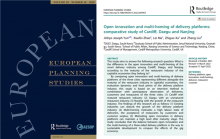
Division of Electronics & Information System Principal Researcher (and guest professor at Seoul National University) Jinhyo Joseph Yun’s team at DGIST conducted joint research with the Nanjing University of Science and Technology’s Professor Lei Ma’s team and the UK Cardiff Metropolitan University’s Professor Zheng Liu’s team on the delivery platform industry, which is becoming a new issue for the 21st century market economy. The teams published an international joint research paper in the ‘European Planning Studies,’ which will be out in May of 2022 in the UK.
03 May 2022
Media Advisory: Experts from the Center for International Forestry Research and World Agroforestry weigh in on the “State of the World’s Forests 2022"
29 Apr 2022
Lingnan University
As COVID-19 continues to spread across the world, there is mandatory 7 to 21-day quarantine for travellers who arrive in Hong Kong and Mainland China from overseas. Since self-isolation may affect people’s emotional health adversely, Lingnan University (LU)’s Wofoo Joseph Lee Consulting and Counselling Psychology Research Centre (WJLCCPRC) has designed a self-assessment questionnaire and intervention exercise to help people in quarantine cope better psychologically.
27 Apr 2022
The World Academy of Sciences (TWAS)
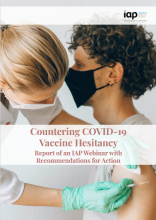
A new report by the InterAcademy Partnership (IAP) highlights practical recommendations for improving the uptake of vaccines.
25 Apr 2022
Daegu Gyeongbuk Institute of Science and Technology (DGIST)
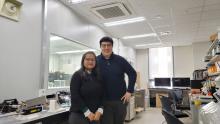
Coconut husk (CH), a solid biowaste derived from coconut, is typically used in household items, such as doormats. Recent studies have shown that CH is rich in lignocellulose, which can make for energy-related applications of CH. To this end, a global team of researchers, in a new study, make use of CH to develop self-powered energy storage and harvesting devices, achieving high energy density and output performance, and opening doors to a circular economy.

01 Apr 2022
Asia Research News
Asia Research News monitors the latest research news in Asia. Some highlights that caught our attention this week are a magnetic slime, training for robotic surgeries, and the furthest star from Earth.
25 Mar 2022
Osaka City University
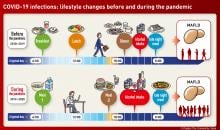
In a retrospective study drawing data from 973 participants between 2018 and 2020, researchers find that cases of metabolic dysfunction-associated fatty liver disease (MAFLD) increased from 22 pre-pandemic to 44 mid. Additionally, univariate and multivariate analysis of lifestyle habits reveal late-night meals pre-pandemic and increased alcohol intake mid-pandemic as independent lifestyle predictors of developing the disease.

21 Mar 2022
MANILA, PHILIPPINES (16 March 2022) — The coronavirus disease (COVID-19) pandemic pushed 4.7 million people in Southeast Asia into extreme poverty in 2021, as 9.3 million jobs disappeared, compared with a baseline no-COVID scenario, according to a new Asian Development Bank (ADB) report presented at the Southeast Asia Development Symposium (SEADS).

16 Mar 2022
Hiroshima University
The small-scale, community-led Shiosai art fair embodies a revitalizing tourism approach that has breathed new life into the aging island village of Mitarai.
15 Mar 2022
Tohoku University
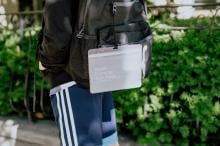
Adolescent carers in the UK were more at risk of experiencing psychological distress and poor mental well-being during the COVID-19 pandemic than their non-carer peers.
14 Mar 2022
Kavli Institute for the Physics and Mathematics of the Universe (Kavli IPMU)
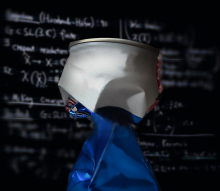
Mathematician Yukari Ito was excited at first to work from home. There was no need to commute to her office at the Kavli Institute for the Physics and Mathematics of the Universe, where she is professor, and she could attend seminars by mathematicians around the world from her living room. But there are also challenges, so she hopes some things will go back to the way they used to be.

10 Mar 2022
International Development Research Centre (IDRC)
Myanmar’s military coup has created new challenges for the country’s researchers.
28 Feb 2022
International Development Research Centre (IDRC)
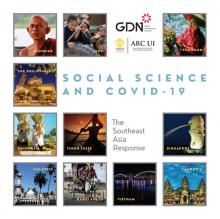
Policy-makers should engage more closely with social scientists to understand the socio-economic, cultural and political contexts behind the behaviours we need to change in response to global crises.
Events
Sorry, no events coming up for this topic.
Researchers
Sorry, no researchers coming up for this topic.
Giants in history

Wu Lien-teh (10 March 1879 – 21 January 1960) was a Malaysian-born doctor who invented a mask that effectively suppressed disease transmission. Winning the prestigious Queen’s Scholarship enabled Wu to become the first Chinese student to study medicine at the University of Cambridge.