

Food
News
16 May 2024
Osaka Metropolitan University
Naturally derived antioxidants improve growth of yeast strain in presence of ethanol

03 May 2024
Asia Research News
Asia Research News monitors the latest research news in Asia. Some highlights that caught our attention this week are the origin of a nearby asteroid, laser-activated droplets that detect biomarkers, and another example of how apes are not too far from us humans!

12 Apr 2024
Asia Research News
Zika virus vaccine targets brain cancer, 120-year quest to farm lobsters, Arctic nightlife bursts with sound, Eating a robot, Molecular orientation is key & New treatment for ALS and dementia. Read all in the latest Editor's Choice.

11 Apr 2024
Hiroshima University
Researchers have identified 14 genes that thale cress express more when responding to five specific stressors, as well as eight genes that the plant suppresses.

05 Apr 2024
Osaka Metropolitan University
Disease-causing E. coli among species labeled electrochemically using organic metallic nanohybrids
29 Mar 2024
Hokkaido University
The lipids in some herbal teas have been identified in detail for the first time, preparing the ground for investigating their contribution to the health benefits of the teas.
19 Mar 2024
Newcastle University in Singapore
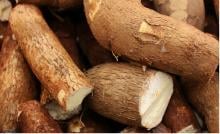
The 12th Starch Value Chain ASIA conference was held in Vientiane, at Crowne Plaza Hotel, from February 27 to 29, 2024. The conference encompassed four key themes: Asia’s starch markets, industrial and food-grade tapioca starch in Laos with expansion plans, sustainable climate-smart agri-technology for rice and cassava cultivation, and challenges for future growth in Asia's biogas-to-energy sector.

07 Mar 2024
Asia Research News
In celebration of International Women's Day, we are putting the spotlight on women experts from various fields who are open to speaking with international media about their research and advocacies.

27 Feb 2024
Applied Microbiology International has announced it will be launching a new series of educational online content called The Microbiologist Masterclass.

16 Feb 2024
Asia Research News
Asia Research News monitors the latest research news in Asia. Some highlights that caught our attention this week are combining rice with animal cells, how microbes make tastier tea, and choosing flavorings and substitutes for salt to reduce the risk of hypertension.

19 Jan 2024
Asia Research News
Asia Research News monitors the latest research news in Asia. Some highlights that caught our attention this week are watching plants warn each other of danger, how even “harmless” addictions can have a serious side effects, and how to clear roads and railways faster using gold nanorods.

08 Dec 2023
Asia Research News
Asia Research News monitors the latest research news in Asia. Some highlights that caught our attention this week are how eels can transfer DNA, older babies falling for tricks that younger ones do not, and a crystal layer deep in the Earth.
04 Dec 2023
Osaka Metropolitan University
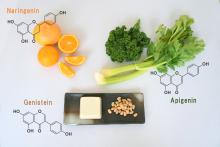
An international team of researchers led by Osaka Metropolitan University has elucidated the process by which the major flavonoids naringenin, apigenin, and genistein are metabolized in the body. These findings are fundamental in elucidating the correlation between the metabolism of flavonoids in the body and their potential health benefits.
29 Nov 2023
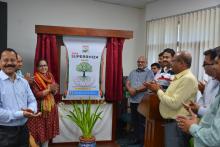
Mycorrhiza biofertilizer Uttam Superrhiza has been named as the winner of the Applied Microbiology International Product of the Year 2023.
The prestigious prize recognizes a commercial product derived from microbiology research, with special consideration given to those products that have addressed the United Nations Sustainable Development Goals.
16 Nov 2023
The winners of the Applied Microbiology International Horizon Awards were announced at the prestigious Environmental Microbiology lecture 2023, held at BMA House in London on November 16.

09 Nov 2023
Asia Research News
New shrimp species in ancient hot spring, Super sprouts, How "warm-ups" work, New antiviral candidate, Solving voltage decay and from our blog: A sustainable future shines in TIE 2023. Read all in the latest Editor's Choice.
24 Oct 2023
Osaka Metropolitan University
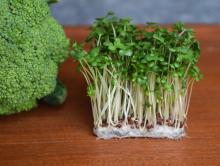
A research team from Osaka Metropolitan University has found that polysulfides are abundant in broccoli sprouts. They found that the amount of polysulfides increased dramatically during growth, by an approximately 20-fold in seeds by the fifth day of germination. Furthermore, a comprehensive analysis of the polysulfides detected a number of polysulfide candidates whose structures have not yet been determined. The identification of these unknown polysulfides and detailed analysis of their pharmacological activities are expected to enable the development of new preventive and therapeutic strategies and medicines for cancer, neurodegenerative diseases, stroke, inflammation, and other diseases.

16 Oct 2023
The shortlist for the Applied Microbiology International Awards 2023 has now been announced.
The AMI Awards programme is designed to celebrate the brightest minds in our field and promote the research, group, projects, products and individuals who continue to help shape the future of applied microbiology.
12 Sep 2023
Osaka Metropolitan University
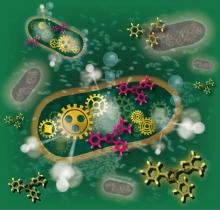
Researchers at Osaka Metropolitan University have developed a measurement technique that rapidly measures the number of viable bacteria in food products. They have succeeded in drastically reducing the inspection time from 2 days to about 1 hour. With this technology, it will be possible to confirm food safety before shipment from factories and prevent food poisoning.
12 Sep 2023
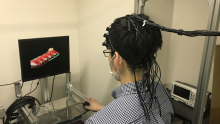
Patients with a specific form of chronic indigestion react differently to images of food, compared to healthy control subjects or patients with irritable bowel syndrome.

01 Sep 2023
Asia Research News
Asia Research News monitors the latest research news in Asia. Some highlights that caught our attention this week are the detection of a rare isotope of oxygen, converting waste coconut fibers into a flavoring compound, and a smart contact lens battery that can be powered by tears.

18 Aug 2023
Asia Research News
Asia Research News monitors the latest research news in Asia. Some highlights that caught our attention this week are vegan 3D printed calamari rings, 4 000-year-old ceramic pipes and ditches, and how swirling stars make some rethink how gravity works.
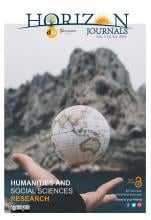
16 Aug 2023
Horizon Journals
Greetings from JHSSR, Horizon is proud to announce the highly acclaimed publication of the latest issue of 2023, Vol. 5, Issue 1 (Jul. 2023).
The issue is now live at the Journal’s webpage. You may explore our range of contributions within this Issue. Explore this issue, click the links below.
11 Aug 2023
Mahidol University
A team of scientists from Thailand and Malaysia, led by principal investigator, Associate Professor Taweechai Amornsakchai from Mahidol University, has successfully developed a low-cost and green method to make films prepared from pineapple stem starch for food packaging, such as fruits and vegetable.

03 Aug 2023
Newcastle University in Singapore
Dr. Zhang Yi, the lead scientist, and his team of researchers from Canada, Singapore, the UK, have successfully completed a study, comparing the efficiency of various bioreactors in producing Raspberry Ketone through Submerged Fermentation. This research marks the first time such a study has been conducted.
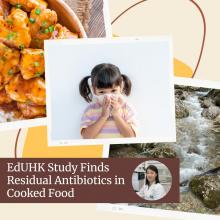
04 Jul 2023
The Education University of Hong Kong (EdUHK)
The use of veterinary antibiotics is not uncommon in the fields of animal husbandry and fisheries to speed up growth and prevent disease. However, residual antibiotics may damage human gut microbiota, promote antibiotic resistance, and even delay the growth and development of brain cells, posing hazards to human health.

30 Jun 2023
Asia Research News
Asia Research News monitors the latest research news in Asia. Some highlights that caught our attention this week are whether octopuses have dreams, an app that can tell you if your cat is in pain, and interchangeable arms for cyborg dancing.
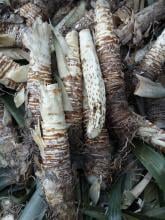
18 Jun 2023
Mahidol University
A team of researchers from universities in Thailand and Malaysia have collaborated to develop a unique kind of bioplastic sheet that is good for the environment and can decompose naturally. They made this bioplastic sheet using a byproduct of the bromelain industry which used the leftover pineapple stems from agricultural waste. This new type of bioplastic sheet has the potential to be used as single-use packaging material, as an alternative to the use of harmful plastic sheet, contributing to a more sustainable way of doing business and promoting a circular economy.

16 Jun 2023
Asia Research News
Asia Research News monitors the latest research news in Asia. Some highlights that caught our attention this week are a potential answer to the question of which came first the chicken or the egg, vaginal seeding to boost baby microbiomes, and looking at remnants of the universe that used to be filled with gas.
07 Jun 2023
Newcastle University in Singapore
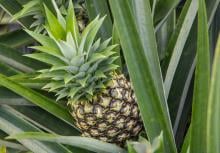
Scientists from Thailand, France and Singapore have conducted groundbreaking research using both tiny cellulose nanofibers (CNF) and long pineapple leaf fibers (PALF) to create stronger materials. They added varying amounts of CNF to epoxy and found that 1% CNF greatly increased impact strength. PALF-epoxy composites showed significant flexibility and strength improvements. Combining CNF and PALF resulted in a remarkable increase in impact strength. The findings could revolutionize stronger material development.
Events
Sorry, no events coming up for this topic.
Researchers
Sorry, no researchers coming up for this topic.
Giants in history

Chinese biochemist Chi Che Wang (1894 - 1979), one of the first Chinese women to study abroad, advanced to prominent research positions at American institutions including the University of Chicago and the Northwestern University Medical School.

Pakistani botanist Azra Quraishi (22 September 1945 – 22 November 2002) is recognised for developing virus-free seed potatoes that increased potato production in Pakistan by an estimated five per cent.

Flora Zaibun Majid ( 1939–2018) was an accomplished Bangladeshi researcher in botany and nutrition science and the first female chairperson of the Bangladesh Council of Scientific and Industrial Research.

Indian botanist Shipra Guha-Mukherjee (13 July 1938 – 15 September 2007) made a breakthrough discovery that enabled the genetic study of plants and, by extension, the development of improved varieties of rice, wheat, potatoes, and other crops.

Hwang Hye-seong (5 July 1920 – 14 December 2006) was an expert on Korean royal court cuisine, the knowledge of which she dedicated her career to keeping alive. Formerly an assistant professor of nutritional science, Hwang met the last kitchen court lady in the Joseon Dynasty Han Hui-sun and, from her, learned about the culinary traditions of the royal court.
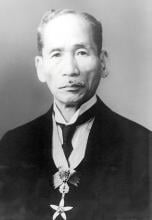
Umetaro Suzuki (7 April 1874 – 20 September 1943) was a Japanese scientist best remembered for his research on beriberi, a disease caused by vitamin B1 deficiency, characterized by limb stiffness, paralysis and pain.

Hsien Wu (24 November 1893 – 8 August 1959) is widely regarded as the founder of biochemistry and nutrition science in China. He was the first to propose that protein denaturation was caused by the unfolding of the protein, instead of chemical alteration.
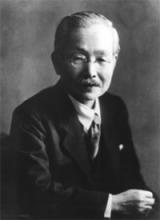
Kikunae Ikeda (8 October 1864 – 3 May 1936) was a Japanese chemist who discovered the fifth basic taste, umami.
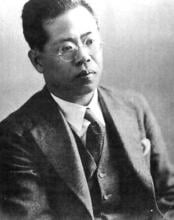
Woo Jang-choon (8 April 1898 – 10 August 1959) was a Korean-Japanese agricultural scientist and botanist.
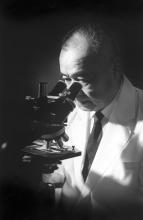
Minoru Shirota (April 23, 1899 – March 10, 1982) was a Japanese microbiologist who invented the popular fermented drink Yakult.
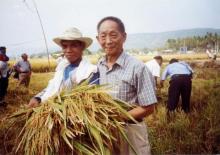
Chinese agronomist Yuan Longping (7 September 1930 – 22 May 2021) developed the first varieties of the high-yield, hybrid rice that brought food security to multiple countries including China, which had been ravaged by food shortages as recently as the mid-20th century.

In 1939, biochemist Kamala Sohonie (18 June 1911 – 28 June 1998) became the first woman to be accepted into the Indian Institute of Science (IISc).

Filipino chemist and pharmacist Manuel A. Zamora (29 March 1870 – 9 July 1929) is best remembered for his discovery of the tiki-tiki formula to combat beriberi, a disease caused by Vitamin B1 deficiency.

Filipina chemist María Orosa (29 November 1892–13 February 1945) fought malnutrition and food insecurity in the Philippines by devising over 700 culinary creations including Soyalac, a nutrient rich drink made from soybeans, and Darak, rice cookies packed with Vitamin B1, which could prevent beriberi disease caused by Vitamin B1 deficiency. She was also a partisan of the guerrilla movement resisting Japanese occupation during World War II, and died after being struck by shrapnel while working in her laboratory during the Battle of Manila.
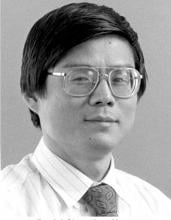
South Korean theoretical physicist Daniel Chonghan Hong (3 March 1956 – 6 July 2002) achieved fame in the public sphere through his research into the physics of popcorn.

Ground-breaking cancer researcher Kamal Jayasing Ranadive (8 November 1917 – 11 April 2001) advanced the understanding of the causes of leukaemia, breast cancer and oesophageal cancer through the use of animal models. She was also among the first to recognise how susceptibility to cancer is linked to tumour-causing interactions between hormones and viruses.
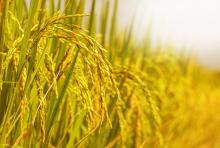
In his over 30 year career in rice research, Munshi Siddique Ahmad (1924 – 19 October 2011) developed more than 30 varieties of high-yielding rice, including the BRRI Shail strain, which was responsible for increasing the rice production of Bangladesh from 8 million tonnes in 1965 to 20 million tonnes in 1975.