

Food
News
07 Mar 2020
International Islamic University Malaysia (IIUM)
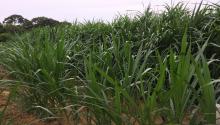
A new feedstock featuring a local grass could provide a more reliable and nutritious food supply for livestock in Malaysia.
27 Jan 2020
International Islamic University Malaysia (IIUM)
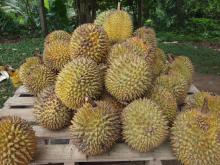
Researchers at the International Islamic University Malaysia have developed biodegradable food packaging container featuring the skin of the durian fruit that can also be used as 3D printing filament.

24 Jan 2020
Universiti Teknologi MARA (UiTM)
A biodegradable biopolymer containing turmeric oil could help extend food shelf life.
22 Nov 2019
Asia Research News
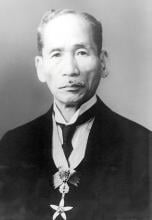
Umetaro Suzuki (7 April 1874 – 20 September 1943) was a Japanese scientist best remembered for his research on beriberi, a disease caused by vitamin B1 deficiency, characterized by limb stiffness, paralysis and pain.

22 Nov 2019
Asia Research News Partnerships
PwC, Rabobank and Temasek launch The Asia Food Challenge Report, highlighting $800 billion investment opportunity in Asia’s Agri-Food sector over the next decade. Report estimates market to grow 7% per year; Asia to double its spending on food to over US$8 trillion by 2030
22 Nov 2019
Asia Research News Partnerships
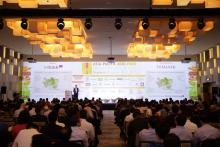
Region faces threats to food security, from climate change and soil degradation to population growth, obesity and diabetes.
800 agribusinesses, food brands, investors and innovators to discuss focus for innovation and investment.

13 Nov 2019
Asia Research News Partnerships
Get ready for a busy week of networking and insights into the future of Asia's agri-food value chain!

07 Nov 2019
Asia Research News Partnerships
Asia-Pacific Agri-Food Innovation Week in Singapore, from November 20-22, 2019, will explore the latest technology innovations and market opportunities in the agri-food supply chain across Southeast Asia, India and China.
24 Oct 2019
Asia Research News Partnerships
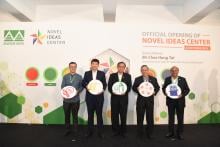
Novel IDEAS Center will focus on delivering innovation in the application of palm oil in F&B
23 Oct 2019
Korea Advanced Institute of Science and Technology (KAIST)
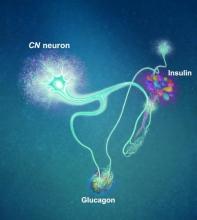
When a fly eats sugar, a single brain cell sends simultaneous messages to stimulate one hormone and inhibit another to control glucose levels in the body. Further research into this control system with remarkable precision could shed light on the neural mechanisms of diabetes and obesity in humans.

23 Oct 2019
Asia Research News Partnerships
Vitafoods Asia is a showcase of the latest ingredients, product developments and technology to shape the industry through science and innovation.

16 Oct 2019
Asia Research News Partnerships
More than 600 leaders and participants from global agribusinesses, indoor farms, food brands, ingredient developers, start-ups and investors will come together to exchange ideas on how technology can be applied to the challenges facing the agri-food value chain in Asia. Key partners include Temasek, Ferrero Innovation Center, Wilmar International, EDB Singapore and the Singapore Food Agency, amongst others.

19 Sep 2019
Asia Research News Partnerships
Find out more at the 9th Vitafoods Asia in Singapore 25-26 September 2019.
12 Sep 2019
National University of Singapore
A recent study led by researchers from the National University of Singapore revealed that regular tea drinkers have better organised brain regions compared to non-tea drinkers.
28 Aug 2019
Asia Research News Partnerships
Vitafoods Asia returns to Singapore between 25-26 September 2019 at Sands Expo & Convention Centre at Marina Bay Sands, Singapore. It is the only nutraceuticals event in Asia to offer end to end insights into the entire nutraceuticals supply chain - from research, to product formulation and commercialisation, through ackaging, and brand development.
14 Aug 2019
Asia Research News Partnerships
Everyone wants to be as healthy as they can be. However, while wearable technology has made it possible for people to track their physical activity, personalised nutrition has yet to be fully addressed.
05 Aug 2019
International Development Research Centre (IDRC)
Malaysia seeks alternative solutions to prevent and treat infectious diseases in shrimp.
02 Aug 2019
Hokkaido University
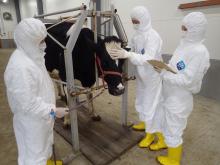
Scientists have succeeded in reducing levels of the bovine leukemia virus (BLV) in cows with severe infections by combining an immune checkpoint inhibitor and an enzyme inhibitor. The finding could be utilized to control other diseases in cattle, and perhaps in humans someday.
29 May 2019
Investments Include the Establishment of an Asia Pacific Head Office, New Research & Development Facilities and a Collaboration to Encourage Ag-Tech Entrepreneurship
26 Apr 2019
Asia Research News
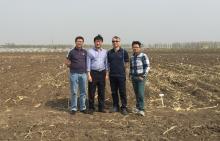
Using advanced computer models, researchers at The Chinese University of Hong Kong (CUHK) found that intercropping enables higher productivity in crops with less synthetic fertilizers and hence reduces the air pollutants being volatilized from the cropland soil.

10 Apr 2019
The WorldFish Center
WorldFish, the International Rice Research Institute (IRRI) and the International Water Management Institute (IWMI) signed a five-year tripartite Memorandum of Understanding (MoU) today.

15 Feb 2019
The Hong Kong Polytechnic University (PolyU)
Ten projects led by The Hong Kong Polytechnic University (PolyU) (PolyU) have recently received funding support from the inaugurated Research Impact Fund (RIF) under the Research Grants Council (RGC). Among them, half of them are health-related, covering areas of drug development, detection of scoliosis, myopia control and food safety.

06 Feb 2019
Asia Research News
Research can offer a strategic blueprint for bolstering food security throughout Asia, but regional cooperation is required.

06 Feb 2019
King Abdullah University of Science and Technology (KAUST)
Desert bacteria protect food crops from salt toxicity.

17 Dec 2018
University of Malaya
Major study of 7,663 Malaysian women shows that breastfeeding, physical activity and soy intake are protective against breast cancer. The findings were from the Malaysian Breast Cancer (MyBrCA) genetic study and the Malaysian Mammographic Density (MyMammo) study.
17 Dec 2018
University of Malaya
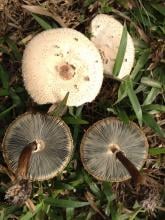
Chlorophyllum molybdites is the poisonous mushroom most frequently reported in Malaysia. The mushroom is confused with Termitomyces mushroom, the edible type. Researchers worked with clinicians and provide training for the doctors about the study of fungus, clinical management of mushroom poisoning and mushroom toxicology surveillance system.
17 Dec 2018
Institute of Transformative Bio-Molecules (WPI-ITbM), Nagoya University
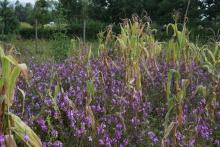
Discovery of a hypersensitive suicide germination stimulant.
13 Dec 2018
University of Malaya
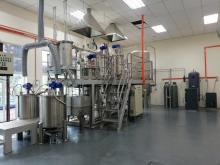
The present invention provides a method to produce black iron oxide nanoparticle slurry having a magnetite structure and homogenously disperse. It can be used as formed or mix with other medium.
04 Dec 2018
University of Malaya
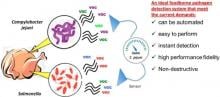
A researcher at University of Malaya, Malaysia, has developed a real-time method based on specific Volatile Organic Compounds (VOCs) to detect dangerous bacteria causing foodborne diseases in raw chicken.
Events
Sorry, no events coming up for this topic.
Researchers
Sorry, no researchers coming up for this topic.
Giants in history

Chinese biochemist Chi Che Wang (1894 - 1979), one of the first Chinese women to study abroad, advanced to prominent research positions at American institutions including the University of Chicago and the Northwestern University Medical School.
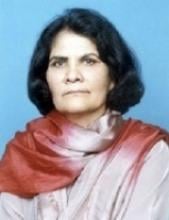
Pakistani botanist Azra Quraishi (22 September 1945 – 22 November 2002) is recognised for developing virus-free seed potatoes that increased potato production in Pakistan by an estimated five per cent.

Flora Zaibun Majid ( 1939–2018) was an accomplished Bangladeshi researcher in botany and nutrition science and the first female chairperson of the Bangladesh Council of Scientific and Industrial Research.

Indian botanist Shipra Guha-Mukherjee (13 July 1938 – 15 September 2007) made a breakthrough discovery that enabled the genetic study of plants and, by extension, the development of improved varieties of rice, wheat, potatoes, and other crops.

Hwang Hye-seong (5 July 1920 – 14 December 2006) was an expert on Korean royal court cuisine, the knowledge of which she dedicated her career to keeping alive. Formerly an assistant professor of nutritional science, Hwang met the last kitchen court lady in the Joseon Dynasty Han Hui-sun and, from her, learned about the culinary traditions of the royal court.
Umetaro Suzuki (7 April 1874 – 20 September 1943) was a Japanese scientist best remembered for his research on beriberi, a disease caused by vitamin B1 deficiency, characterized by limb stiffness, paralysis and pain.
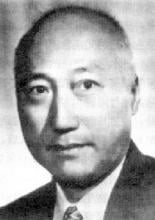
Hsien Wu (24 November 1893 – 8 August 1959) is widely regarded as the founder of biochemistry and nutrition science in China. He was the first to propose that protein denaturation was caused by the unfolding of the protein, instead of chemical alteration.
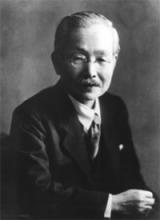
Kikunae Ikeda (8 October 1864 – 3 May 1936) was a Japanese chemist who discovered the fifth basic taste, umami.
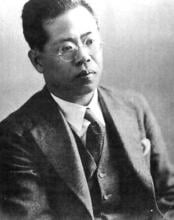
Woo Jang-choon (8 April 1898 – 10 August 1959) was a Korean-Japanese agricultural scientist and botanist.
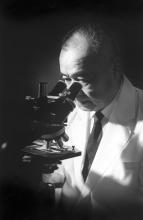
Minoru Shirota (April 23, 1899 – March 10, 1982) was a Japanese microbiologist who invented the popular fermented drink Yakult.
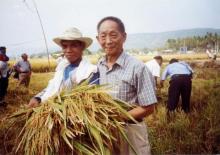
Chinese agronomist Yuan Longping (7 September 1930 – 22 May 2021) developed the first varieties of the high-yield, hybrid rice that brought food security to multiple countries including China, which had been ravaged by food shortages as recently as the mid-20th century.
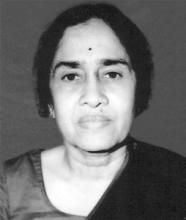
In 1939, biochemist Kamala Sohonie (18 June 1911 – 28 June 1998) became the first woman to be accepted into the Indian Institute of Science (IISc).

Filipino chemist and pharmacist Manuel A. Zamora (29 March 1870 – 9 July 1929) is best remembered for his discovery of the tiki-tiki formula to combat beriberi, a disease caused by Vitamin B1 deficiency.

Filipina chemist María Orosa (29 November 1892–13 February 1945) fought malnutrition and food insecurity in the Philippines by devising over 700 culinary creations including Soyalac, a nutrient rich drink made from soybeans, and Darak, rice cookies packed with Vitamin B1, which could prevent beriberi disease caused by Vitamin B1 deficiency. She was also a partisan of the guerrilla movement resisting Japanese occupation during World War II, and died after being struck by shrapnel while working in her laboratory during the Battle of Manila.
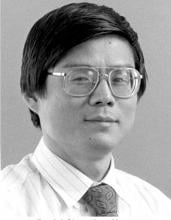
South Korean theoretical physicist Daniel Chonghan Hong (3 March 1956 – 6 July 2002) achieved fame in the public sphere through his research into the physics of popcorn.

Ground-breaking cancer researcher Kamal Jayasing Ranadive (8 November 1917 – 11 April 2001) advanced the understanding of the causes of leukaemia, breast cancer and oesophageal cancer through the use of animal models. She was also among the first to recognise how susceptibility to cancer is linked to tumour-causing interactions between hormones and viruses.
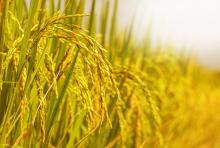
In his over 30 year career in rice research, Munshi Siddique Ahmad (1924 – 19 October 2011) developed more than 30 varieties of high-yielding rice, including the BRRI Shail strain, which was responsible for increasing the rice production of Bangladesh from 8 million tonnes in 1965 to 20 million tonnes in 1975.