

Health
News

16 Jul 2021
Hiroshima University
A study showed braces that give our smiles a makeover could also transform oral microflora to a pre-gum disease state. Now scientists plan to use their findings to prevent this from happening.
14 Jul 2021
Institute for Integrated Cell-Material Sciences (iCeMS) at Kyoto University
Researchers have found a way to enhance radiation therapy using novel iodine nanoparticles.
08 Jul 2021
Hokkaido University
Our brain has no lymphatic system; however, it does have fluid flow, which is believed to play a role in removing waste from the brain. However, the fluid's point of origin and fluid flow is still unclear. The “multi-scale stable isotopes imaging” project in Hokkaido University aims to solve this mystery using advanced technology.
“We would not have been able to perform this study without Hokkaido University’s MRI technology and the isotope microscope,” said the project’s PI, Professor Kohsuke Kudo of the Department of Radiology, Faculty of Medicine.

08 Jul 2021
Asia Research News
ARN's July newsletter features research about a promising treatment candidate to reverse dementia, a newly discovered climate pattern, using starch in tiny energy devices, exploring earth Earth ecosystems and the photo of the month.

07 Jul 2021
Duke-NUS Medical School
Lonely older adults live at least three fewer years, in poorer health, and are less active than non-lonely peers, say ageing research experts.

05 Jul 2021
Osaka City University
Researchers analyze bone marrow-derived and peripheral blood-derived fibrin clots showing that the former contains more growth factors. They then show that bone marrow-derived fibrin clots can be used for meniscus suturing, even in the inner-most avascular regions, and with a 2-year post-operative follow-up, they show bone marrow-derived fibrin clots support healing better than their peripheral blood counterparts.
30 Jun 2021
Hokkaido University
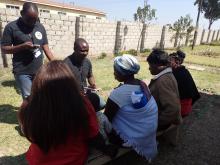
Japanese and Zambian scientists have shown that environmental lead poisoning in children affects not only their own health and wellbeing, but the vitality and mental health of their mothers, as well.
29 Jun 2021
Tohoku University
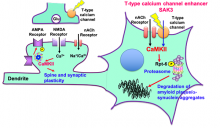
Researchers have identified a new treatment candidate that appears to not only halt neurodegenerative symptoms in mouse models of dementia and Alzheimer’s disease, but also reverse the effects of the disorders. The treatment candidate has been declared safe by Japan’s governing board, and the researchers plan to begin clinical trials in humans in the next year.

28 Jun 2021
International Islamic University Malaysia (IIUM)
Researchers at The International Islamic University Malaysia (IIUM) have developed an algorithmic approach to predict progression of a condition called pterygium, which involves abnormal tissue growth across the eye.

28 Jun 2021
International Islamic University Malaysia (IIUM)
A new mouthwash developed in Malaysia, called Microencapsulated OroSYNTM, is expected to protect against oral diseases.
The mouthwash made from banana skin and a bacterium promotes a healthy microbiome in the oral cavity to protect against diseases
28 Jun 2021
Hiroshima University
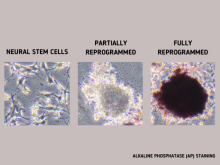
A new non-invasive technique scans “chemical fingerprints” to see if ordinary cells’ reprogramming into stem cells is on track and verify transformation success by matching “print” patterns.
25 Jun 2021
Asia Research News Partnerships
The inaugural virtual edition of Singapore Health and Biomedical Congress will be held on 7 & 8 October 2021. Register and submit abstracts now.
24 Jun 2021
City University of Hong Kong (CityUHK)
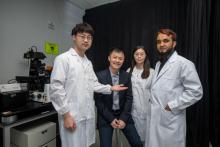
It is generally agreed that sperms “swim” by beating or rotating their soft tails. However, a research team led by scientists from City University of Hong Kong (CityU) has discovered that ray sperms move by rotating both the tail and the head. The team further investigated the motion pattern and demonstrated it with a robot. Their study has expanded the knowledge on the microorganisms’ motion and provided inspiration for robot engineering design.

23 Jun 2021
Osaka City University
Researchers from Osaka City University find that when the larva nematode C. elegans is fed a diet of Bacillus subtilis var. natto, a bacteria used to ferment soy beans into the traditional Japanese food natto, upon reaching adulthood these worms are able to survive infections from the gram-positive bacteria Staphylococcus aureus and Enterococcus faecalis longer than when fed a standard diet of non-pathogenic E. coli.

23 Jun 2021
Lingnan University
Productive ageing is an internationally clear direction of social policy development. A recent survey conducted by the Institute of Policy Studies (IPS) of Lingnan University (LU) in Hong Kong confirmed that an age-friendly city framework would help to promote the productive engagement of older adults in Hong Kong. The research team recommended that the Hong Kong Government to enact policies and programmes improving intergenerational communication and interaction, promoting inclusivity to address ageism for positive engagement leading to healthy and productive ageing.
23 Jun 2021
The Education University of Hong Kong (EdUHK)
Urbanisation, technological advances, and increasing convenience in everyday life have restricted the amount of physical exercise most people engage in, resulting in a major public health concern. This persistent and growing health-related problem calls for an acute need to develop an intervention programme that can effectively promote physical activities, not only at individual level but also at the family, community, and citywide levels.
22 Jun 2021
Daegu Gyeongbuk Institute of Science and Technology (DGIST)
- CTCELLS Co., Ltd., Selected for '200 Baby Unicorns' Organized by MSS & KISED
- Successfully Attracts 5 Billion Won Investment through Series A Investment Attraction
18 Jun 2021
Duke-NUS Medical School
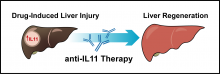
A signalling protein thought to be able to treat liver damage in paracetamol toxicity could actually worsen it. Instead, Singapore scientists discovered, blocking its effects could be the way forward.

15 Jun 2021
University of Malaya
This is an opinion piece by Associate Professor Dr Loh Siew Yim (Malaysia), Dr Gail Boniface (UK), Professor Sharon Britnell (Canada).
14 Jun 2021
Hokkaido University
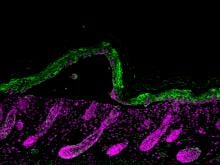
A team of scientists has shown that the healing of skin blisters is driven by hair follicle stem cells, which delay their own development in the process.
08 Jun 2021
Hiroshima University
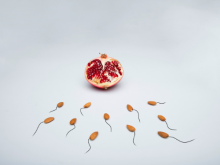
The chances of restoring fertility through sperm stem cell transplant are as random as a coin toss. But a team of scientists developed a new strategy that serves as a “weighted coin” that can favorably rig the odds to achieve outcomes where fertility is successfully restored.

31 May 2021
Institute for Integrated Cell-Material Sciences (iCeMS) at Kyoto University
High-resolution genome structural analyses combined with large-scale simulations show the arrangements of the genome’s spool-like structures affecting gene expression.

24 May 2021
Tohoku University
The devastating Great East Japan Earthquake on March 11, 2011 displaced some 500,000 people to evacuation shelters. A research team that conducted regular visits to shelters to assess their status and inhabitants well-being have analyzed their data and found that about half of shelters had inadequate clean tap water and toilets, leading to worsening health outcomes for inhabitants.
21 May 2021
Duke-NUS Medical School
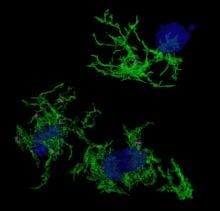
Single-cell gene studies are clarifying the roles of the brain’s specialised immune cell in Alzheimer’s disease and offer new avenues for treatment of this incurable condition.
21 May 2021
Hokkaido University
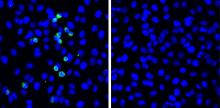
Scientists from Hokkaido University have discovered a novel defensive response to SARS-CoV-2 that involves the viral pattern recognition receptor RIG-I. Upregulating expression of this protein could strengthen the immune response in COPD patients.
20 May 2021
Hokkaido University
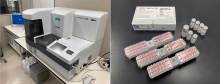
Scientists from Hokkaido University have shown that an antigen-based test for quantifying SARS-CoV-2 in saliva samples is simple, rapid, and more conducive for mass-screening.
19 May 2021
Hokkaido University
Dr. Kazuhiro Ohtani is a certified public psychologist and a lecturer at Hokkaido University’s Graduate School of Education. His main research interest is the academic motivations of Japanese students, especially adolescents. He believes that children in the age range of puberty are more prone to depression, which often leads to the loss of academic motivation.
18 May 2021
Korea Advanced Institute of Science and Technology (KAIST)
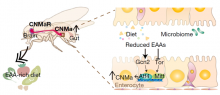
Revelations from a fly study could improve our understanding of protein malnutrition in humans.
13 May 2021
Ulsan National Institute of Science and Technology (UNIST)
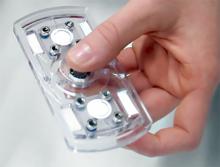
A spinning toy meets hydrodynamics and sets point-of-care diagnostics in motion.

13 May 2021
Lingnan University
Everyone has to wear a mask to curb the spread of COVID-19. However, this is an additional communication barrier for people with a hearing impairment as they cannot read lips or facial expressions behind a mask. Invited by The Hong Kong Society for the Deaf, the Lingnan Entrepreneurship Initiative of Lingnan University in Hong Kong (LU) recently designed a transparent ASTM Level 3 face mask based on the needs of hearing-impaired people, and its fully transparent and anti-reflective design makes lip-reading easier.
Events
Sorry, no events coming up for this topic.
- « first
- ‹ previous
- 1
- 2
- 3
Giants in history

Henriette Bui Quang Chieu (1906 – 2012) was inspired to follow in her brother’s footsteps and become a doctor after losing her mother to tuberculosis. She studied in France and became the first Vietnamese woman to receive a medical degree. Upon her return to Vietnam, Bui was appointed head of the Department of Midwifery at Cho Lon Hospital in Ho Chi Minh City. A pioneer in gynaecology, she applied acupuncture techniques that she had learned in Japan to obstetrics. As Vietnam was still a French colony, Bui also lobbied for the rights of Vietnamese doctors, nurses, and patients.

Japanese biochemist Akira Endo (1933 – 2024) discovered the first statin, called mevastatin, which lowered cholesterol levels in the blood by inhibiting a key enzyme in the cholesterol biosynthesis pathway. His work laid the foundation for the development of statins to help patients lower their blood cholesterol levels and reduce their risk of heart disease or stroke.

Filipina paediatrician and scientist Perla Santos-Ocampo (25 July 1931 – 29 June 2012) made important contributions to treatments and policies that curbed debilitating and sometimes deadly diarrhoea-related diseases and malnutrition in children.

Singaporean physician Oon Chiew Seng (1916 – 31 March 2022) advanced dementia care and research in Singapore, and co-founded the Apex Harmony Lodge, the nation’s first nursing home for residents with dementia.

Vietnamese surgeon Tôn Thất Tùng (10 May 1912 – 7 May 1982) developed a pioneering technique that reduced the risks and mortality rate of liver operations.

Chinese biochemist Chi Che Wang (1894 - 1979), one of the first Chinese women to study abroad, advanced to prominent research positions at American institutions including the University of Chicago and the Northwestern University Medical School.
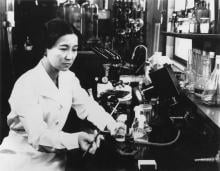
Ruby Sakae Hirose (1904 – 1960) was a Japanese-American scientist whose research contributed significantly to our understanding of blood clotting, allergies and cancer.

Flora Zaibun Majid ( 1939–2018) was an accomplished Bangladeshi researcher in botany and nutrition science and the first female chairperson of the Bangladesh Council of Scientific and Industrial Research.

Iranian physician and bacteriologist Azar Andami (8 December 1926 – 19 August 1984) developed a cholera vaccine to combat an outbreak that swept through the Middle East, India, Southeast Asia, and Africa in 1937.

Irene Ayako Uchida’s (8 April 1917 – 30 July 2013) strides to understand genetic diseases such as Down syndrome paved the way for early screening of chromosomal abnormalities in foetuses.
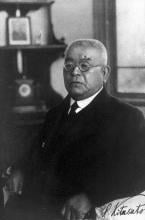
Baron Kitasato Shibasaburo (29 January 1856 – 13 June 1931) was a Japanese physician and bacteriologist whose work led to a new understanding of preventing and treating tetanus, diphtheria and anthrax.

Maggie Lim (5 January 1913 – November 1995) was a Singaporean physician who promoted family planning and expanded the access to clinics to improve the quality of life for mothers and children in Singapore’s early days.
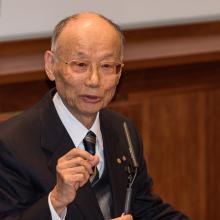
By isolating soil microorganisms and studying the compounds they produce, Satoshi Omura (born 1935) discovered almost 500 organic compounds with unique properties that were produced by these microorganisms, including many new antibiotics.

The founder of the Adyar Cancer Institute in India, Muthulakshmi Reddy (30 July 1886 – 22 July 1968), fought to uplift women and girls from impoverished situations.
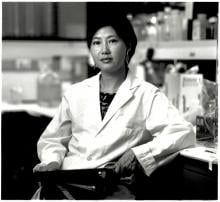
Chinese-American virologist and molecular biologist Flossie Wong-Staal (27 August 1946 – 8 July 2020) was the first scientist to clone HIV and determine the function of its genes.

Maharani Chakravorty (1937 – 2015) was one of India’s earliest molecular biologists whose research paved the way for advances in the treatment of bacterial and viral infections.

Archana Sharma (16 February 1932 - 14 January 2008) conducted research into plant and human genetics that expanded the understanding of both botany and human health. In relation to botany, she uncovered the means by which asexually-reproducing plants evolve into new species.
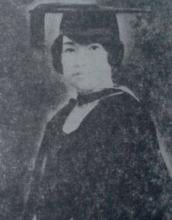
The first Thai woman to receive a degree in medicine, Margaret Lin Xavier (29 May 1898 – 6 December 1932), is best remembered for her compassion towards her less privileged patients.
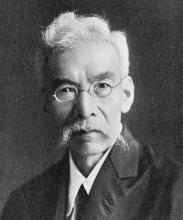
In 1915, pathologist Katsusaburo Yamagiwa and his research assistant Koichi Ichikawa became the first to prove that chronic exposure to chemicals can cause cancer.
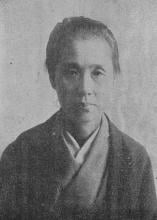
Ogino Ginko (3 March 1851 – 23 June 1913) was the first registered female doctor to practise modern medicine in Japan.
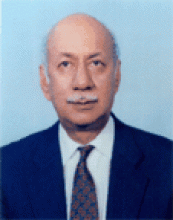
Syed Qasim Mehdi (13 February 1941 – 28 September 2016) was a Pakistani molecular biologist who was a founding member of the Human Genome Diversity Project (HGDP), which assessed human diversity by studying human migration, mutation rates, relationships between different populations, genes involved in height and selective pressure.
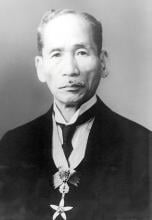
Umetaro Suzuki (7 April 1874 – 20 September 1943) was a Japanese scientist best remembered for his research on beriberi, a disease caused by vitamin B1 deficiency, characterized by limb stiffness, paralysis and pain.
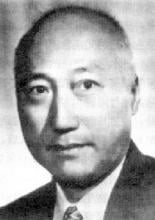
Hsien Wu (24 November 1893 – 8 August 1959) is widely regarded as the founder of biochemistry and nutrition science in China. He was the first to propose that protein denaturation was caused by the unfolding of the protein, instead of chemical alteration.

Indian organic chemist Asima Chatterjee (1917 to 2006) studied the medicinal properties of plant products, especially compounds known as vinca alkaloids.
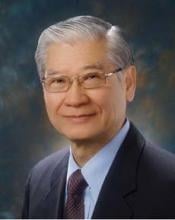
David T. Wong (born 1936) is a Hong Kong-born American neuroscientist who is best known for discovering the antidepressant drug fluoxetine, better known as Prozac.
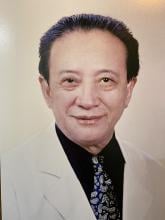
After witnessing death and suffering as a youth in his home village during World War II, Nguyễn Tài Thu (6 April 1931 – 14 February 2021) set his sights on alleviating pain by becoming a doctor. After studying Traditional Chinese Medicine in China in the 1950s, Thu returned to Vietnam to serve in military hospitals. Eventually, he became the country’s foremost practitioner of acupuncture, a technique he first learned by inserting needles into himself.

Filipino chemist and pharmacist Manuel A. Zamora (29 March 1870 – 9 July 1929) is best remembered for his discovery of the tiki-tiki formula to combat beriberi, a disease caused by Vitamin B1 deficiency.
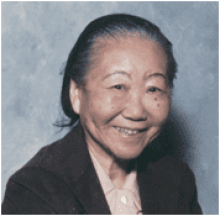
Tsai-Fan Yu (1911 – 2 March 2007) was a Chinese-American physician and researcher who was the first female full professor at Mount Sinai School of Medicine. She discovered that gout, a condition characterized by the painful inflammation of joints, was caused by elevated levels of uric acid in the bloodstream.
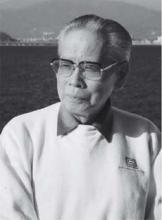
A Japanese surgeon, Tetsuzo Akutsu (20 August 1922 – 9 August 2007) built the first artificial heart capable of keeping an animal alive.
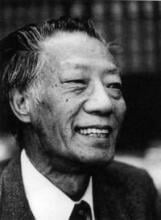
Min Chueh Chang (10 October 1908 – 5 June 1991) was a Chinese-American biologist who studied fertilization in mammalian reproduction.