

Materials
News

29 Jan 2023
Impart
The Kailasanatha Temple at Ellora is the largest monolithic rock-cut monument in the world. Considered to represent the victory of its patrons, the Rashtrakuta Dynasty, over the Chalukyas, the temple is widely considered remarkable for its size, standing at 32 metres high and 78 metres long.
24 Jan 2023
Osaka Metropolitan University
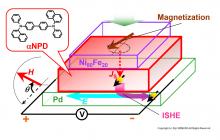
A research group, at the Osaka Metropolitan University Graduate School of Engineering, has succeeded in measuring spin transport in a thin film of αNPD molecules—a material well-known in organic light emitting diodes—at room temperature. They found that this thin molecular film has a spin diffusion length of approximately 62 nm, a length that could have practical applications in developing spintronics technology. In addition, while electricity has been used to control spin transport in the past, the thin molecular film used in this study is photoconductive, allowing spin transport control using visible light.

20 Jan 2023
Asia Research News
Overeating mechanism: why "eating just one chip"🍟 is impossible, Measuring hidden energy of gamma-ray bursts, Marine species that can adapt to ocean acidification & A rough start can lead to a strong bond, Read all in our first Editor's Choice of 2023. Plus our interview on what dengue vaccine approval in EU💉means for global dengue protection.
20 Jan 2023
Hokkaido University
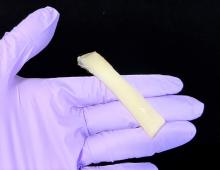
The natural abilities of squid tissues and the creativity of chemists combine to take hydrogel research in new directions.
19 Jan 2023
Tohoku University
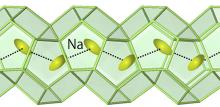
Controlling a material’s thermal conductivity can help insulate our homes, improve the performance of electronic devices, conserve power consumption in cars, and generate greater power efficiency. Now, a group of researchers has unveiled a novel mechanism that leads to further suppression of thermal conductivity in thermoelectric materials, something that will help develop new guidelines for producing high-performance thermoelectric materials.

13 Jan 2023
Asia Research News
Asia Research News monitors the latest research news in Asia. Some highlights that caught our attention this week are the growing trend of unique name pronunciations in Japan, an aquarium that can tell you about which fish you are looking at, and which professional baseballs are slipperiest.
13 Jan 2023
Tohoku University
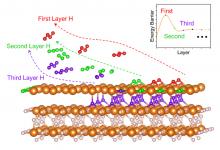
Magnesium hydride has long been touted for its potential to store large amounts of hydrogen, something essential if hydrogen is to play a role in powering a sustainable future. Yet, sluggish dehydrogenation kinetics and the high temperature required to decompose and produce hydrogen from the material have stymied its use. Now, researchers have identified why this is so, paving the way for future design guidelines and widespread commercial use.
09 Jan 2023
Newcastle University in Singapore
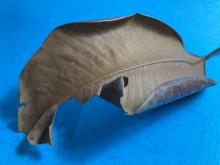
Scientists from five Asian universities, namely Vellore Institute of Technology (VIT), Universiti Putra Malaysia (UPM), Charles Darwin University, National Defence University of Malaysia, and Newcastle University in Singapore have completed and published a comprehensive survey of the complex nature of natural fibre reinforcing composite materials.

06 Jan 2023
Asia Research News
Asia Research News monitors the latest research news in Asia. Some highlights that caught our attention this week are how mysterious enormous space bubbles are formed, how drinking sweet drinks might contribute to hair loss, and a synthetic tissue created to give pigs back their erectile function.

01 Jan 2023
Impart
Rock-cut sculpture has independently arisen in various parts of the world, from subterranean structures in Malta in the Neolithic Period to tombs in ancient Egypt and the Phrygian kingdom in present-day Turkey. Read on to learn about India's earliest surviving examples of rock-cut sculpture.
29 Dec 2022
Daegu Gyeongbuk Institute of Science and Technology (DGIST)
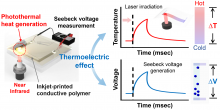
- A joint research team led by DGIST Professor Kang Hong-gi and KIST Dr. Chung Seung-jun develops high-speed powerless photothermal effect temperature sensor technology using a transparent polymer thermoelectric material printing process
- Opens up the possibility of direct high-resolution measurement of nano-photothermal phenomenon without interference of light, proposed for brain stimulation, cancer treatment, and ultra-fast PCR, etc.... Published online in ‘Materials Horizons’ in October
22 Dec 2022
City University of Hong Kong (CityUHK)
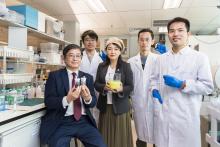
Clean hydrogen energy is a good alternative to fossil fuels and is critical for achieving carbon neutrality. Researchers around the world are looking for ways to enhance the efficiency and lower the cost of hydrogen production, particularly by improving the catalysts involved. Recently, a research team from City University of Hong Kong (CityU) developed a new, ultra-stable hydrogen evolution reaction (HER) electrocatalyst, which is based on two-dimensional mineral gel nanosheets and does not contain any precious metals. The catalyst can be produced in large scale and can help achieve a lower hydrogen price in the future.
21 Dec 2022
Institute of Industrial Science, The University of Tokyo (UTokyo-IIS)
Researchers at The University of Tokyo develop a simple but effective method of bonding polymers with galvanized steel, a material ubiquitous in the automobile industry, to cheaply and easily create a lightweight and durable product.
16 Dec 2022
Newcastle University in Singapore
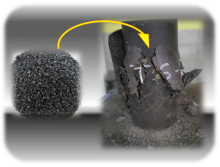
Scientists from Universiti Teknologi Malaysia have reported a novel way to produce reinforced concrete materials using tin slag aggregates, which is a by-product of the smelting process. This way of producing concrete enables tin slag to become a useful material, as well as reducing the amount of natural resources used, which in turn contribute to reducing carbon footprint in the construction industry.
16 Dec 2022
Tohoku University
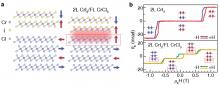
An international team of researchers has studied the heterostructures of layered antiferromagnets, painting a better picture of what happens when two different magnetic orders are combined.
16 Dec 2022
Tohoku University
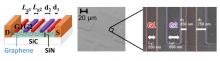
There is a small area on the electromagnetic spectrum occupied by terahertz waves, where conventional electronic devices struggle to operate. Still, engineering devices that can take advantage of terahertz waves are crucial for the development of future wireless technology such as 6G and 7G. Using a graphene transistor, a research team has successfully detected terahertz waves with a fast response and high sensitivity at room temperature.
15 Dec 2022
Tohoku University
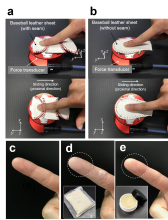
In baseball, even the smallest detail can tip the scales in favor of the batter or the pitcher. A recent publication has highlighted how rosin powder helps maintain a more constant friction when pitching, something that could bring about a fairer playing field in Major League Baseball.

15 Dec 2022
Asia Research News
Understanding how bats tolerate viral infections, Material separates water from...water, The virtual sense of touch polished to next level and COVID-19 negatively impacted early-careers and female researchers. Read all in the December's Editor's Choice.
13 Dec 2022
Osaka Metropolitan University
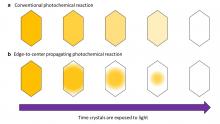
A research group at Osaka Metropolitan University has discovered that 2,5-distyrylpyrazine (DSP) crystals undergo a unique photoreaction. Normally, photoreactive color changes proceed uniformly throughout photomechanical molecular crystals, so that all parts of each crystal change color at the same time. However, when light shines evenly on a DSP crystal, the photoreaction propagates from edge to center, deviating from conventional photochemistry models. The group found that this phenomenon was caused by a surface effect and a cooperative effect, which make reactivity extremely high for molecules at the crystal’s edge and those adjacent to molecules that have already changed color.
09 Dec 2022
National Institute for Materials Science (NIMS)
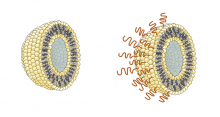
A new coating for tiny packages called liposomes could allow them to carry vaccines and drugs into and around the body more safely.

08 Dec 2022
Tohoku University
Quinine and various drugs based on its chemical structure have been used to treat malaria for centuries. But parasites resistant to antimalarial drugs are becoming apparent. To pave the way for future medicine development, an efficient way to synthesize quinine was needed. And now a research team from Tohoku University has achieved just that.
02 Dec 2022
Tohoku University
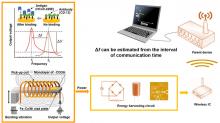
What if you could tell if your surroundings contained COVID-19 particles or droplets the moment they or you entered the vicinity? This is now closer to reality. A research group has engineered a battery-less, self-powering device that can wirelessly transmit the detection of coronavirus in the air.
02 Dec 2022
Tohoku University
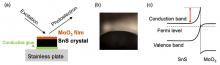
Tin sulfide (SnS) solar cells have shown immense promise in the rush to develop more environmentally friendly thin-film solar cells. Yet for years SnS solar cells have struggled to achieve a high conversion efficiency. To overcome this, a SnS interface exhibiting large band bending was necessary, something a research group has recently achieved.

01 Dec 2022
National Institute for Materials Science (NIMS)
Machine learning and robotic process automation combine to speed up and simplify a process used to determine crystal structures.
01 Dec 2022
Tohoku University
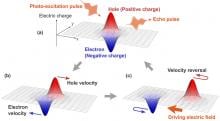
Precise control of quantum systems, such as quantum computers, is of great importance for modern quantum science. One way this has been done is via spin echoes. A research group has discovered a new type of echo, labelling them “energy-band echoes.”

30 Nov 2022
Newcastle University in Singapore
Scientists from 4 Asian universities, namely Sri Ramakrishna Engineering College, Universiti Teknologi Malaysia, Saveetha Institute of Medical and Technical Sciences, and Newcastle University in Singapore have reported a novel way to produce lightweight reinforced resin composite materials using clay particles with the potential to lower carbon emission, compared to conventional carbon particles.
28 Nov 2022
Tohoku University
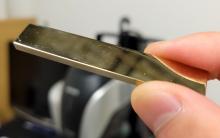
Most metal and alloys possess a high elastic strain rate at the micro level. But this changes when they are in their bulk shape, as they are for everyday engineering applications. Now, a research group has developed a bulk copper-based alloy boasting the largest tensile elastic strain at room temperature to date.

20 Nov 2022
Impart
Practised in only three countries in the world, the process of making double Ikat is intricate and demands a degree of mathematical precision while weaving the textile on the loom.

15 Nov 2022
City University of Hong Kong (CityUHK)
A multinational team of researchers, co-led by a City University of Hong Kong (CityU) physicist, has found that a novel metallic crystal displays unusual electronic behaviour on its surface, thanks to the crystal’s unique atomic structure. Their findings open up the possibility of using this material to develop faster and smaller microelectronic devices.
09 Nov 2022
Institute for Integrated Cell-Material Sciences (iCeMS) at Kyoto University
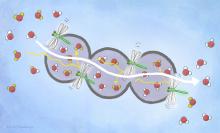
A flipping action in a porous material facilitates the passage of normal water to separate it out from heavy water.
Events
Sorry, no events coming up for this topic.
Researchers
Sorry, no researchers coming up for this topic.
- « first
- ‹ previous
- 1
- 2
- 3
- 4
Giants in history

Abdus Suttar Khan (c. 1941 – 31 January 2008) was a Bangladeshi engineer who spent a significant part of his career conducting aerospace research with NASA, United Technology and Alstom.

Lin Lanying (7 February 1918 – 4 March 2003) was a Chinese material engineer remembered for her contributions to the field of semiconductor and aerospace materials. Lanying was born into a family who did not believe in educating girls and she was not allowed to go to school.