
Technology
News

19 Feb 2018
Asia Research News
Machines are now intelligent, robots are ‘stealing jobs’, and your next meeting might be led by a bot. How will AI disrupt your life?
16 Feb 2018
Asia Research News
In a recent study, researchers from the Indian Institute of Science, Bengaluru, have designed a novel approach to trap and manoeuvre objects as small as 100 nm.
14 Feb 2018
Korea Advanced Institute of Science and Technology (KAIST)
Innovative nanosensors improve detection of disease biomarkers in exhaled breath.

14 Feb 2018
Qatar University
Qatar University (QU) and The University of Newcastle – Australia signed on February 11 a memorandum of understanding (MoU) to strengthen their collaboration and cooperate on the design and development of advanced materials for energy and environmental applications.
14 Feb 2018
Asia Research News
The IoT Asia 2018 conference has been designed to converge perspectives and learnings from key players in the industry, with focus on Smart Cities and Industrial IoT.
13 Feb 2018
Asia Research News
2,000 educators, policymakers & technology leaders assemble to assess the future of Filipino education
09 Feb 2018
Asia Research News
Synthesis of a water-soluble warped nanographene and its application for photo-induced cell death
08 Feb 2018
Tohoku University
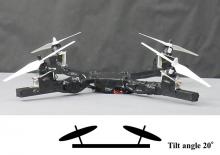
Stability of unmanned aerial vehicles in heavy winds can be improved through rotor placement and angle, according to a team from Tohoku University and Kanazawa Institute of Technology.
08 Feb 2018
Electronics and Telecommunications Research Institute(ETRI)
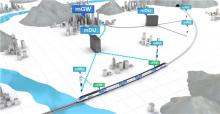
A mobile hotspot network will enable riders on fast-moving trains to stream HD videos without interruption while underground, thanks in part to a newly-developed mmWave wireless backhaul technology. The first commercial service using this technology will debut later this year.
08 Feb 2018
Institute of Transformative Bio-Molecules (WPI-ITbM), Nagoya University
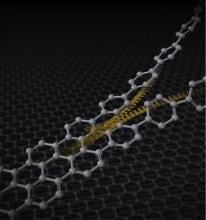
A fast and efficient method for graphene nanoribbon synthesis
Scientists at Nagoya University have now developed a fast way to form nanographenes in a controlled fashion.

08 Feb 2018
Asia Research News
EmTech Asia explores future of life, humanity and economy
07 Feb 2018
Asia Research News
Research development arm attracts leading industry talent with new hires.
07 Feb 2018
Asia Research News
Discover the latest advances in AI with NASA, Alibaba, HSBC, DHL, Mercedes-Benz and more this June - Offer ends soon.
05 Feb 2018
King Abdullah University of Science and Technology (KAUST)
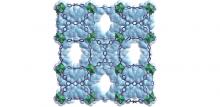
A metal-organic framework that can take up twice its weight in water and then release it when humidity falls.
05 Feb 2018
King Abdullah University of Science and Technology (KAUST)
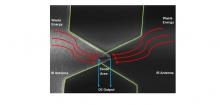
Innovative diode design uses ultrafast quantum tunneling to harvest infrared energy from the environment.
05 Feb 2018
King Abdullah University of Science and Technology (KAUST)
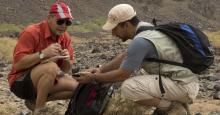
Genetic analyses of a desert bacterium show it could help to improve crop production in arid lands.
03 Feb 2018
Hokkaido University
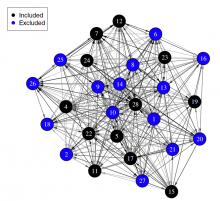
A new method could help researchers develop unbiased indicators for assessing complex systems such as population health.
01 Feb 2018
National Institute for Materials Science (NIMS)
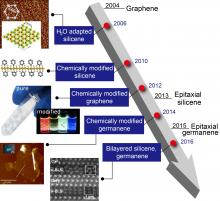
Developing 2D materials similar to graphene remains a challenge, but chemists are making progress — moving closer to smaller and faster electronics and photonics.
31 Jan 2018
Hokkaido University
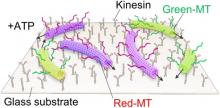
A team of researchers from Hokkaido University and Kansai University has developed DNA-assisted molecular robots that autonomously swarm in response to chemical and physical signals, paving the way for developing future nano-machines.
30 Jan 2018
King Abdullah University of Science and Technology (KAUST)
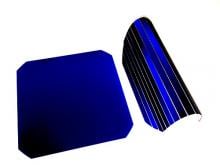
Ultrathin, rigid silicon segments that are wired through interdigitated metal contacts produce ultraflexible high-performance solar cells.

29 Jan 2018
Asia Research News
The new Japanese facility, to be ready by the year’s end, will be Asia’s first detector and the world’s first below ground

29 Jan 2018
Asia Research News
Natural evolution has given us opposable thumbs, the ability to walk fully upright and brains that can reason. Now, scientists are poised to revolutionise fields from drug discovery to goods manufacturing by further harnessing evolution’s power in the laboratory.

26 Jan 2018
Electronics and Telecommunications Research Institute(ETRI)
Researchers in South Korea have developed Aldebaran5, a processor for self-driving cars that provides high computing power as well as safety mechanisms to ensure reliability for automotive applications while exhibiting industry leading power efficiency in a tiny, smaller-than-a-nail-head size.
25 Jan 2018
Asia Research News
People should be able to read scientists’ research papers for free, and governments and universities should evaluate researchers based on the merits on their work, and not by which journals their findings are published in.

25 Jan 2018
Asia Research News
The standard unit for mass will have a new definition before the year is out
24 Jan 2018
Tohoku University
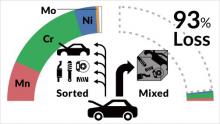
Detailed sorting of scrap car parts could boost recycling rates to over 97%, saving billions spent on new materials and slashing associated greenhouse gas emissions.
24 Jan 2018
Hokkaido University
Joint press release by Hitachi, Ltd. and Hokkaido University
Hitachi Receives FDA 510(k) Clearance for Real Time Image Gating Motion Management for its Proton Therapy System
23 Jan 2018
Asia Research News
The Conference on the Emerging Technologies That Matter

22 Jan 2018
The Hong Kong Polytechnic University (PolyU)
The Hong Kong Polytechnic University entered into a licensing arrangement with Vision Science and Technology Co. Ltd. (VST), a local start-up supported by HKSTP-PolyU Tech Incubation Fund and PolyU Tech Launchpad Fund, for commercializing PolyU’s Defocus Incorporated Soft Contact lens for myopia control in children.

22 Jan 2018
King Abdullah University of Science and Technology (KAUST)
Geophysical modeling of one of the world’s most important fossil sites reveals the history of the site where early humankind evolved.
Giants in history

Turkish astrophysicist Dilhan Eryurt (29 November 1926 – 13 September 2012) conducted research on how the sun affects environmental conditions on the moon.
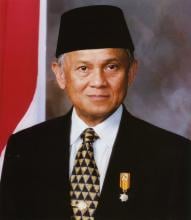
Bacharuddin Jusuf Habibie (25 June 1936 – 11 September 2019) was an Indonesian engineer who was President of Indonesia from 1998 to 1999.

Physicist Narinder Singh Kapany (31 October 1926 – 4 December 2020) pioneered the use of optical fibres to transmit images, and founded several optical technology companies. Born in Punjab, India, he worked at a local optical instruments factory before moving to London for PhD studies at Imperial College. There, he devised a flexible fibrescope to convey images along bundles of glass fibres.

Sir Mokshagundam Srinivasa Shastry Vishveshwarayya (15 September 1860 – 14 April 1962) is widely regarded as India’s most outstanding engineer. In a career that spanned almost his entire life, Vishveshwarayya played a pivotal role in several engineering projects, including designing the Krishnarajasagara dam that is still the source of irrigation and drinking water for parts of Karnataka today.
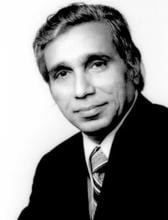
Fazlur Rahman Khan (3 April 1929 – 27 March 1982) was a Bangladeshi-American structural engineer and architect who invented the tube principle, which formed the basis for modern skyscraper design.
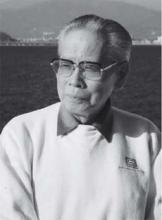
A Japanese surgeon, Tetsuzo Akutsu (20 August 1922 – 9 August 2007) built the first artificial heart capable of keeping an animal alive.

Lin Lanying (7 February 1918 – 4 March 2003) was a Chinese material engineer remembered for her contributions to the field of semiconductor and aerospace materials. Lanying was born into a family who did not believe in educating girls and she was not allowed to go to school.

Gregorio Y. Zara (8 March 1902 – 15 October 1978) was a Filipino engineer and physicist best remembered for inventing the first two-way video telephone. Zara’s video telephone invention enabled the caller and recipient to see each other while conversing, laying the foundation for video-conferencing