
Technology
News

25 Oct 2017
Ulsan National Institute of Science and Technology (UNIST)
A design team in South Korea has revealed a new self-charging electric bike design concept “Hybrid Module Mobility”.

25 Oct 2017
Ulsan National Institute of Science and Technology (UNIST)
A new, advanced waterless energy-producing toilet system ‘BeeVi Toilet' developed by researchers in South Korea.
24 Oct 2017
Asia Research News
The fourth edition of the Asia Clean Energy Summit (ACES) opened today at the Sands Expo and Convention Centre, Marina Bay Sands in Singapore.
24 Oct 2017
Asia Research News
Navigating a New Energy Landscape

23 Oct 2017
The Agency for Science, Technology and Research (A*STAR)
A simple, low cost technique that uses common materials could lead to significantly cheaper solar cells.

20 Oct 2017
The World Academy of Sciences (TWAS)
It will be vital to support and sustain a global culture of responsibility and integrity in research and innovation and to engage in an open dialogue with stakeholders.
19 Oct 2017
Tohoku University
Professor Kazuya Yoshida and HAKUTO members prepare for the final push to land a rover on the moon in the Google Lunar XPRIZE challenge.
13 Oct 2017
Asia Research News
Taylor & Francis and the Japan Society of Civil Engineers (JSCE) are pleased to announce their new publishing partnership from 2018.
12 Oct 2017
Asia Research News
Detailed Programme of IFSS now available online
09 Oct 2017
Asia Research News
The Clean Energy Leaders Dialogue is a high-level forum bringing together leaders in the regional solar and renewables space. The Dialogue witnesses top utility leaders, PV manufacturers, developers and policy professionals exchanging best practices, while debating trends and solutions in the clean energy industry.
06 Oct 2017
Asia Research News
This session brings the adopters of solar technology together with companies providing technologies and solutions as well as case studies of successful implementation and latest innovations in this space.

05 Oct 2017
King Abdullah University of Science and Technology (KAUST)
A vibration-driven logic gate could form the basis for the next generation of efficient, low-power computers.
05 Oct 2017
The Agency for Science, Technology and Research (A*STAR)
A new data structure developed at A*STAR allows rapid tracking and policing of data flowing in and out of a network.
05 Oct 2017
The Agency for Science, Technology and Research (A*STAR)
The optimum drill geometry for creating deep, narrow holes is determined using a computational model.
05 Oct 2017
The Agency for Science, Technology and Research (A*STAR)
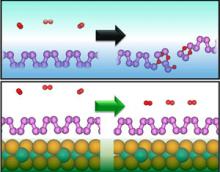
Chemically stabilizing atomically flat materials improves their potential for commercial application.
03 Oct 2017
Asia Research News
ASEAN’s Largest Green Technology Platform to Showcase Latest Green Innovations
28 Sep 2017
The Hong Kong Polytechnic University (PolyU)
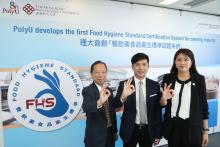
The Hong Kong Polytechnic University (PolyU) has applied its expertise in food safety to develop the comprehensive Food Hygiene Standard Certification System (FHSCS).

28 Sep 2017
King Abdullah University of Science and Technology (KAUST)
A novel type of electronic component made from a blend of polymer materials could enable more effective circuitry.
28 Sep 2017
The Agency for Science, Technology and Research (A*STAR)
The theoretical discovery of transparent particles that break the previously accepted limit of visibility opens a new door in the search for perfect transparency.
28 Sep 2017
Asia Research News
Asia Power Week Conference & Exhibition Draws over 8,500 Industry Professionals from across Asia
26 Sep 2017
The Hong Kong Polytechnic University (PolyU)
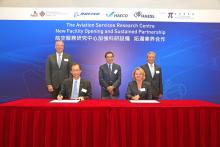
The Aviation Services Research Centre (ASRC), co-founded by The Hong Kong Polytechnic University (PolyU) and The Boeing Company (Boeing), enters into a new phase today, with the opening of the newly built centre in Block X of the PolyU campus.
26 Sep 2017
King Abdullah University of Science and Technology (KAUST)
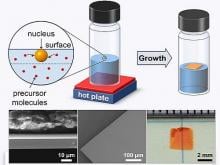
New evidence of surface-initiated crystallization may improve the efficiency of printable photovoltaic materials.
22 Sep 2017
Asia Research News
Rethinking Energy; Navigating Change at the 10th edition of Singapore International Energy Week
22 Sep 2017
Ulsan National Institute of Science and Technology (UNIST)
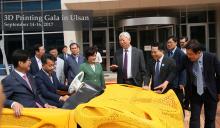
South Korea's Ulsan National Institute of Science and Technology (UNIST) held a 3D printing gala to showcase the future of 3D printing.
22 Sep 2017
Ulsan National Institute of Science and Technology (UNIST)
South Korea's Ulsan National Institute of Science and Technology (UNIST) has embarked on a research project to develop a new type of tracking device, capable of monitoring the migration routes of wild birds.
20 Sep 2017
Asia Research News
Warm response at launch event that kick starts inaugural Intellectual Property-driven open innovation competition.
20 Sep 2017
King Abdullah University of Science and Technology (KAUST)
Insight into the thermal decomposition of a potential fuel additive shows it could promote cleaner and more efficient combustion.
20 Sep 2017
Institute of Transformative Bio-Molecules (WPI-ITbM), Nagoya University
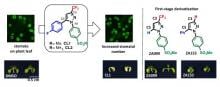
Discovery of small molecules that increases the number of stomata on plant leaves
19 Sep 2017
Asia Research News
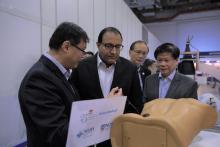
The Singapore based team have successfully created a solution to simplify the complicated process of removing large or complex kidney stones.
19 Sep 2017
Asia Research News
Enterprises get ready to tap on the latest technologies from around the globe at TechInnovation 2017
Giants in history

Turkish astrophysicist Dilhan Eryurt (29 November 1926 – 13 September 2012) conducted research on how the sun affects environmental conditions on the moon.
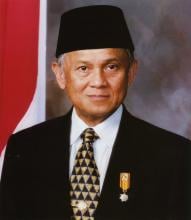
Bacharuddin Jusuf Habibie (25 June 1936 – 11 September 2019) was an Indonesian engineer who was President of Indonesia from 1998 to 1999.
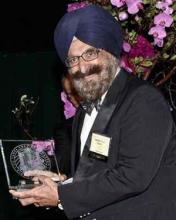
Physicist Narinder Singh Kapany (31 October 1926 – 4 December 2020) pioneered the use of optical fibres to transmit images, and founded several optical technology companies. Born in Punjab, India, he worked at a local optical instruments factory before moving to London for PhD studies at Imperial College. There, he devised a flexible fibrescope to convey images along bundles of glass fibres.
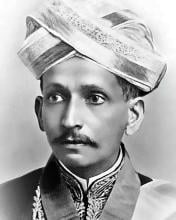
Sir Mokshagundam Srinivasa Shastry Vishveshwarayya (15 September 1860 – 14 April 1962) is widely regarded as India’s most outstanding engineer. In a career that spanned almost his entire life, Vishveshwarayya played a pivotal role in several engineering projects, including designing the Krishnarajasagara dam that is still the source of irrigation and drinking water for parts of Karnataka today.
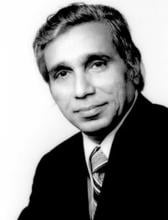
Fazlur Rahman Khan (3 April 1929 – 27 March 1982) was a Bangladeshi-American structural engineer and architect who invented the tube principle, which formed the basis for modern skyscraper design.
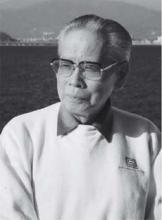
A Japanese surgeon, Tetsuzo Akutsu (20 August 1922 – 9 August 2007) built the first artificial heart capable of keeping an animal alive.

Lin Lanying (7 February 1918 – 4 March 2003) was a Chinese material engineer remembered for her contributions to the field of semiconductor and aerospace materials. Lanying was born into a family who did not believe in educating girls and she was not allowed to go to school.

Gregorio Y. Zara (8 March 1902 – 15 October 1978) was a Filipino engineer and physicist best remembered for inventing the first two-way video telephone. Zara’s video telephone invention enabled the caller and recipient to see each other while conversing, laying the foundation for video-conferencing