
Technology
News
30 May 2017
The Hong Kong Polytechnic University (PolyU)
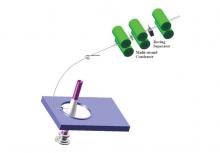
New spinning method and system for 100% fine worsted yak yarns and fabrics.
26 May 2017
Daegu Gyeongbuk Institute of Science and Technology (DGIST)
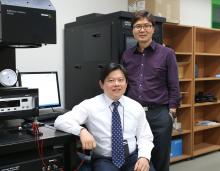
A new oxygen-deficient titanium dioxide prepared with Mg reduction method drastically improves the carbon dioxide conversion efficiency up to three times the efficiency of existing photocatalyst. It is expected to be applied for carbon dioxide resources and reduction technology.
25 May 2017
Zelinsky Institute of Organic Chemistry, Russian Academy of Sciences
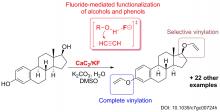
Acetylene is one of the primary starting materials for chemical synthesis. However, acetylene is known as gas, which is highly flammable, dangerous and difficult to use in regular research laboratories. A novel solid acetylene regent was developed to make chemical applications safe and easy to use (doi: 10.1039/c7gc00724h).

25 May 2017
The Hong Kong Polytechnic University (PolyU)
The Hong Kong Polytechnic University (PolyU) has brought glory to Hong Kong by winning three Global Innovation Awards at the TechConnect World Conference and Expo 2017 (TechConnect World). It is the first time for a Hong Kong higher education institution to receive the award. PolyU is also the only awardee from Hong Kong.

25 May 2017
Korea Advanced Institute of Science and Technology (KAIST)
Korea Advanced Institute of Science and Technology (KAIST)'s undergraudate organization, International Conference for Integration of Science, Techology and Science (ICISTS) will convene its annual conference from July 31 to Aug. 4 at the KAIST Daejeon campus. This year's theme is "Draw the Web: Interactions in Society."
25 May 2017
Nagoya University
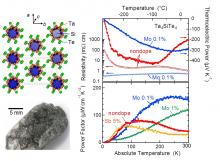
Researchers at Nagoya University report high thermoelectric powers in one-dimensional crystals for practical low-temperature cooling.

25 May 2017
Asia Research News
Winning products demonstrate amazing ingenuity and design qualities
23 May 2017
The Hong Kong Polytechnic University (PolyU)
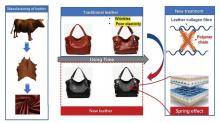
A cross-linkable spring-like polymer finishing agent inserted into calfskin leather for high elastic recovery performance.
22 May 2017
The Hong Kong Polytechnic University (PolyU)
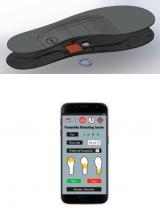
Researchers at The Hong Kong Polytechnic University (PolyU) have developed a mobile biofeedback device for footstrike pattern modification for injury prevention and rehabilitation in runners.
22 May 2017
Asia Research News
Singapore Deputy Prime Minister Teo Chee Hean to deliver Singapore Energy Lecture at 10th edition of Singapore International Energy Week

19 May 2017
Korea Advanced Institute of Science and Technology (KAIST)
A Korean research team has developed semi-transparent perovskite solar cells that could be great candidates for solar windows.
19 May 2017
Hokkaido University
Satellite success is a big step forward for the Philippines and for broader efforts to establish a microsatellite consortium across Asia.

19 May 2017
The Agency for Science, Technology and Research (A*STAR)
A user-controlled file security scheme makes it possible to instantly revoke access to files hosted on Internet cloud servers.
18 May 2017
The Agency for Science, Technology and Research (A*STAR)
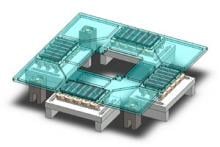
A new magnetic system could precisely control the movement of levitating objects for many manufacturing applications.
18 May 2017
Asia Research News
MIT Technology Review calls for nominations from innovators in Southeast Asia, Australia, New Zealand and Taiwan for the 2018 Innovators Under 35 Asia list.
16 May 2017
The Agency for Science, Technology and Research (A*STAR)
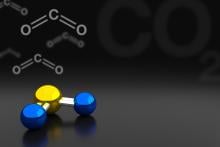
A single-step process transforms carbon dioxide into star-shaped molecules that are promising building blocks for useful polymeric materials.

15 May 2017
Daegu Gyeongbuk Institute of Science and Technology (DGIST)
A revolutionary design mimics the rowing action of the cilia on single-celled Paramecium, demonstrating much faster movement than conventional microrobots.

15 May 2017
The Agency for Science, Technology and Research (A*STAR)
Roll-to-roll printing of a conductive metal ink offers an inexpensive, high performance alternative to today’s touchscreen technology.
12 May 2017
Asia Research News
Hear from UNDP, Red Cross, WFP, USAID and BBC Media Action at Aid & Development Asia Summit 2017
11 May 2017
Institute of Transformative Bio-Molecules (WPI-ITbM), Nagoya University
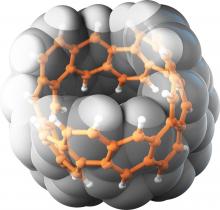
Chemists have tried to synthesize carbon nanobelts for more than 60 years, but none have succeeded until now. A team at Nagoya University reported the first organic synthesis of a carbon nanobelt in Science. Carbon nanobelts are expected to serve as a useful template for building carbon nanotubes and open a new field of nanocarbon science.
10 May 2017
National Institute for Materials Science (NIMS)
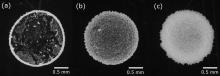
Cellulose nanofibers can help particles in ink and printed electronics disperse evenly, rather than spread apart like dried coffee rings.

09 May 2017
Universiti Putra Malaysia (UPM)
A computer model that can ‘learn’ like a human brain could help water resource managers reduce damage in cases of extreme flooding.

09 May 2017
The Agency for Science, Technology and Research (A*STAR)
Harnessing the potential of big data to improve the security of Internet of Things devices.
09 May 2017
The Agency for Science, Technology and Research (A*STAR)
Study into spirals of magnetic spin showcases potential of layered materials for future data storage.
08 May 2017
The Hong Kong Polytechnic University (PolyU)
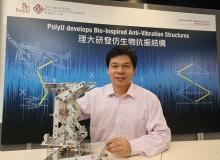
The Department of Mechanical Engineering of The Hong Kong Polytechnic University (PolyU) has developed a novel bio-inspired nonlinear anti-vibration system that can significantly reduce vibration in various mechanic systems.

08 May 2017
Tohoku University
The Tohoku University research group of Professor Keiichi Edamatsu and Postdoctoral fellow Naofumi Abe has demonstrated dynamically and statically unpolarized single-photon generation using diamond.
08 May 2017
The Hong Kong Polytechnic University (PolyU)
The Hong Kong Polytechnic University (PolyU) co-hosted a United Nations-supported international conference recently on the challenges and opportunities of ocean and coastal sustainable development under the United Nations Sustainable Development Goals (UNSDG) Agenda.
08 May 2017
Nagoya University
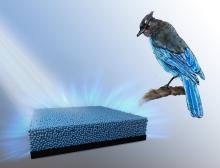
A Nagoya University-led research team mimics the rich color of bird plumage and demonstrates new ways to control how light interacts with materials.
08 May 2017
Asia Research News
Exploiting the Potential of Technology towards Greater Public Service Delivery
05 May 2017
The Hong Kong Polytechnic University (PolyU)
World-renowned innovators from higher education, government and business sectors will gather in an international summit in Hong Kong this summer to explore how to enhance universities’ impacts through innovative research and teaching for the benefit of the society and mankind.
Giants in history

Turkish astrophysicist Dilhan Eryurt (29 November 1926 – 13 September 2012) conducted research on how the sun affects environmental conditions on the moon.
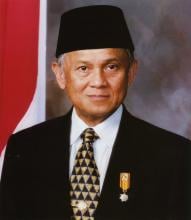
Bacharuddin Jusuf Habibie (25 June 1936 – 11 September 2019) was an Indonesian engineer who was President of Indonesia from 1998 to 1999.

Physicist Narinder Singh Kapany (31 October 1926 – 4 December 2020) pioneered the use of optical fibres to transmit images, and founded several optical technology companies. Born in Punjab, India, he worked at a local optical instruments factory before moving to London for PhD studies at Imperial College. There, he devised a flexible fibrescope to convey images along bundles of glass fibres.

Sir Mokshagundam Srinivasa Shastry Vishveshwarayya (15 September 1860 – 14 April 1962) is widely regarded as India’s most outstanding engineer. In a career that spanned almost his entire life, Vishveshwarayya played a pivotal role in several engineering projects, including designing the Krishnarajasagara dam that is still the source of irrigation and drinking water for parts of Karnataka today.
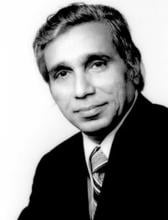
Fazlur Rahman Khan (3 April 1929 – 27 March 1982) was a Bangladeshi-American structural engineer and architect who invented the tube principle, which formed the basis for modern skyscraper design.
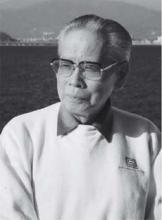
A Japanese surgeon, Tetsuzo Akutsu (20 August 1922 – 9 August 2007) built the first artificial heart capable of keeping an animal alive.

Lin Lanying (7 February 1918 – 4 March 2003) was a Chinese material engineer remembered for her contributions to the field of semiconductor and aerospace materials. Lanying was born into a family who did not believe in educating girls and she was not allowed to go to school.

Gregorio Y. Zara (8 March 1902 – 15 October 1978) was a Filipino engineer and physicist best remembered for inventing the first two-way video telephone. Zara’s video telephone invention enabled the caller and recipient to see each other while conversing, laying the foundation for video-conferencing