

Technology
News
14 Feb 2017
Institute for Integrated Cell-Material Sciences (iCeMS) at Kyoto University
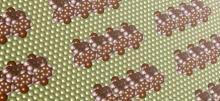
A new computational method may improve the control of nanomaterial fabrication.
14 Feb 2017
Asia Research News
Over 500 new inventions, ideas and designs to commercialize and invest in.
08 Feb 2017
Ulsan National Institute of Science and Technology (UNIST)
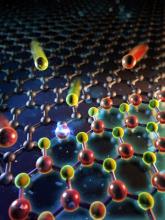
World’s thinnest oxide semiconductor is just one atom thick, thanks to a new method developed by a research team at Ulsan National Institute of Science and Technology (UNIST) in South Korea. This may open up new possibilities for thin, transparent, and flexible electronic devices, such as ultra-small sensors.
08 Feb 2017
Nagoya University
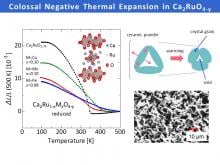
Researchers based at Nagoya University discover ceramic material that contracts on heating by more than twice the previous record-holding material.
07 Feb 2017
King Abdullah University of Science and Technology (KAUST)
The sequencing of a high-quality quinoa genome by a KAUST-led team supports global food security and the production of crops to feed millions of people - FOR EMBARGOED RELEASE – Wednesday, February 8, 2017, 6:00 p.m. GMT
07 Feb 2017
Asia Research News
2017 IoTE expects 500+ exhibitors throughout the IoT industry chain, 60,000+ professional visitors, system integrators and end users from 20 Countries and Areas. The three-day event will also include 10 conferences and summits on IoT technology and application.
07 Feb 2017
Asia Research News
Inventors and Innovators: Get your ideas noticed at MTE 2017.
03 Feb 2017
Asia Research News
On 21 February at SMX Convention Center, Manila, EduTECH Philippines 2017 will kickoff with an opening address on the future of education by Guest-of-Honor, Senator Paolo Benigno ‘Bam’ Aquino IV, one of Philippine’s most influential educational advocates.
01 Feb 2017
Tohoku University
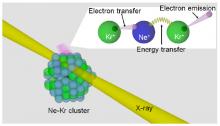
Researchers led by Kiyoshi Ueda of Tohoku University have investigated what x-rays in matter really do and identified a new mechanism of producing low-energy free electrons. Since the low-energy electrons cause damage to the matter, the identified process might be important in understanding and designing radiation treatment of illnesses.

27 Jan 2017
Korea Advanced Institute of Science and Technology (KAIST)
With the addition of holographic diffusers or frosted glasses to wavefront modulators, Korea Advanced Institute of Science and Technology (KAIST) researchers offer a simple and practical solution to significantly enhance the performance of 3D dynamic holographic displays by 2,600 times.
26 Jan 2017
The Agency for Science, Technology and Research (A*STAR)
A machine-learning program uses land-use and amenities data to predict public transport use in Singapore.
26 Jan 2017
The Agency for Science, Technology and Research (A*STAR)
Low-cost iron hydroxide coatings with unique fin-like shapes can clean heavily contaminated water with a simple dipping procedure.
23 Jan 2017
Asia Research News
The Centre for Science & Technology of the Non-Aligned and Other Developing Countries jointly with the Amity University, UP, India, Dubai Campus announces the organisation of an International Workshop on ‘Trends in Solar Power Generation and Energy Harvesting’ in Dubai during 27-29 March 2017.

23 Jan 2017
Korea Advanced Institute of Science and Technology (KAIST)
Korea Advanced Institute of Science and Technology (KAIST) opened its Humanoid Robot Research Center on January 19 at the KAIST Institute.

22 Jan 2017
Ulsan National Institute of Science and Technology (UNIST)
UNIST signs cooperation MoU with KICT, KOTI, KIMM, KERI, ETRI, KRRI, and Hanyang University to accelerate the realization of futuristic transportation system, "Hyper Tube Express".
20 Jan 2017
Korea Advanced Institute of Science and Technology (KAIST)
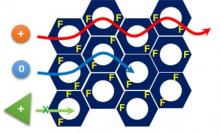
A Korean research team has developed water treatment adsorbent that can selectively remove water-soluble micromolecules. It is also cheap, easily synthesized and renewable.

20 Jan 2017
Universiti Putra Malaysia (UPM)
A research team in Malaysia has invented a ‘dekoponix rack’ and a ‘home deco’ that will enable high-rise building residents to plant vegetables and other greens at home.

19 Jan 2017
King Abdullah University of Science and Technology (KAUST)
The dynamic three-dimensional organization of chromosomal structure can profoundly influence plant gene expression
17 Jan 2017
Korea Advanced Institute of Science and Technology (KAIST)
Korea Advanced Institute of Science and Technology (KAIST) representatives will join high profile, multi-stakeholder dialogues with global leaders across the world to discuss higher education, science, and technological innovation.
17 Jan 2017
Asia Research News
With the event anchored in Singapore, IoT Asia continues to chart the future for IoT in Asia by accurately anticipating the needs and concerns of the rapidly evolving industry.
16 Jan 2017
Daegu Gyeongbuk Institute of Science and Technology (DGIST)
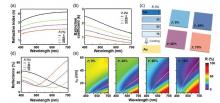
DGIST research team developed a technology to coat metal with several nanometers of semiconducting materials. This technology can be applied to solar cells, wearable devices, displays, and the like.

15 Jan 2017
The Agency for Science, Technology and Research (A*STAR)
Theoretical model reveals how droplets grow around tiny particles on a surface.

15 Jan 2017
The Agency for Science, Technology and Research (A*STAR)
Rapid and cheap on-the-spot diagnoses for diseases such as tuberculosis and cancer are a step closer thanks to a new modular valve for microfluidic chips.
10 Jan 2017
Asia Research News
International Exhibition & Conference on the Internet of Things - Transforming Businesses, Government and Societies
09 Jan 2017
King Abdullah University of Science and Technology (KAUST)
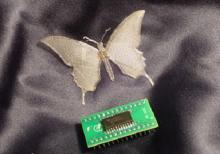
A process developed by researchers in Saudi Arabia prints high-performance silicon-based computers on to soft, sticker-like surfaces that can be attached anywhere.
09 Jan 2017
Korea Advanced Institute of Science and Technology (KAIST)
South Korea's undergraduate students win the grand prize at the Innovative Design Contest 2016 at the 16th Asia Design Engineering Workshop (A-DEWS).
09 Jan 2017
The Agency for Science, Technology and Research (A*STAR)
Streaming video over mobile networks could be greatly improved by smart prioritization of visually important data.
09 Jan 2017
The Agency for Science, Technology and Research (A*STAR)
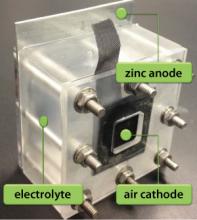
Three-layer nanoparticle catalysts improve zinc-air batteries.
04 Jan 2017
Hokkaido University
Researchers have verified that the mere presence of a cell phone or smartphone can adversely affect our cognitive performance, particularly among infrequent internet users.
Giants in history

Turkish astrophysicist Dilhan Eryurt (29 November 1926 – 13 September 2012) conducted research on how the sun affects environmental conditions on the moon.
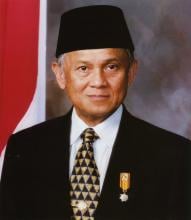
Bacharuddin Jusuf Habibie (25 June 1936 – 11 September 2019) was an Indonesian engineer who was President of Indonesia from 1998 to 1999.
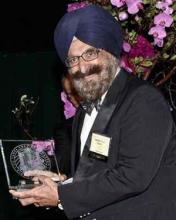
Physicist Narinder Singh Kapany (31 October 1926 – 4 December 2020) pioneered the use of optical fibres to transmit images, and founded several optical technology companies. Born in Punjab, India, he worked at a local optical instruments factory before moving to London for PhD studies at Imperial College. There, he devised a flexible fibrescope to convey images along bundles of glass fibres.
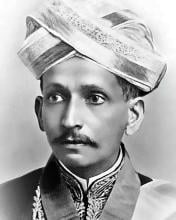
Sir Mokshagundam Srinivasa Shastry Vishveshwarayya (15 September 1860 – 14 April 1962) is widely regarded as India’s most outstanding engineer. In a career that spanned almost his entire life, Vishveshwarayya played a pivotal role in several engineering projects, including designing the Krishnarajasagara dam that is still the source of irrigation and drinking water for parts of Karnataka today.
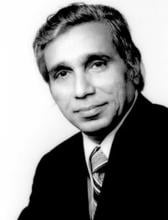
Fazlur Rahman Khan (3 April 1929 – 27 March 1982) was a Bangladeshi-American structural engineer and architect who invented the tube principle, which formed the basis for modern skyscraper design.
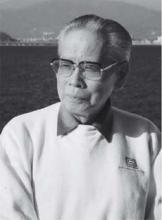
A Japanese surgeon, Tetsuzo Akutsu (20 August 1922 – 9 August 2007) built the first artificial heart capable of keeping an animal alive.

Lin Lanying (7 February 1918 – 4 March 2003) was a Chinese material engineer remembered for her contributions to the field of semiconductor and aerospace materials. Lanying was born into a family who did not believe in educating girls and she was not allowed to go to school.

Gregorio Y. Zara (8 March 1902 – 15 October 1978) was a Filipino engineer and physicist best remembered for inventing the first two-way video telephone. Zara’s video telephone invention enabled the caller and recipient to see each other while conversing, laying the foundation for video-conferencing