

Technology
News
07 Apr 2017
Institute of Transformative Bio-Molecules (WPI-ITbM), Nagoya University
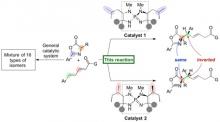
Minimal structural change in catalyst enables stereochemical inversion for the synthesis of amino acid derivatives

06 Apr 2017
University of Malaya
A hybrid ‘eco-roof’ design in Malaysia combines five existing energy-saving technologies into a single system.

06 Apr 2017
The Agency for Science, Technology and Research (A*STAR)
Social networking sites could be used to monitor and respond to global disease outbreaks.
05 Apr 2017
The Agency for Science, Technology and Research (A*STAR)
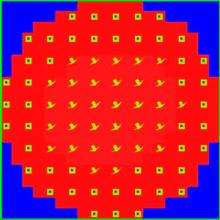
Controlling memory with electric fields enables faster and more energy-efficient computing.

05 Apr 2017
The Agency for Science, Technology and Research (A*STAR)
Superimposing two lattices of similar periods creates structures that researchers can design to control and localize light.

04 Apr 2017
Universiti Malaysia Sarawak
A practical anti-phishing tool for the Internet can secure electronic communications, enhance confidence in e-commerce sites, and reduce consumer and business financial losses.

04 Apr 2017
The Hong Kong Polytechnic University (PolyU)
The Hong Kong Polytechnic University (PolyU) has brought glory to Hong Kong by winning a total of 11 prizes at the 45th International Exhibition of Inventions of Geneva. Covering a wide range of application areas, these breakthroughs not only expand the boundaries of knowledge, but also enhance the well-being of our society on different fronts.
03 Apr 2017
Daegu Gyeongbuk Institute of Science and Technology (DGIST)
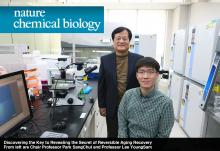
A team in South Korea has opened a new horizon of aging recovery research by changing the irreversibility paradigm of aging. The research team was the world’s first to confirm that as cell aging progresses.
03 Apr 2017
Hong Kong Baptist University (HKBU)
A delegation from Hong Kong Baptist University (HKBU) won a total of nine top prizes at the 45th International Exhibition of Inventions of Geneva held in Switzerland from 29 March to 2 April 2017.

03 Apr 2017
Asia Research News
More from RE•WORK Global Summits
31 Mar 2017
Tohoku University
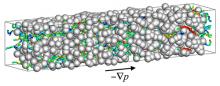
Scientists have designed mathematical expressions that more accurately estimate gas movement through nanosized pores. This could help improve fuel cell development.
30 Mar 2017
The Hong Kong Polytechnic University (PolyU)
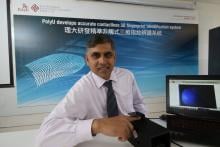
Researchers in Hong Kong have developed a system for three-dimensional (3D) fingerprint identification by adopting ground breaking 3D fingerprint minutiae recovery and matching technology.
29 Mar 2017
Hokkaido University
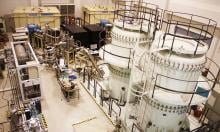
A new method uncovers a four-decade mystery about metallic glass that could allow researchers to fine-tune its properties to develop new materials.
28 Mar 2017
Asia Research News
10th Singapore International Energy Week
28 Mar 2017
Asia Research News
Singapore: EURAXESS ASEAN is hosting a research seminar entitled “The state of research in ASEAN: Co-publication and co-patenting activity”.
28 Mar 2017
King Abdullah University of Science and Technology (KAUST)
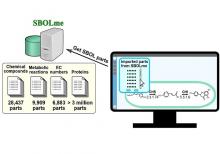
A repository of metabolic information provides a quick reference tool for designing useful synthetic biological systems.

28 Mar 2017
King Abdullah University of Science and Technology (KAUST)
Discovery of a novel rotational force inside magnetic vortices makes it easier to design ultrahigh capacity disk drives.
28 Mar 2017
Hokkaido University
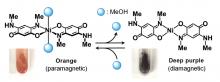
Hokkaido University scientists have succeeded in developing a nickel complex that changes color and magnetism when exposed to methanol vapor. The new material can potentially be used not only as a chemical sensor, but also with future rewritable memory devices.
28 Mar 2017
Asia Research News
Singapore’s first-ever “internet-ready human” live chip-implant performance sets stage for new era of disruptive technology

22 Mar 2017
National Institute for Materials Science (NIMS)
Ultra-sensitive devices are being developed to detect biological and chemical compounds.
22 Mar 2017
Tohoku University
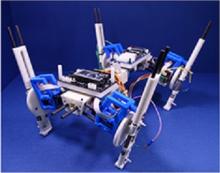
The research group of Professor Akio Ishiguro and Assistant Professor Dai Owaki of Tohoku University have, for the first time, successfully demonstrated that by changing only its parameter related to speed, a quadruped robot can spontaneously change its steps between energy-efficient patterns (gait transition phenomena).
22 Mar 2017
The Agency for Science, Technology and Research (A*STAR)
Supercritical carbon dioxide delivers protective molecules to semiconductor surfaces.
22 Mar 2017
The Agency for Science, Technology and Research (A*STAR)
A novel ‘soft’ magnetic material could enable faster computer memory.
20 Mar 2017
King Abdullah University of Science and Technology (KAUST)
Deformable thermoelectric materials add a new twist to the design of energy-scavenging devices.
20 Mar 2017
The Agency for Science, Technology and Research (A*STAR)
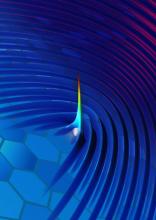
Electronic oscillations in graphene could make a tabletop—or even handheld— source of X-rays a reality.
18 Mar 2017
Asia Research News
Malaysia’s biennial show on power generation and transmission supports government’s commitment to increase contribution of non-fossil fuels.

15 Mar 2017
Korea Advanced Institute of Science and Technology (KAIST)
Korean researchers have developed a technology that can remotely control an animal’s movement with human thought.
14 Mar 2017
University of Malaya
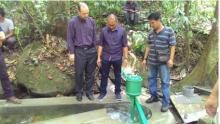
Access to modern, safe and affordable energy and energy services is one of the attributes with great potential to reduce poverty. University of Malaya Ulu Gombak PV + micro hydro project provides an alternative in electrifying the rural areas of Malaysia.
13 Mar 2017
King Abdullah University of Science and Technology (KAUST)
Plunging hot spheres into viscous liquids reveals a way to reduce fluid resistance without complex engineering procedures.

13 Mar 2017
Singapore Management University
Singapore Management University’s Secure Mobile Centre is tackling cybersecurity risks in mobile computing.
Giants in history

Turkish astrophysicist Dilhan Eryurt (29 November 1926 – 13 September 2012) conducted research on how the sun affects environmental conditions on the moon.
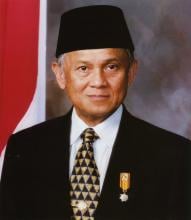
Bacharuddin Jusuf Habibie (25 June 1936 – 11 September 2019) was an Indonesian engineer who was President of Indonesia from 1998 to 1999.
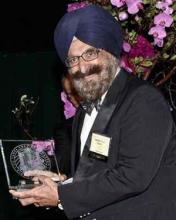
Physicist Narinder Singh Kapany (31 October 1926 – 4 December 2020) pioneered the use of optical fibres to transmit images, and founded several optical technology companies. Born in Punjab, India, he worked at a local optical instruments factory before moving to London for PhD studies at Imperial College. There, he devised a flexible fibrescope to convey images along bundles of glass fibres.
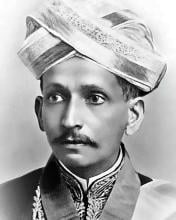
Sir Mokshagundam Srinivasa Shastry Vishveshwarayya (15 September 1860 – 14 April 1962) is widely regarded as India’s most outstanding engineer. In a career that spanned almost his entire life, Vishveshwarayya played a pivotal role in several engineering projects, including designing the Krishnarajasagara dam that is still the source of irrigation and drinking water for parts of Karnataka today.
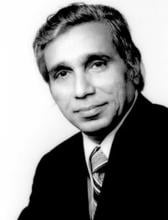
Fazlur Rahman Khan (3 April 1929 – 27 March 1982) was a Bangladeshi-American structural engineer and architect who invented the tube principle, which formed the basis for modern skyscraper design.
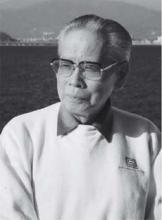
A Japanese surgeon, Tetsuzo Akutsu (20 August 1922 – 9 August 2007) built the first artificial heart capable of keeping an animal alive.

Lin Lanying (7 February 1918 – 4 March 2003) was a Chinese material engineer remembered for her contributions to the field of semiconductor and aerospace materials. Lanying was born into a family who did not believe in educating girls and she was not allowed to go to school.

Gregorio Y. Zara (8 March 1902 – 15 October 1978) was a Filipino engineer and physicist best remembered for inventing the first two-way video telephone. Zara’s video telephone invention enabled the caller and recipient to see each other while conversing, laying the foundation for video-conferencing