
Technology
News
18 Aug 2017
The Hong Kong University of Science and Technology (HKUST)
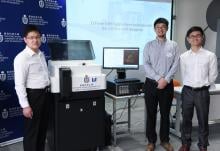
Researchers at The Hong Kong University of Science and Technology (HKUST) have developed a new generation of microscope, which not only could capture 3D live cell videos, but the resulted images are also of much higher quality, greatly enhancing the accuracy and the scope of research on cell biology.
17 Aug 2017
Institute of Transformative Bio-Molecules (WPI-ITbM), Nagoya University
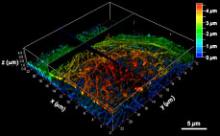
~ A powerful tool for 3D and multicolor STED imaging of cellular ultrastructure ~

14 Aug 2017
The Agency for Science, Technology and Research (A*STAR)
Using a green LED as a detector can help to boost data transmission rates
14 Aug 2017
The Agency for Science, Technology and Research (A*STAR)
A versatile coating for magnesium could eventually lead to better implants for mending broken bones
14 Aug 2017
The Agency for Science, Technology and Research (A*STAR)
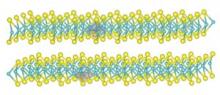
Determining the thermal properties of a versatile material could lead to new applications in energy storage, optoelectronic and flexible electronic devices
10 Aug 2017
Daegu Gyeongbuk Institute of Science and Technology (DGIST)
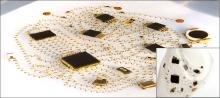
A soft, stick-on patch collects, analyzes and wirelessly transmits a variety of health metrics from the body to a smartphone.
10 Aug 2017
Daegu Gyeongbuk Institute of Science and Technology (DGIST)
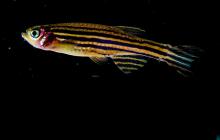
A research team in Korea succeeded in measuring multichannel EEG of zebrafish using non-invasive method. It is expected to be used in the development of new drugs to treat brain diseases such as epilepsy syndrome.

10 Aug 2017
Korea Advanced Institute of Science and Technology (KAIST)
A team at Korea Advanced Institute of Science and Technology (KAIST) has developed 'Mobile Plus,' a mobile platform that can share the functionalities of applications between smart devices. This novel technology allows applications to easily share their functionalities without needing any modifications.

07 Aug 2017
Asia Research News
Singapore International Energy Week (SIEW 2017) will be held from October 23-27, 2017 at Marina Bay Sands, Singapore
04 Aug 2017
Tohoku University
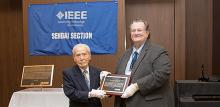
An IEEE Milestone has been dedicated to Tohoku University for Professor Emeritus Yasuto Mushiake's work on self-complementary antennas.
03 Aug 2017
Asia Research News
First instalment of a global white paper was released and launched at the Facilities Management Conference. It expounds on eight key trends which are set to take Asia by storm over the near future until 2025 and outlines integral areas for facilities management organisations and professionals.
30 Jul 2017
King Abdullah University of Science and Technology (KAUST)
A nature-based technique paves the way for cheaper and environmentally friendly liquid-repellent materials.
28 Jul 2017
The Hong Kong University of Science and Technology (HKUST)
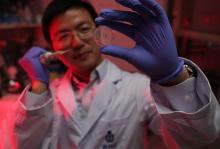
A research team led by Prof SUN Fei, Assistant Professor of Chemical & Biological Engineering at The Hong Kong University of Science and Technology (HKUST), has created a new protein-based stimuli-responsive smart hydrogel that could open doors for future material biology and biomedical applications.
28 Jul 2017
Nagoya University
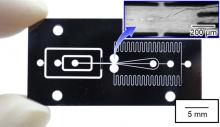
A research group in Nagoya University developed a high-speed cell sorting method of large cells with high-viability using dual on-chip pumps.
27 Jul 2017
Asia Research News
Learn about the latest tech driven consumer trends for 2017 at Convergence, the Emerging Technology Innovation Conference & Expo
27 Jul 2017
Asia Research News
Themed Discover, Connect, Collaborate, TechInnovation will feature 140 exhibitors showcasing over 400 enabling technologies.
24 Jul 2017
Institute for Integrated Cell-Material Sciences (iCeMS) at Kyoto University
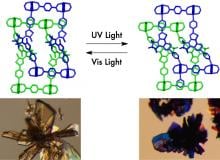
A new flexible material changes its porous nature when exposed to light.

24 Jul 2017
King Abdullah University of Science and Technology (KAUST)
3D-printed, disposable sensors capable of detecting noxious gases and changes in temperature and humidity, could revolutionize environmental monitoring.
24 Jul 2017
Institute of Transformative Bio-Molecules (WPI-ITbM), Nagoya University
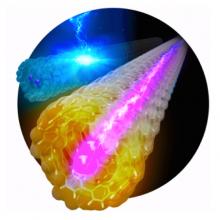
Scientists at Nagoya University have developed a new way to make stimuli-responsive materials in a predictable manner. They used this method to design a new material, a mixture of carbon nanorings and iodine, which conducts electricity and emits white light when exposed to electricity.
19 Jul 2017
Hokkaido University
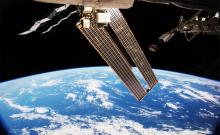
JAXA, Tohoku University and Hokkaido University have signed an agreement for microsatellites to be deployed from Kibo, the Japanese Experiment Module onboard the International Space Station(ISS).
19 Jul 2017
University of Malaya
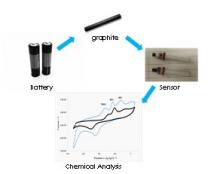
Multiplex detection of antioxidants / food additives / preservatives in food samples is possible using our newly developed graphite-based nanocomposite electrochemical sensor from used alkaline battery. The chemical sensor not only leads to shorter analysis time but also is a greener chemistry innovation.
17 Jul 2017
Asia Research News
19 to‐21 September 2017 - Bangkok International Trade & Exhibition Centre (BITEC), Bangkok, Thailand
17 Jul 2017
Asia Research News
SIEW Energy Insights Japan will address the SIEW 2017 theme "Rethinking Energy: Navigating Change", featuring a panel discussion with key experts on the latest energy developments in Japan.
17 Jul 2017
Asia Research News
KUALA LUMPUR, 12th of July 2017 – Universiti Malaya (UM), Malaysia’s premier Research University will be organising its inaugural “Give Back to UM Day” on 25th July 2017 at the Exhibition Hall, Institute of Research Management and Services, UM.
16 Jul 2017
King Abdullah University of Science and Technology (KAUST)
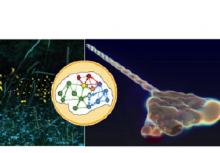
KAUST researchers predict that synchronized emissions from new on-chip lasers can produce artificial neural networks at low cost
05 Jul 2017
The Hong Kong Polytechnic University (PolyU)
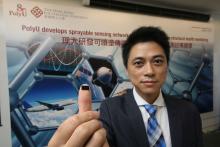
The Hong Kong Polytechnic University (PolyU) research team developed a novel breed of nanocomposites-inspired sensors which can be sprayed directly on flat or curved engineering structural surfaces, such as train tracks and aeroplane structures.
04 Jul 2017
Tohoku University
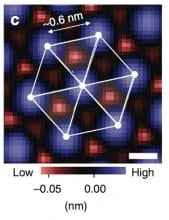
Researchers have applied advanced scanning methods to visualize the previously unexplored surface of a superconductor: lithium titanate.
04 Jul 2017
Asia Research News
Registration opens for the 10th Singapore International Energy Week
03 Jul 2017
Daegu Gyeongbuk Institute of Science and Technology (DGIST)
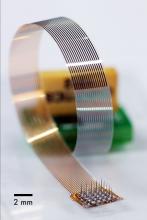
Flexible microelectrodes embedded in canine nerve bundles show recording success with latest test, bringing the devices a step closer to human application.

03 Jul 2017
Universiti Putra Malaysia (UPM)
A new approach could help detect forged parts of photographs faster and more accurately than current methods.
Giants in history

Turkish astrophysicist Dilhan Eryurt (29 November 1926 – 13 September 2012) conducted research on how the sun affects environmental conditions on the moon.
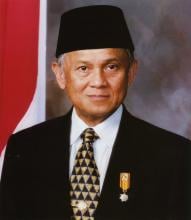
Bacharuddin Jusuf Habibie (25 June 1936 – 11 September 2019) was an Indonesian engineer who was President of Indonesia from 1998 to 1999.
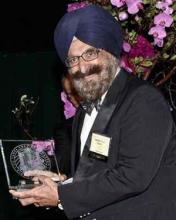
Physicist Narinder Singh Kapany (31 October 1926 – 4 December 2020) pioneered the use of optical fibres to transmit images, and founded several optical technology companies. Born in Punjab, India, he worked at a local optical instruments factory before moving to London for PhD studies at Imperial College. There, he devised a flexible fibrescope to convey images along bundles of glass fibres.
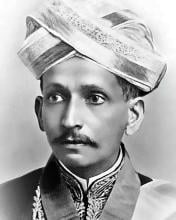
Sir Mokshagundam Srinivasa Shastry Vishveshwarayya (15 September 1860 – 14 April 1962) is widely regarded as India’s most outstanding engineer. In a career that spanned almost his entire life, Vishveshwarayya played a pivotal role in several engineering projects, including designing the Krishnarajasagara dam that is still the source of irrigation and drinking water for parts of Karnataka today.
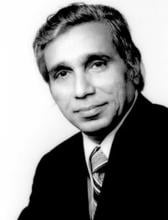
Fazlur Rahman Khan (3 April 1929 – 27 March 1982) was a Bangladeshi-American structural engineer and architect who invented the tube principle, which formed the basis for modern skyscraper design.
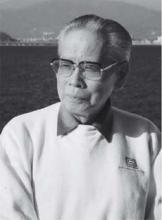
A Japanese surgeon, Tetsuzo Akutsu (20 August 1922 – 9 August 2007) built the first artificial heart capable of keeping an animal alive.

Lin Lanying (7 February 1918 – 4 March 2003) was a Chinese material engineer remembered for her contributions to the field of semiconductor and aerospace materials. Lanying was born into a family who did not believe in educating girls and she was not allowed to go to school.

Gregorio Y. Zara (8 March 1902 – 15 October 1978) was a Filipino engineer and physicist best remembered for inventing the first two-way video telephone. Zara’s video telephone invention enabled the caller and recipient to see each other while conversing, laying the foundation for video-conferencing