
Technology
News

21 Jul 2014
Institute of Transformative Bio-Molecules (WPI-ITbM), Nagoya University
Prof. Cathleen Crudden (PI of ITbM and Professor at Queen's University) has been awarded the 2014 CIC Fellowship of the Chemical Institute of Canada.
21 Jul 2014
The University of Nottingham Malaysia Campus
The University of Nottingham is lending its engineering expertise to an ambitious new aerospace centre in Malaysia.

20 Jul 2014
Waseda University
Will Tokyo be able to unveil a disaster-prepared, barrier-free Tokyo at the Olympics where the elderly, disabled, and foreign visitors can live in safety? Opinion article by Prof. Yuji Hasemi of Waseda University.
16 Jul 2014
University of Malaya
University of Malaya (UM) won three out of five prizes at the National Assistive Rehabilitation & Therapeutic Technology (AR&TTs) Challenge Malaysia 2014 which was held last 30 June to 1 July 2014.
16 Jul 2014
Asia Research News
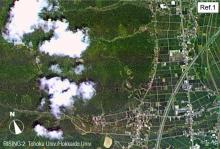
Sendai, Japan - On July 2, Microsatellite Rising-2 succeeded in capturing high precision images of the earth’s surface. Using a High Precision Telescope (HPT), it captured color images at a spatial resolution of 5m, the highest in the world among 50kg-class satellites.

14 Jul 2014
National Institute for Materials Science (NIMS)
This article published in the Science and Technology of Advanced Materials reports an approach with industrial potential to produce nano-sized composite silicon-based powders as negative electrodes for the next generation lithium ion batteries.
10 Jul 2014
Okayama University
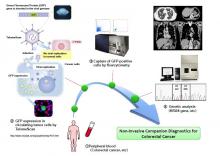
(Okayama, Japan, 10 July) Okayama University researchers seek partners to commercialize a clinically proven non-invasive fluorescence virus-guided capture system of human colorectal circulating tumor cells (CTCs) from blood samples for genetic testing. This non-invasive companion diagnostics is important for personalized targeted cancer therapy.

09 Jul 2014
The Research Center of Communication and Development Knowledge Management (CCDKM)
Within the framework of Microsoft Thailand’s global programme “Microsoft Youth Spark”, thousands of young entrepreneurs in Viet Nam, Indonesia, Thailand and the Philippines have been empowered with the necessary ICT skills that will enable them to successfully run small medium enterprises (SMEs).
09 Jul 2014
The Hong Kong Polytechnic University (PolyU)
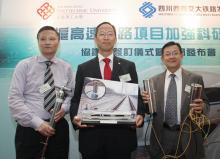
The Hong Kong Polytechnic University will further participate in the nation’s High-Speed Rail through its PolyU Shenzhen Base.

07 Jul 2014
The Research Center of Communication and Development Knowledge Management (CCDKM)
The Google Basics Telecentre Challenge will run in Thailand from July 1 to August 31, 2014. Learn about Google Chrome, Google Apps, Google Search, Google Plus Social Networks, and Internet Safety.
07 Jul 2014
Universiti Teknologi MARA (UiTM)
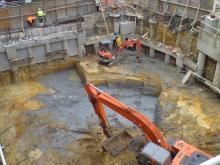
This research focused on making soft clay more stable to facilitate construction. Researchers at the Universiti Teknologi MARA mixed clay with various waste materials to enhance its engineering quality.

03 Jul 2014
Asia Research News
Select Biosciences South East Asia is pleased to report on the success of the inaugural International Bioprinting Congress, which took place at the Biopolis,
Singapore on the 24-25 July 2014.
03 Jul 2014
University of Malaya
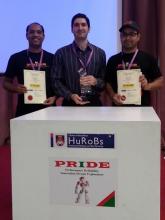
CareDroids, which assists elderly folks with their daily needs and communications was awarded second place in the competition.

02 Jul 2014
The Agency for Science, Technology and Research (A*STAR)
The formation of electrically conducting ‘nanoroads’ on atomically thin semiconductor nanosheets enables the integration of electronic components.
02 Jul 2014
The Agency for Science, Technology and Research (A*STAR)
A simple and inexpensive fabrication procedure boosts the light-capturing capabilities of tiny holes carved into silicon wafers.

02 Jul 2014
The Agency for Science, Technology and Research (A*STAR)
An off-center waveguide enables light to be efficiently extracted from nanoscale lasers.

02 Jul 2014
The Agency for Science, Technology and Research (A*STAR)
A gas cluster ion beam smoothing produces ultrathin silver films and lithographically patterned structures to enhance plasmonic performance.
02 Jul 2014
University of Malaya
The Human Life Advancement Foundation (HLAF) through its evaluation committee has chosen UM Power Energy Dedicated Advanced Centre (UMPEDAC), University of Malaya as the recipient of this year’s HLAF Lifetime Achievement Award.
25 Jun 2014
Okayama University
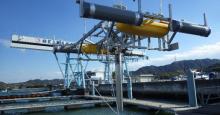
(Okayama, Japan, 25 June 2014) Research highlights in the June issue of the Okayama University e-Bulletin include innovative pendulum dynamo for converting tidal energy to electricity; models for breeding plants; unique insights into photosynthesis and Photosystem II; repairing DNA; and developing lithium-ion baterries with help from bacteria.

25 Jun 2014
RIKEN
A collaboration from RIKEN, the Tokyo Institute of Technology, and University College Dublin won top place in the June 2014 Graph 500 supercomputer ranking using the K computer, which is located in Kobe, Japan.
20 Jun 2014
National Institute for Materials Science (NIMS)
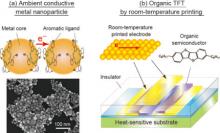
Japanese researchers have established a process for forming organic thin-film transistors (TFTs), conducting the entire printing process at room temperature under ambient atmospheric conditions.
20 Jun 2014
The University of Electro-Communications
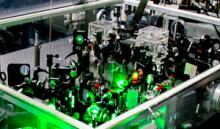
(Tokyo, Japan, 20 June 2014) The June 2014 issue of the University of Electro-Communications e-Bulletin includes research highlights on Raman scattering for laser optical communications; fuzzy control systems; optical signal processing; pharmacophores and future of drug discovery; hybrid dye solar cells.
19 Jun 2014
The Agency for Science, Technology and Research (A*STAR)
A theoretical model for vibrations in laptops provides design strategies for reducing hard drive failures
19 Jun 2014
The Agency for Science, Technology and Research (A*STAR)
Microspheres and a tiny pipette are all it takes to image surfaces with a resolution below 100 nanometers
19 Jun 2014
The Agency for Science, Technology and Research (A*STAR)
Scheduling algorithms based on game theory can make better use of computational resources to reduce the costs of grid computing
19 Jun 2014
The Agency for Science, Technology and Research (A*STAR)
A systematic analysis reveals that cloud storage services have security weaknesses that can inadvertently leak users’ data
18 Jun 2014
The Research Center of Communication and Development Knowledge Management (CCDKM)
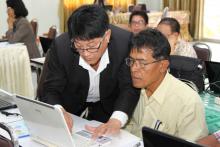
Population aging, as well as fast technological developments pose new challenges on individuals, communities and nations; these include a stronger digital divide with the growing gap between younger and older generations, ICT illiteracy, elderly people’s exclusion from using ICTs in their daily lives and lack of access to information.
18 Jun 2014
The Agency for Science, Technology and Research (A*STAR)
Singapore, 18 June 2014 – The Centre for Technology and Social-Behavioural Insights (CTSBI) will tap on high performance computing technology, big data analytics and behavioural sciences to study people-centric issues and human behaviour including how people think, feel and act in different settings.
17 Jun 2014
Asia Research News
Singapore, 16 June 2014 - Over 150 delegates gathered in Singapore on 16 June 2014 to discuss innovative solutions for an ageing society in the new era of ICT-enabled growth and to create opportunities for people with disabilities to capitalise on the digital wave.
13 Jun 2014
Asia Research News
ELECTROMASA 2014 will be held in Kuala Lumpur, Malaysia where visitors can enjoy a variety of activities and entertainment. The conference will be held from November 4-6, 2014, with paper presentations from the international community of authors, including presentations from keynote speakers.
Giants in history

Turkish astrophysicist Dilhan Eryurt (29 November 1926 – 13 September 2012) conducted research on how the sun affects environmental conditions on the moon.
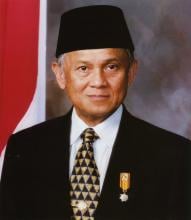
Bacharuddin Jusuf Habibie (25 June 1936 – 11 September 2019) was an Indonesian engineer who was President of Indonesia from 1998 to 1999.

Physicist Narinder Singh Kapany (31 October 1926 – 4 December 2020) pioneered the use of optical fibres to transmit images, and founded several optical technology companies. Born in Punjab, India, he worked at a local optical instruments factory before moving to London for PhD studies at Imperial College. There, he devised a flexible fibrescope to convey images along bundles of glass fibres.
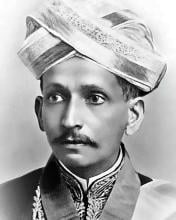
Sir Mokshagundam Srinivasa Shastry Vishveshwarayya (15 September 1860 – 14 April 1962) is widely regarded as India’s most outstanding engineer. In a career that spanned almost his entire life, Vishveshwarayya played a pivotal role in several engineering projects, including designing the Krishnarajasagara dam that is still the source of irrigation and drinking water for parts of Karnataka today.
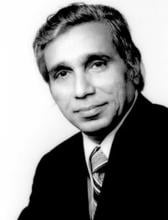
Fazlur Rahman Khan (3 April 1929 – 27 March 1982) was a Bangladeshi-American structural engineer and architect who invented the tube principle, which formed the basis for modern skyscraper design.

A Japanese surgeon, Tetsuzo Akutsu (20 August 1922 – 9 August 2007) built the first artificial heart capable of keeping an animal alive.

Lin Lanying (7 February 1918 – 4 March 2003) was a Chinese material engineer remembered for her contributions to the field of semiconductor and aerospace materials. Lanying was born into a family who did not believe in educating girls and she was not allowed to go to school.

Gregorio Y. Zara (8 March 1902 – 15 October 1978) was a Filipino engineer and physicist best remembered for inventing the first two-way video telephone. Zara’s video telephone invention enabled the caller and recipient to see each other while conversing, laying the foundation for video-conferencing