
Technology
News

27 Jan 2014
The Hong Kong Polytechnic University (PolyU)
Groundbreaking passive sensing and energy harvesting technologies safeguard electrical engineering assets
24 Jan 2014
International Center for Materials Nanoarchitectonics (MANA)
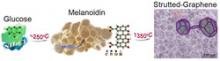
(Tsukuba, 23 January 2013) Robust, highly conductive 3D graphene structures for use in super-capacitors, through a method inspired by blown sugar, created.
22 Jan 2014
Tokyo Institute of Technology
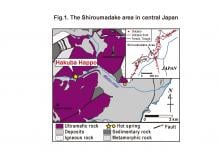
(Tokyo, 22 Jan 2014) Researchers at Tokyo Institute of Technology reveal mechanisms for the formation of methane, which may have been a crucial stage in the origin of life on Earth.

22 Jan 2014
The Agency for Science, Technology and Research (A*STAR)
An innovative design turns soft hydrogels into ionic conductors with diverse applications, from artificial muscles to transparent audio speakers
22 Jan 2014
The Agency for Science, Technology and Research (A*STAR)
Innovative electrodes allow new computer memory technologies to be compatible with existing circuitry
22 Jan 2014
The Agency for Science, Technology and Research (A*STAR)
A chip-based detection system for minor functional proteins in infant milk formula could assist quality-control testing

21 Jan 2014
The Hong Kong Polytechnic University (PolyU)
According to a research paper in the current issue of Construction and Building Materials, The Hong Kong Polytechnic University (PolyU) tops the world in the publication of articles related to field of construction and building technology.
20 Jan 2014
The Agency for Science, Technology and Research (A*STAR)
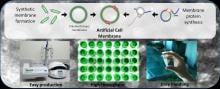
ACM Biolabs, a spin-off company from A*STAR’s Institute of Materials Research and Engineering (IMRE), will market novel plastic cell membranes to be used as low-cost, easily maintained drug targets that may help shorten the drug discovery process by weeks or months and cut cost by two-thirds.
16 Jan 2014
The Agency for Science, Technology and Research (A*STAR)
A study of the thermodynamic properties of copper connections uncovers a route to improving the reliability of electronic devices
16 Jan 2014
The Agency for Science, Technology and Research (A*STAR)
Using a copper catalyst to unite carbon dioxide with organic molecules under mild conditions could make this ubiquitous gas industrially useful
16 Jan 2014
The Agency for Science, Technology and Research (A*STAR)
Using a newly developed technique, protective casings for microscale devices can be built quickly and cheaply without damaging components
15 Jan 2014
The Agency for Science, Technology and Research (A*STAR)
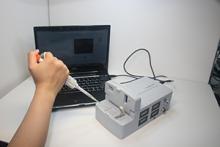
A portable instrument that replaces a full-size laboratory provides accurate multi-element analysis in less than a minute
15 Jan 2014
The Agency for Science, Technology and Research (A*STAR)
Developed at A*STAR, the first electrically pumped random lasers for mid-infrared radiation are set to enable applications in sensing and imaging
07 Jan 2014
National Institute for Materials Science (NIMS)
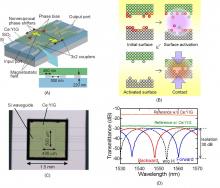
Tokyo, 7 Jan - In a paper published in Science and Technology of Advanced Materials today, researchers demonstrated the first optical isolator on silicon waveguide platforms.
06 Jan 2014
The Agency for Science, Technology and Research (A*STAR)
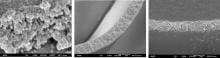
Singapore, 6 Jan - Tera-Barrier Films invents alternative stretchable plastic for prolonging shelf-life of pharmaceuticals, food and electronics.
19 Dec 2013
The Agency for Science, Technology and Research (A*STAR)
Sheets of carbon just one atom thick could make effective transparent electrodes in certain types of photovoltaic cells
19 Dec 2013
The Agency for Science, Technology and Research (A*STAR)
Dr. Li Haizhou is recognised for his achievements in speech and language technology. As a pioneer in human language technology for Asian languages, Dr. Li has made outstanding contributions in transforming the interface of mobile applications and breaking down the language barriers for Asian society.
18 Dec 2013
Ulsan National Institute of Science and Technology (UNIST)
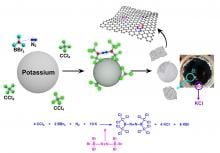
(Ulsan, South Korea 18 Dec. 2013): UNIST announced a method for the mass production of boron/nitrogen co-doped graphene nanoplatelets, which led to the fabrication of a graphene-based field-effect transistor (FET) with semiconducting nature. This opens up opportunities for practical use in electronic devices.
17 Dec 2013
International Center for Materials Nanoarchitectonics (MANA)
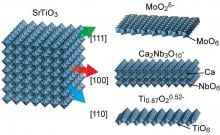
(Tsukuba, 17 December 2013) Molecularly thin two-dimensional crystals can alleviate the lattice matching restrictions of epitaxial crystalline thin film growth, as reported by researchers in Japan.

16 Dec 2013
Universiti Teknologi MARA (UiTM)
Textile dyeing is a significant consumer of water and producer of contaminated aqueous waste stream. Without proper waste water treatment, the effluents discharged by these factories will harm the environment. Dyes, as they are concentrated in colour, represent potential harm to mankind and aquatic life.
11 Dec 2013
Okayama University
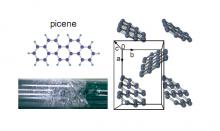
(Okayama, Japan, 12 Dec 2013) Focus on the only group in the world researching on superconducting picene. Prof Yoshihiro Kubozono team's work at Okayama University has potential for innovative applications of solid picene and organic superconductors, graphene and other functional materials.

11 Dec 2013
Okayama University
(Okayama, Japan, 12 Dec 2013) Content highlights include research on superconducting solid picene; naturally occurring nanobacteria-like particles and ectopic calcification; rice plants and manganese; earth science; nano-pathophysiology; and large porous zeolite.

11 Dec 2013
Waseda University
Power shortages are a major issue after the Great East Japan Earthquake. This technology will enable houses and buildings to conserve energy even in times of highly power demand and could help avoid scheduled blackouts. This test is the first attempt of its kind in Japan.
09 Dec 2013
Waseda University
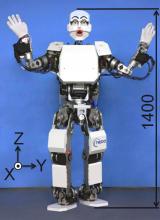
Some of Waseda University's robots include TWENDY-ONE which supports the elderly, WABIAN-2 and KOBIAN bi-pedal robots with emotions, SCHEMA, the robot that can converse with many people and TWIns institute for breast cancer tumor surgery

08 Dec 2013
Toyohashi University of Technology
Prof. Naohiro Hozumi of Toyohashi Tech explains “Instead of waiting an hour or more, tissue can be tested almost immediately and because the reflected sound varies depending on the type of cancer, a doctor can interpret the type of disease from the image by comparing it to a reference material.”

08 Dec 2013
Toyohashi University of Technology
Highlights include nanoscale photonic integrated circuit using surface plasmon polaritons on silicon; High pressure cold spray technology; Nitride semiconductor Hall effect magnetic field sensors for extreme environments and innovative analytical tool for the life sciences and biotechnology
06 Dec 2013
Universiti Putra Malaysia (UPM)
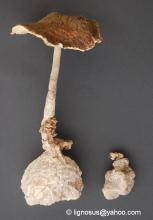
A technique to preserve cells from the rare and popular Tigers Milk Mushroom for later use is published in the latest issue of The Journal of Tropical Agriculture Science. The mushroom is important in communities in Malaysia who use it as a medicinal treatment for various ailments as well as to produce a tonic to maintain health.

06 Dec 2013
Waseda University
Tokyo, 6 Dec - Waseda University announces the formation of an international base for research on compound disasters due to tsunamis, earthquakes, storm surges and volcanic eruptions. The team will include researchers from Canada, the United Kingdom, Iran, Indonesia, Thailand, Tanzania, Bhutan, Chile, and Vietnam
04 Dec 2013
The Agency for Science, Technology and Research (A*STAR)
Quickly switching the orientation of a laser beam enables control over the quantum properties of light
04 Dec 2013
The Agency for Science, Technology and Research (A*STAR)
Hacking programs disguised as games are helping Apple to improve the security of devices operating on its iOS platform
Giants in history

Turkish astrophysicist Dilhan Eryurt (29 November 1926 – 13 September 2012) conducted research on how the sun affects environmental conditions on the moon.
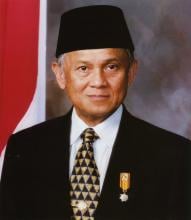
Bacharuddin Jusuf Habibie (25 June 1936 – 11 September 2019) was an Indonesian engineer who was President of Indonesia from 1998 to 1999.

Physicist Narinder Singh Kapany (31 October 1926 – 4 December 2020) pioneered the use of optical fibres to transmit images, and founded several optical technology companies. Born in Punjab, India, he worked at a local optical instruments factory before moving to London for PhD studies at Imperial College. There, he devised a flexible fibrescope to convey images along bundles of glass fibres.

Sir Mokshagundam Srinivasa Shastry Vishveshwarayya (15 September 1860 – 14 April 1962) is widely regarded as India’s most outstanding engineer. In a career that spanned almost his entire life, Vishveshwarayya played a pivotal role in several engineering projects, including designing the Krishnarajasagara dam that is still the source of irrigation and drinking water for parts of Karnataka today.
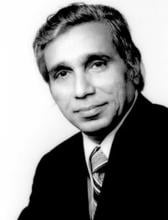
Fazlur Rahman Khan (3 April 1929 – 27 March 1982) was a Bangladeshi-American structural engineer and architect who invented the tube principle, which formed the basis for modern skyscraper design.
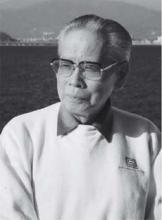
A Japanese surgeon, Tetsuzo Akutsu (20 August 1922 – 9 August 2007) built the first artificial heart capable of keeping an animal alive.

Lin Lanying (7 February 1918 – 4 March 2003) was a Chinese material engineer remembered for her contributions to the field of semiconductor and aerospace materials. Lanying was born into a family who did not believe in educating girls and she was not allowed to go to school.

Gregorio Y. Zara (8 March 1902 – 15 October 1978) was a Filipino engineer and physicist best remembered for inventing the first two-way video telephone. Zara’s video telephone invention enabled the caller and recipient to see each other while conversing, laying the foundation for video-conferencing