
Technology
News

20 Nov 2013
The Agency for Science, Technology and Research (A*STAR)
A narrow channel that acts as a polarization filter adds a new dimension to optical data transmission
20 Nov 2013
The Agency for Science, Technology and Research (A*STAR)
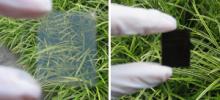
Understanding how hydration affects color-changing windows that optimize solar energy transmission can boost their efficiency and durability
20 Nov 2013
The Agency for Science, Technology and Research (A*STAR)
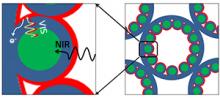
Specially designed nanostructured materials can increase the light-absorbing efficiency of solar cells

20 Nov 2013
The Agency for Science, Technology and Research (A*STAR)
A recently isolated bacterial strain converts waste from palm oil production into industrially useful lactic acid

18 Nov 2013
The Agency for Science, Technology and Research (A*STAR)
Singapore, 19 Nov: Singapore’s SIMTech, a research institute of the Agency for Science, Technology and Research (A*STAR), and the VTT Technical Research Centre of Finland inked a MoU to promote R&D in technology innovation and new capabilities development for the Factories of the Future.

14 Nov 2013
The Hong Kong Polytechnic University (PolyU)
Backed by strong support from the government and industry, The Hong Kong Polytechnic University (PolyU) has garnered more momentum for the advancement of aviation services research in Hong Kong through its partnership with industry leader Boeing.

14 Nov 2013
Ulsan National Institute of Science and Technology (UNIST)
Another innovative idea from the UNIST ‘Project M’ team was awarded the Gold Prize in the 2014 KEPCO Electricity Technology Idea Contest. This is an idea about developing a smartphone application that monitors the usage of household electricity and helps to save it.
14 Nov 2013
The Agency for Science, Technology and Research (A*STAR)
On 12th November 2013, A*STAR officially launched the Technology Adoption Programme (TAP), its latest initiative to provide SMEs with greater accessibility to practical and affordable technology solutions to boost productivity

14 Nov 2013
The Agency for Science, Technology and Research (A*STAR)
On 12th of November, Singapore’s Agency for Science, Technology and Research (A*STAR) and its industry partners have clinched one of the region’s most prestigious engineering honours, the ASEAN Outstanding Engineering Achievement Awards.

13 Nov 2013
National Institute for Materials Science (NIMS)
NIMS researchers elucidated the relationship between the photocurrent and the peculiar changes in the absorption structure occurring in the vicinity of the molecular-electrode interface in dye-sensitized solar cells
08 Nov 2013
National Institute for Materials Science (NIMS)
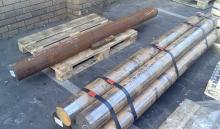
In a paper published in the Science and Technology of Advanced Materials, Bhadeshia introduces the world’s first bulk nanostructured metal in commercial production.

07 Nov 2013
Universiti Teknologi MARA (UiTM)
The recent rapid development of wireless communication systems has created a strong need for the development of new antenna structures. The research described in this project introduces the concept of reconfigurable antennas with switching beam control, operable at 5.8 GHz.
06 Nov 2013
The Agency for Science, Technology and Research (A*STAR)
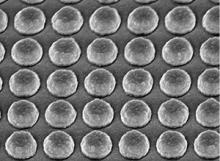
Arrays of nanoscale pillars made to reflect light of a selected color could find application as optical filters in digital cameras
06 Nov 2013
The Agency for Science, Technology and Research (A*STAR)
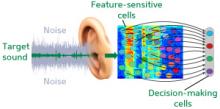
When designed to process sound based on familiar patterns, sound recognition by computers becomes more robust
06 Nov 2013
The Agency for Science, Technology and Research (A*STAR)
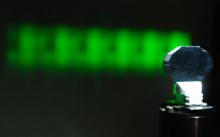
A new technique that combines optical plates to manipulate laser light improves the quality of holograms
01 Nov 2013
Ulsan National Institute of Science and Technology (UNIST)
UNIST signed an MOU for setting up a joint technology holding company, with three science and technology specialized universities: KAIST, GIST, and DGIST, on 28 Oct, 2013.
30 Oct 2013
National Institute for Materials Science (NIMS)
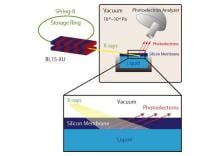
The results may elucidate the process at solid/liquid interfaces of energy devices like rechargeable batteries and fuel cells. It will also contribute to the development and performance of cell electrodes and catalyst materials.

29 Oct 2013
Ulsan National Institute of Science and Technology (UNIST)
The Korean undergraduate student team, ‘Project M’ from Ulsan National Institute of Science and Technology, proposed to make a smart phone application, which helps the visually impaired to navigate and find their way without delay by an instant and intuitive sound system.
28 Oct 2013
Ulsan National Institute of Science and Technology (UNIST)
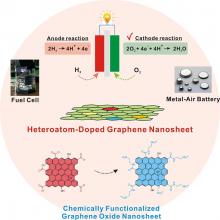
A UNIST undergrad, Minju Park, and her research team found a new way to synthesize highly efficient electrocatalysts based on heteroatom-doped graphene nanosheets.
23 Oct 2013
The Agency for Science, Technology and Research (A*STAR)
Next-generation lithium-ion batteries made with iron oxide nanoparticles could extend the driving distance of electric cars
23 Oct 2013
The Agency for Science, Technology and Research (A*STAR)
Software that monitors industrial machine operations in real time can reduce the overall energy consumption of factories
23 Oct 2013
The Agency for Science, Technology and Research (A*STAR)
An anti-reflective film that mimics a moth’s eye is durable and highly effective, overcoming some of the main barriers to commercialization
23 Oct 2013
The Agency for Science, Technology and Research (A*STAR)
An innovative strategy produces positively and negatively charged polymer chains ideal for generating multifunctional coatings
23 Oct 2013
The Agency for Science, Technology and Research (A*STAR)
A new and verified computer model improves the machining of nanoscale semiconductor parts for the electronics industry
20 Oct 2013
National Institute for Materials Science (NIMS)
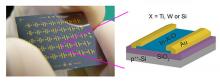
For the first time in the world, researchers have found what is needed for a thin film to behave as a semiconductor. The research will reduce power consumption of displays, lead to stable higher-definition TVs and contribute towards conserving precious resources by not using zinc, gallium
17 Oct 2013
International Development Research Centre (IDRC)
As the world observed World Food Day on October 16, IDRC asked researchers: What can be done to help small-scale farmers become more productive, resilient, and profitable?
15 Oct 2013
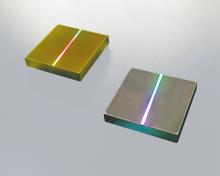
Diffraction grating elements for 633 nm to 1064 nm waveband with 1600 lines/mm, exhibit a diffraction efficiency of 98%—the highest in this category of technology. This feature is important for expansion and compression of laser pulses for light sources used in laser processing.
14 Oct 2013
Asia Research News
More than 120 global leaders from higher education, private and public sectors, to discuss the promotion of economic growth through knowledge creation and entrepreneurship
11 Oct 2013
The Hong Kong Polytechnic University (PolyU)
Three mechanical engineering students of The Hong Kong Polytechnic University (PolyU) have designed a remote inspection vehicle which can examine a simulated radioactivity-contaminated area within one minute.
10 Oct 2013
The Agency for Science, Technology and Research (A*STAR)
A*STAR and KITECH MoU paves the way for joint research in sustainable chemicals
Giants in history

Turkish astrophysicist Dilhan Eryurt (29 November 1926 – 13 September 2012) conducted research on how the sun affects environmental conditions on the moon.
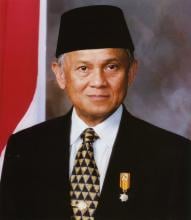
Bacharuddin Jusuf Habibie (25 June 1936 – 11 September 2019) was an Indonesian engineer who was President of Indonesia from 1998 to 1999.
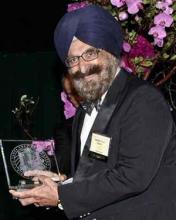
Physicist Narinder Singh Kapany (31 October 1926 – 4 December 2020) pioneered the use of optical fibres to transmit images, and founded several optical technology companies. Born in Punjab, India, he worked at a local optical instruments factory before moving to London for PhD studies at Imperial College. There, he devised a flexible fibrescope to convey images along bundles of glass fibres.
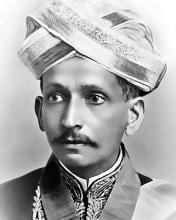
Sir Mokshagundam Srinivasa Shastry Vishveshwarayya (15 September 1860 – 14 April 1962) is widely regarded as India’s most outstanding engineer. In a career that spanned almost his entire life, Vishveshwarayya played a pivotal role in several engineering projects, including designing the Krishnarajasagara dam that is still the source of irrigation and drinking water for parts of Karnataka today.
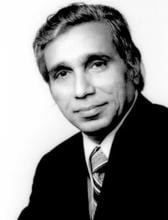
Fazlur Rahman Khan (3 April 1929 – 27 March 1982) was a Bangladeshi-American structural engineer and architect who invented the tube principle, which formed the basis for modern skyscraper design.
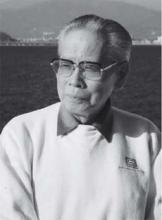
A Japanese surgeon, Tetsuzo Akutsu (20 August 1922 – 9 August 2007) built the first artificial heart capable of keeping an animal alive.

Lin Lanying (7 February 1918 – 4 March 2003) was a Chinese material engineer remembered for her contributions to the field of semiconductor and aerospace materials. Lanying was born into a family who did not believe in educating girls and she was not allowed to go to school.

Gregorio Y. Zara (8 March 1902 – 15 October 1978) was a Filipino engineer and physicist best remembered for inventing the first two-way video telephone. Zara’s video telephone invention enabled the caller and recipient to see each other while conversing, laying the foundation for video-conferencing