

Technology
News
06 Aug 2013
Universiti Teknologi MARA (UiTM)
Food researchers at Universiti Teknologi Mara develop new process to make healthy fruit based snacks
06 Aug 2013
Ulsan National Institute of Science and Technology (UNIST)
Research team developing a more accurate way to monitor and predict weather changes.

06 Aug 2013
Asia Research News
For the first time anywhere, electric buses provide public transportation services and are recharged right from the road.

31 Jul 2013
The Agency for Science, Technology and Research (A*STAR)
Sensitive measurements of lubricant transfer in hard disk drives will aid the design of more stable and compact components
31 Jul 2013
The Agency for Science, Technology and Research (A*STAR)
Experiments and numerical simulations show that miniaturized ultra-small platinum cylinders weaken when their constituents are reduced in number
31 Jul 2013
The Agency for Science, Technology and Research (A*STAR)
The Singapore White Spaces Pilot Group takes the nation’s capability in ‘white space’ wireless connectivity to a new level
30 Jul 2013
Ulsan National Institute of Science and Technology (UNIST)
Ph.D candidate Songyi Chae from the School of Design and Human Engineering at UNIST, majoring in Affective and Human Factors Engineering, was awarded the Google Anita Borg Memorial Scholarship. She will receive a $3500 scholarship and has been invited to visit a Google office in Sydney, Australia for a networking retreat on September 11, 2013.

24 Jul 2013
Asia Research News
Utilizing existing features on smartphones, the MagPen provides users with a compatible and simple input tool regardless of the type of phones they are using.
23 Jul 2013
Ulsan National Institute of Science and Technology (UNIST)
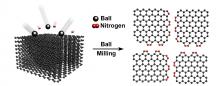
UNIST researchers have announced a simple, low-cost and eco-friendly method of creating nitrogen-doped graphene nanoplatelets (NGnPs), which could be used in dye-sensitized solar cells and fuel cells The work published in Scientific Reports today could be a step towards replacing conventional platinum (Pt)-based catalysts for energy conversion.
23 Jul 2013
The Agency for Science, Technology and Research (A*STAR)
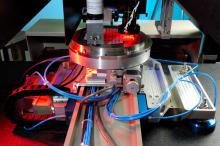
Joint Labs in Precision Motion Systems and Industrial Robotics are Geared towards High Value Manufacturing
21 Jul 2013
National Institute for Materials Science (NIMS)
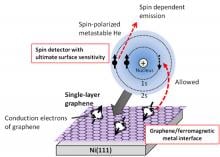
Opens the Way to Research on Spin Properties and Device Applications of Graphene and Other 2-Dimensional Materials
21 Jul 2013
Ulsan National Institute of Science and Technology (UNIST)
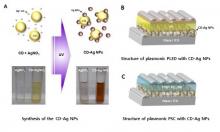
UNIST researchers report considerable improvement in device performance of polymer-based optoelectronic devices. Published in Nature Photonics today, the new plasmonic material, can be applied to both polymer light-emitting diodes (PLEDs) and polymer solar cells (PSCs), with world-record high performance, through a simple and cheap process.
17 Jul 2013
The Agency for Science, Technology and Research (A*STAR)
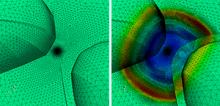
A new computational scheme enables more stable simulations of shockwaves in fluids and may be scalable for large engineering designs
17 Jul 2013
The Agency for Science, Technology and Research (A*STAR)
A technique that reduces the time to simulate the operation of active optical devices aids the design of nanoscale lasers
17 Jul 2013
The Agency for Science, Technology and Research (A*STAR)
Tiny nanoribbons of carbon could be used to make a magnetic field sensor for novel electronic devices
16 Jul 2013
The Agency for Science, Technology and Research (A*STAR)
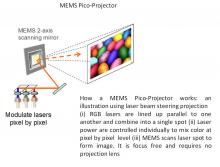
A*STAR Institute of Microelectronics and OPUS Microsystems Collaborate to Advance Technology for Larger Screen Viewing Experience with Smartphones
11 Jul 2013
Universiti Teknologi MARA (UiTM)
This study is about the Smart Java language editor (SJE). SJE combines the current features of existing Java editor with some smart features that will help students in learning Java programming.
11 Jul 2013
Universiti Teknologi MARA (UiTM)
This program was developed to assist chemistry students to learn basic concepts in chemistry and contains five modules: molecular-weight calculator, empirical formula, thermochemistry, electrochemistry and acid base calculations.
11 Jul 2013
Asia Research News
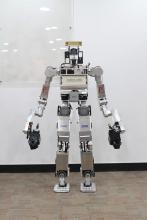
When walking on muddy or bumpy roads, the two arms of DRC-HUBO become extra legs, enabling stable and agile movements.
11 Jul 2013
The Agency for Science, Technology and Research (A*STAR)
The projects include X-ray sterilisation for the MedTech industry, corrosion prevention and advanced precision metal machining for oil & gas, aerospace and MedTech industries.
11 Jul 2013
The Agency for Science, Technology and Research (A*STAR)
Institute for Infocomm Research (I2R) & Topcon Corporation to develop advanced technologies for earlier detection of eye ailments
10 Jul 2013
Waseda University
People composed of biotechnology are cyborgs, an amalgam of human being and technology. What direction are human beings, or should I say cyborgs, headed in? Opinion article by Prof. Toru Takahashi of Waseda University
09 Jul 2013
The Agency for Science, Technology and Research (A*STAR)
Singapore, 9 July – Reliability and performance issues are technical challenges in packaging solutions for compact sized consumer electronics and high power electronics. To overcome these issues, A*STAR’s IME and leading semiconductor companies formed the 12th Electronics Packaging Research Consortium (EPRC12).

08 Jul 2013
The Hong Kong Polytechnic University (PolyU)
With a view to setting new standards for hotel rooms, The Hong Kong Polytechnic University has joined hands with its teaching and research hotel, Hotel ICON, and organized a global competition to shape guestrooms of the future.
08 Jul 2013
Ulsan National Institute of Science and Technology (UNIST)
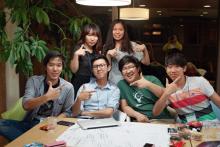
The software, Sullivan’s Voice, developed by the team of the same name from UNIST, was chosen to be one of the finalists of the Asia cooperative pilot projects at the 2013 Asia Youth Tech Entrepreneurship Camp (AYTEC).
08 Jul 2013
Ulsan National Institute of Science and Technology (UNIST)
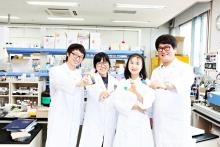
Korean Researchers from Ulsan National Institute of Science and Technology (UNIST) developed a new method to massively synthesize enhanced yet affordable materials for supercapacitors.
04 Jul 2013
Waseda University
Accuracy and precision of robots can give advantage to medical treatment - opinion article by Yo Kobayashi of Waseda University
04 Jul 2013
National Institute for Materials Science (NIMS)
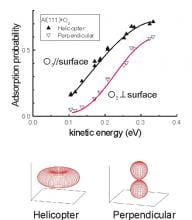
NIMS researchers have solved a 20 year old riddle concerning the reaction mechanism of aluminium surface oxidation
04 Jul 2013
Universiti Teknologi MARA (UiTM)
A report on the tensile and tearing strength of natural rubber latex (NRL) high strength coated fabrics.
03 Jul 2013
The Hong Kong Polytechnic University (PolyU)
The Hong Kong Polytechnic University (PolyU) has won a total of 10 prizes for its multi-faceted innovations presented at the 41st International Exhibition of Inventions of Geneva. Not only have these breakthroughs brought glory to Hong Kong, but also extended the frontiers of knowledge and enhanced the well-being of our society on different fronts.
Giants in history

Turkish astrophysicist Dilhan Eryurt (29 November 1926 – 13 September 2012) conducted research on how the sun affects environmental conditions on the moon.
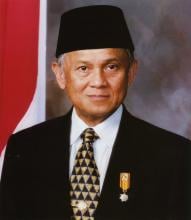
Bacharuddin Jusuf Habibie (25 June 1936 – 11 September 2019) was an Indonesian engineer who was President of Indonesia from 1998 to 1999.

Physicist Narinder Singh Kapany (31 October 1926 – 4 December 2020) pioneered the use of optical fibres to transmit images, and founded several optical technology companies. Born in Punjab, India, he worked at a local optical instruments factory before moving to London for PhD studies at Imperial College. There, he devised a flexible fibrescope to convey images along bundles of glass fibres.
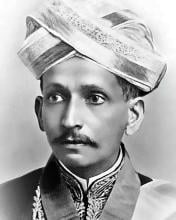
Sir Mokshagundam Srinivasa Shastry Vishveshwarayya (15 September 1860 – 14 April 1962) is widely regarded as India’s most outstanding engineer. In a career that spanned almost his entire life, Vishveshwarayya played a pivotal role in several engineering projects, including designing the Krishnarajasagara dam that is still the source of irrigation and drinking water for parts of Karnataka today.
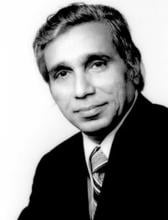
Fazlur Rahman Khan (3 April 1929 – 27 March 1982) was a Bangladeshi-American structural engineer and architect who invented the tube principle, which formed the basis for modern skyscraper design.
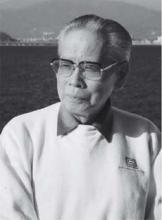
A Japanese surgeon, Tetsuzo Akutsu (20 August 1922 – 9 August 2007) built the first artificial heart capable of keeping an animal alive.

Lin Lanying (7 February 1918 – 4 March 2003) was a Chinese material engineer remembered for her contributions to the field of semiconductor and aerospace materials. Lanying was born into a family who did not believe in educating girls and she was not allowed to go to school.

Gregorio Y. Zara (8 March 1902 – 15 October 1978) was a Filipino engineer and physicist best remembered for inventing the first two-way video telephone. Zara’s video telephone invention enabled the caller and recipient to see each other while conversing, laying the foundation for video-conferencing