

Technology
News

05 Jun 2013
The Agency for Science, Technology and Research (A*STAR)
A numerical simulation based on individual preferences provides insights into social attitudes that are unattainable through physical experiments
04 Jun 2013
The Agency for Science, Technology and Research (A*STAR)
An affordable optical modulator to enable high-definition online gaming experience in real-time with multiple players from anywhere in the world
30 May 2013
Ulsan National Institute of Science and Technology (UNIST)
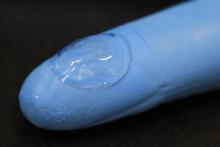
Ulsan, South Korea, May 30 — Ulsan National Institute of Science & Technology (UNIST) has demonstrated that a live rabbit could wear contact lenses fitted with inorganic light-emitting diode with no side effects. This new class of hybrid transparent and stretchable electrode paves the way for flexible displays, solar cells, and electronics.

30 May 2013
The Agency for Science, Technology and Research (A*STAR)
Singapore, 30 May: Singapore’s SIMTech and Leeds University have inked a MoU to collaborate on innovative medical devices like lab on chips, medical implants and implantable devices. The R&D also includes innovative joint replacements & biological scaffolds for cardiovascular & musculoskeletal tissue regeneration.
29 May 2013
Hanyang University
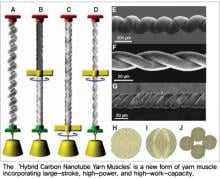
Professor Seon Jeong Kim of Hanyang University has created a high capacity yarn muscle that does not require electrolytes or special packaging. It will have a big impact in the motor, biological and robot industry.
29 May 2013
Hanyang University
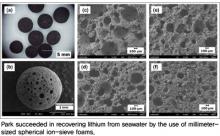
Urban mining is a performed by extracting metal resources from electronic products. Gold from PCBs and Lithium from seawater - read more about Prof. Jai-Koo Park of Hanyang University on his research into urban mining.
27 May 2013
Tokyo Institute of Technology
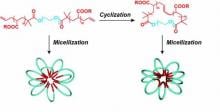
(Tokyo, 27 May 2013): Scientists at Tokyo Tech have developed a new self-assembled nanostructure that can survive very hot or saline environments.

27 May 2013
Tokyo Institute of Technology
(Tokyo, 27 May 2013) Self assembled nanostructures for hostile environments: the May 2013 issue the Tokyo Institute of Technology Bulletin contains the latest information about cutting edge research projects and related activities at Tokyo Tech.
24 May 2013
National Institute for Materials Science (NIMS)
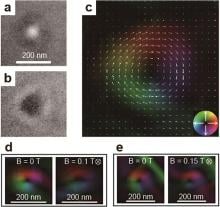
Researchers using Lorentz electron microscopy have shown that magnetic skyrmions are spontaneously formed as nanomagnetic clusters in a ferromagnetic manganese oxide with centrosymmetry.
24 May 2013
National Institute for Materials Science (NIMS)
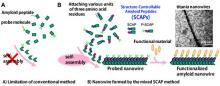
Researchers in Japan and US have developed a new technique for efficiently creating functionalized nanowires for the first time ever.
22 May 2013
The Agency for Science, Technology and Research (A*STAR)
Optical computing could benefit from the recent development of a novel electromagnetic wave
22 May 2013
The Agency for Science, Technology and Research (A*STAR)
Ammonium salts could provide a viable way of removing carbon dioxide from the atmosphere via carbon mineralization

20 May 2013
National Institute for Materials Science (NIMS)
The National Institute for Materials Science in cooperation with the Japan Aerospace Exploration Agency are evaluating the mechanical properties of metallic materials used in liquid rocket engines for Japan's H-IIA and H-IIB launch vehicles.
20 May 2013
The Agency for Science, Technology and Research (A*STAR)
Singapore's National Metrology Centre celebrates World Metrology Day, “Measurements in Daily Life”

13 May 2013
Toyohashi University of Technology
Kazuaki Sawada from Toyohashi Tech was awarded the FY2013 Science and Technology Award [Research Division] by the Minister of Education, Culture, Sports, Science and Technology.
13 May 2013
The Agency for Science, Technology and Research (A*STAR)
Single-chip integration of the components needed for sending and receiving terahertz radiation should help applications in imaging and communication
13 May 2013
The Agency for Science, Technology and Research (A*STAR)
High-level simulations reveal that plastic deformation in super-resilient alloys is governed by atomic zones with characteristic lengths
13 May 2013
The Agency for Science, Technology and Research (A*STAR)
Numerical simulations show how to avoid imperfections in the next generation of high-density data storage
13 May 2013
The Agency for Science, Technology and Research (A*STAR)
A novel type of tilt sensor may extend the capabilities of ultrasonic devices already used in a range of applications

13 May 2013
The Hong Kong Polytechnic University (PolyU)
A student team from The HKPolyU has made a strong presence in the 2013 Taiwan Innovative Unmanned Aircraft Vehicle (UAV) Design Competition by taking home the Second Runner-up (Navigated Flight Category).
13 May 2013
National Institute for Materials Science (NIMS)
IOP Publishing (IOP) announced a new three year agreement with the National Institute for Materials Science (NIMS) for the continued publication of the open access title Science and Technology of Advanced Materials (STAM).

10 May 2013
The Agency for Science, Technology and Research (A*STAR)
Singapore, 10 May 2013 – Lloyd’s Register (LR) and A*STAR’s Institute of High Performance Computing (IHPC) have officially opened a joint laboratory, which will deliver innovative technological solutions to address the challenges faced by the marine, energy and offshore sectors.
08 May 2013
The Agency for Science, Technology and Research (A*STAR)
Singapore – 8 May 2013 – The Institute for Infocomm Research (I2R), a research institute of the Agency for Science, Technology and Research (A*STAR) announced two collaborations with ST Electronics (Info-Comm Systems) and Singapore Power in the areas of Software Defined Communications systems and Grid Networks respectively.

08 May 2013
International Development Research Centre (IDRC)
Citizens in remote rural areas in 11 Asian countries are leaping over language barriers and into the Internet age. They may now access government services online, and submit college applications without making an arduous trek to the city. And their children are learning the computer skills that promise greater economic opportunities in the future.
06 May 2013
Ulsan National Institute of Science and Technology (UNIST)
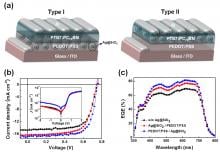
Researchers from Ulsan National Institute of Science and Technology (UNIST) demonstrated high-performance polymer solar cells (PSCs) with power conversion efficiency (PCE) of 8.92% which is the highest values reported to date for plasmonic PSCs using metal nanoparticles (NPs).
30 Apr 2013
National Institute for Materials Science (NIMS)
A research group at the International Center for Materials Nanoarchitectonics (MANA) of NIMS discovered an intriguing phenomenon in which an inorganic layered crystal expanded and contracted by 100 times its original size in a few seconds in an aqueous solution, displaying a behavior similar to a living cell.
26 Apr 2013
National Institute for Materials Science (NIMS)
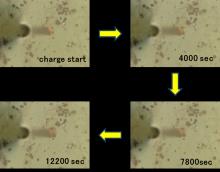
The NIMS Global Research Center for Environment and Energy based on Nanomaterials Science (GREEN) and Tokyo Metropolitan University have measured the volumetric expansion of single particles of silicon accompanying the charging reaction. This finding demonstrated the importance of electrode design from the viewpoint of volumetric energy density.
26 Apr 2013
National Institute for Materials Science (NIMS)
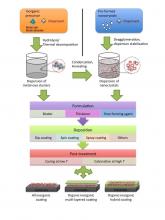
Tsukuba, Japan 26 April - Nanoparticles are used in many commercial products catalysts to cosmetics. A review published today in the Science and Technology of Advanced Materials by researchers in Sweden and Spain describes recent work on the 3 main nanoparticles used in photocatalytic, UV-blocking and sunscreens.
24 Apr 2013
The Agency for Science, Technology and Research (A*STAR)
Trapping free electrons with polycyclic aromatic molecules creates materials with enhanced optical, electronic and magnetic properties
24 Apr 2013
The Agency for Science, Technology and Research (A*STAR)
Replacing a high-temperature processing technique with an infrared treatment allows the manufacture of tiny devices without damaging the polymer components
Giants in history

Turkish astrophysicist Dilhan Eryurt (29 November 1926 – 13 September 2012) conducted research on how the sun affects environmental conditions on the moon.

Bacharuddin Jusuf Habibie (25 June 1936 – 11 September 2019) was an Indonesian engineer who was President of Indonesia from 1998 to 1999.

Physicist Narinder Singh Kapany (31 October 1926 – 4 December 2020) pioneered the use of optical fibres to transmit images, and founded several optical technology companies. Born in Punjab, India, he worked at a local optical instruments factory before moving to London for PhD studies at Imperial College. There, he devised a flexible fibrescope to convey images along bundles of glass fibres.

Sir Mokshagundam Srinivasa Shastry Vishveshwarayya (15 September 1860 – 14 April 1962) is widely regarded as India’s most outstanding engineer. In a career that spanned almost his entire life, Vishveshwarayya played a pivotal role in several engineering projects, including designing the Krishnarajasagara dam that is still the source of irrigation and drinking water for parts of Karnataka today.

Fazlur Rahman Khan (3 April 1929 – 27 March 1982) was a Bangladeshi-American structural engineer and architect who invented the tube principle, which formed the basis for modern skyscraper design.

A Japanese surgeon, Tetsuzo Akutsu (20 August 1922 – 9 August 2007) built the first artificial heart capable of keeping an animal alive.

Lin Lanying (7 February 1918 – 4 March 2003) was a Chinese material engineer remembered for her contributions to the field of semiconductor and aerospace materials. Lanying was born into a family who did not believe in educating girls and she was not allowed to go to school.

Gregorio Y. Zara (8 March 1902 – 15 October 1978) was a Filipino engineer and physicist best remembered for inventing the first two-way video telephone. Zara’s video telephone invention enabled the caller and recipient to see each other while conversing, laying the foundation for video-conferencing