

Technology
News

03 Jul 2013
The Agency for Science, Technology and Research (A*STAR)
A mathematical model that predicts the electromagnetic radiation produced by circuit boards could help to improve designs and lower costs
03 Jul 2013
The Agency for Science, Technology and Research (A*STAR)
An approach that directly inserts proteins into polymer-based cell membranes improves drug-screening platforms
03 Jul 2013
The Agency for Science, Technology and Research (A*STAR)
The A*STAR Institute of Microelectronics and Japan’s Shikino High-Tech Co., Ltd have united to develop improved technologies for motion sensing
02 Jul 2013
National Institute for Materials Science (NIMS)
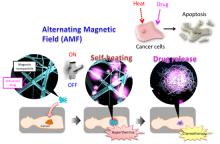
A MANA research team has developed a new nanofiber mesh which is capable of simultaneously realizing thermotherapy (hyperthermia) and chemotherapy (treatment with anticancer drugs) of tumors. They succeeded in efficiently inducing natural death (apoptosis) of epithelial cancer cells.
02 Jul 2013
Ulsan National Institute of Science and Technology (UNIST)
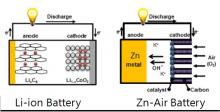
Korean researchers from Ulsan National Institute of Science and Technology (UNIST) have developed a novel bio-inspired composite electrocatalyst which outperforms platinum, in terms of cost, production simplicity and has a longer cycle life reaching above 1000 cycles.

28 Jun 2013
The Hong Kong Polytechnic University (PolyU)
Hong Kong, 28 June 2013 - PolyU Innovation and Entrepreneurship Global Student Challenge (GSC) 2013 was awarded last night with the Gold Award of the University Division to University of Dhaka, Bangladesh and the Secondary School Division to Hankuk Academy of Foreign Studies of South Korea.
27 Jun 2013
National Institute for Materials Science (NIMS)
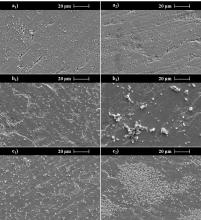
Biomaterials are increasingly replacing human organs and tissues and silver is added to reduce the adhesion of bacteria to biomaterials and prevent infections. However, a recent study by researchers in Portugal suggests that – in one material – increasing levels of silver may indirectly promote bacterial adhesion.

27 Jun 2013
Ulsan National Institute of Science and Technology (UNIST)
Ulsan, South Korea, June 27, 2013 – A research team at Ulsan National Institute of Science and Technology (UNIST) have found a new physical organogel electrolyte with two unique characteristics: an irreversible thermal gelation and a high value of the Li+ transference number.
26 Jun 2013
Toyohashi University of Technology
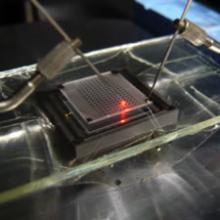
(Toyohashi, 26 June 2013) Toyohashi Tech researchers fabricate powerful red light-emitting diodes by codoping GaN with Eu and Mg. The details are described in the June 2013 issue of Toyohashi Tech e-Newslette

26 Jun 2013
Toyohashi University of Technology
(Toyohashi, 26 June 2013) Growing plants in factories: the June 2013 issue the Toyohashi Tech e-Newsletter contains the latest research-news and views from one of Japan's most innovative and dynamic science and technology-based academic institutes.
25 Jun 2013
Organization of Frontier Science and Innovation, Kanazawa University
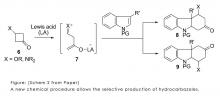
(Kanazawa, Japan, 25 June 2013) A new chemical process developed by researchers at Kanazawa University provides an efficient way of synthesizing diverse organic compounds. Such an efficient, flexible route to these useful compounds could greatly benefit pharmaceuticals and other industries.

24 Jun 2013
Universiti Teknologi MARA (UiTM)
This paper focuses on the spatial-temporal dynamics of the micro climate conditions in canopy gaps in forests.
24 Jun 2013
Universiti Teknologi MARA (UiTM)
This study investigates the effects of sunlight exposure on Rizophora dye solution
24 Jun 2013
The Agency for Science, Technology and Research (A*STAR)
Singapore, 24 June 2013 - A*STAR Institute of Microelectronics and Leading Semiconductor Partners combine research and market expertise to address industry challenges

22 Jun 2013
National Institute for Materials Science (NIMS)
A research team headed by Dr. Takashi Nakanishi, a Principal Researcher of the NIMS Organic Materials Group, Polymer Materials Unit, developed a full-colour tunable luminescent liquid material with excellent light stability based on an anthracene molecule, which is a general organic fluorescent dye.
19 Jun 2013
Institute of Chemical and Engineering Sciences
Singapore, 20 June 2013 –Pfizer Asia Pacific Pte. Ltd, Glaxo Wellcome Manufacturing Pte. Ltd. and Siemens Pte. Ltd, have signed on as founding members of a new A*STAR R&D Consortium Programme - Innovative Processing of Specialties and Pharmaceuticals (iPSP).
19 Jun 2013
Okayama University
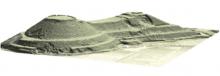
(Okayama, Japan, 19 June 2013) Japan's ancient 'Kofun' burial mounds: Fusion of traditional archaeology with cutting edge information technology to uncover the mysteries of ancient civilizations.

19 Jun 2013
Okayama University
(Okayama, Japan, 19 June) - Highlights include IT-based insights into the mysteries of Japan's ancient 'Kofun' burial mounds; pioneering research on the Standard Model Higgs boson; synthesis of silafluorenes; vesicular neurotransmitter transporters and clean biochemistry; and IP on the synthesis of graphene oxide and nanocomposite applications.
19 Jun 2013
The Agency for Science, Technology and Research (A*STAR)
Converting bioethanol into hydrogen for fuel cells becomes significantly simpler with innovative metal catalysts
19 Jun 2013
The Agency for Science, Technology and Research (A*STAR)
Insights into self-assembled, multicomponent nanostructures on nanowires provide an innovative fabrication approach for high-performance devices
19 Jun 2013
The Agency for Science, Technology and Research (A*STAR)
Magnetic materials that change their properties when heated could pack more data on to hard drives
19 Jun 2013
The Agency for Science, Technology and Research (A*STAR)
A low-cost molecule boosts the stability and amplification characteristics of solution-based polymer semiconductors
17 Jun 2013
Ulsan National Institute of Science and Technology (UNIST)
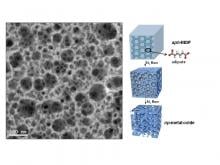
Ulsan, S. Korea, June 17, 2013 - Researchers from Ulsan National Institute of Science and Technology (UNIST), S. Korea, developed a novel, simple method to synthesize hierarchically nanoporous frameworks of nanocrystalline metal oxides such as magnesia and ceria by the thermal conversion of well-designed metal-organic frameworks (MOFs).
14 Jun 2013
The Agency for Science, Technology and Research (A*STAR)
SINGAPORE, June 14, 2013 – ETPL (Exploit Technologies Pte Ltd), the technology transfer arm of A*STAR, today signed a Memorandum of Understanding with the Asia News Network (ANN) to collaborate on projects and solutions aimed at the media and advertising industries.

12 Jun 2013
Nature Publishing Group
A new prototype random-access memory, which uses light for reading out information, is presented in this week’s online issue of Nature Communications. This memory has an exceptionally high write and read speed, a low energy consumption and good endurance making it a promising candidate in the quest for a “universal memory”.

11 Jun 2013
The World Academy of Sciences (TWAS)
Postgraduate fellowships are offered to female scientists by the Organization for Women in Science for the Developing World (OWSD).
Deadline for applications: 31 July 2013.
10 Jun 2013
Ulsan National Institute of Science and Technology (UNIST)
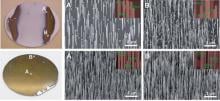
Researchers from Ulsan National Institute of Science and Technology (UNIST), South Korea, and University of Illinois, U.S.A, developed the large-scale heteroepitaxial growth III-V nanowires on a Si wafer.
05 Jun 2013
Ulsan National Institute of Science and Technology (UNIST)
Ulsan, South Korea, June 5, 2013 – Ulsan National Institute of Science and Technology (UNIST), Case Western Reserve University & University of North Texas have paved a new way for affordable commercialization of fuel cells with efficient metal-free electrocatalysts using edge-halogenated graphene nanoplatelets.
05 Jun 2013
The Agency for Science, Technology and Research (A*STAR)
Specifically sized gold nanoparticle spheres increase the sensitivity of a light-based chemical detector
05 Jun 2013
The Agency for Science, Technology and Research (A*STAR)
As well as company privacy, security frameworks for smart grids must protect the privacy of individual consumers
Giants in history

Turkish astrophysicist Dilhan Eryurt (29 November 1926 – 13 September 2012) conducted research on how the sun affects environmental conditions on the moon.
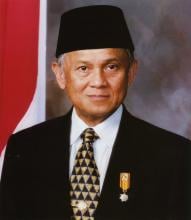
Bacharuddin Jusuf Habibie (25 June 1936 – 11 September 2019) was an Indonesian engineer who was President of Indonesia from 1998 to 1999.

Physicist Narinder Singh Kapany (31 October 1926 – 4 December 2020) pioneered the use of optical fibres to transmit images, and founded several optical technology companies. Born in Punjab, India, he worked at a local optical instruments factory before moving to London for PhD studies at Imperial College. There, he devised a flexible fibrescope to convey images along bundles of glass fibres.

Sir Mokshagundam Srinivasa Shastry Vishveshwarayya (15 September 1860 – 14 April 1962) is widely regarded as India’s most outstanding engineer. In a career that spanned almost his entire life, Vishveshwarayya played a pivotal role in several engineering projects, including designing the Krishnarajasagara dam that is still the source of irrigation and drinking water for parts of Karnataka today.

Fazlur Rahman Khan (3 April 1929 – 27 March 1982) was a Bangladeshi-American structural engineer and architect who invented the tube principle, which formed the basis for modern skyscraper design.

A Japanese surgeon, Tetsuzo Akutsu (20 August 1922 – 9 August 2007) built the first artificial heart capable of keeping an animal alive.

Lin Lanying (7 February 1918 – 4 March 2003) was a Chinese material engineer remembered for her contributions to the field of semiconductor and aerospace materials. Lanying was born into a family who did not believe in educating girls and she was not allowed to go to school.

Gregorio Y. Zara (8 March 1902 – 15 October 1978) was a Filipino engineer and physicist best remembered for inventing the first two-way video telephone. Zara’s video telephone invention enabled the caller and recipient to see each other while conversing, laying the foundation for video-conferencing