

Technology
News
05 Mar 2013
International Center for Materials Nanoarchitectonics (MANA)
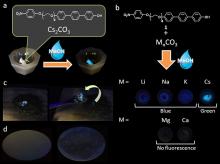
(Tsukuba, 5 March 2013) 'Micrometre-level naked-eye detection' of caesium ions, a major source of contamination in the vicinity of radioactive leaks, is demonstrated in a material developed by researchers in Japan.

27 Feb 2013
The Agency for Science, Technology and Research (A*STAR)
Researchers at the A*STAR Data Storage Institute, Singapore have created tiny spheres of silicon that can strongly interact with the magnetic field of visible-wavelength light. These engineered ‘magnetic materials’ enable new ways of controlling light at the nanoscale.
27 Feb 2013
The Agency for Science, Technology and Research (A*STAR)
Sensors used in harsh conditions, such as deep-sea oil wells, must withstand extreme temperatures and pressures for hundreds of hours without failing. Researchers in Singapore have investigated two metal alloys that could give micro-electromechanical system (MEMS) sensors better protection in the toughest environments
27 Feb 2013
The Agency for Science, Technology and Research (A*STAR)
When a bubble of air rising through water hits a sheet of glass, it doesn’t simply stop — it squishes, rebounds, and rises again, before slowly moving to the barrier. An international research team with high-speed cameras reveal the complex physics at work as air meets water and glass.
25 Feb 2013
Tokyo Institute of Technology
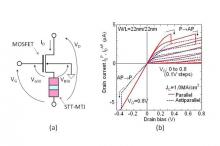
Tokyo, 25 Feb - Non-volatile bistable memory circuits being developed by Satoshi Sugahara and his team at Tokyo Tech pave the way for highly energy-efficient CMOS logic systems. The details are described in the Feb issue of Tokyo Institute of Technology Bulletin

25 Feb 2013
Tokyo Institute of Technology
Tokyo, 25 Feb - Helium crystallization under micro-gravity, highly energy-efficient CMOS logic systems, and ham radio for global communication: the Feb issue of the Tokyo Tech Bulletin contains the latest information about cutting edge research projects and related activities at Tokyo Tech.
22 Feb 2013
Universiti Teknologi MARA (UiTM)
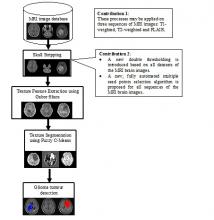
Universiti Teknologi MARA researchers outline a non-invasive method for detecting brain tumours by utilizing spectral texture features of the MRI images
22 Feb 2013
Ulsan National Institute of Science and Technology (UNIST)
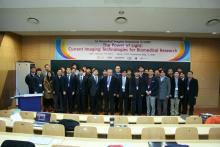
Ulsan National Institute of Science and Technology (UNIST) hosted an international symposium at the UNIST-OLYMPUS Biomedical Imaging Center (UOBC) on February 19, 2013 with over 100 participants including international scholars, medical professionals, business leaders, researchers and students.

18 Feb 2013
National Institute for Materials Science (NIMS)
In Algeria, education of young researchers and graduate students is also important issue and the Ambassador particularly took a great deal of interest in our graduate school and internship programs with universities both in Japan and overseas.
18 Feb 2013
National Institute for Materials Science (NIMS)
Prof. Pairash Thajchayapong, Chairman of the Executive Board of NANOTEC, accompanied by Prof. Sirirurg Songsivilai, Executive director of NANOTEC paid a visit to NIMS President Prof. USHIODA.
15 Feb 2013
The Agency for Science, Technology and Research (A*STAR)
Singapore, 15 Feb 2013 - A*STAR’s Institute of Microelectronics (IME) and Stanford University will collaborate to advance innovations in nano-electromechanical systems (NEMS) switch technology for ultra low power digital systems.
13 Feb 2013
The Agency for Science, Technology and Research (A*STAR)
Rethinking the process used to machine industrially important ceramics could reduce damaging cracks and chips
13 Feb 2013
The Agency for Science, Technology and Research (A*STAR)
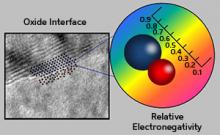
A model that predicts real-world behaviors of insulator interfaces makes designing ‘nano-electronic’ materials significantly simpler
13 Feb 2013
The Agency for Science, Technology and Research (A*STAR)
A flexible design approach for nanosensors that overcomes practicality and reliability issues is now available
13 Feb 2013
Ulsan National Institute of Science and Technology (UNIST)
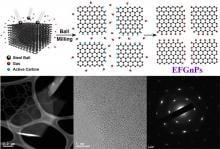
Researchers from the Ulsan National Institute of Science and Technology (UNIST), South Korea have pioneered a simple, but efficient and eco-friendly way to produce Edge-selectively functionalized graphene nanoplatelets (EFGnPs) by dry ball milling graphite in the presence of various gases.
07 Feb 2013
National Institute for Materials Science (NIMS)
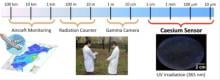
Tsukuba, Japan 7 Feb - Researchers in Japan have developed a way to detect caesium contamination on a scale of millimetres enabling the detection of small areas of radioactive contamination. The research is published in Science and Technology of Advanced Materials today.
07 Feb 2013
National Institute for Materials Science (NIMS)
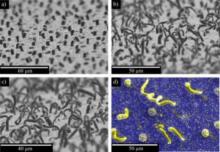
Tsukuba, Japan 7 Feb - Researchers at Ruhr University have used self-assembling techniques to produce gold microwires that have suitable properties for micro-Velcro. The research is published today in Science and Technology of Advanced Materials.

06 Feb 2013
Asia Research News
Penang, Malaysia 6 Feb - A group of international scientists have sequenced the draft genome sequence of the rubber tree Hevea brasiliensis, the major commercial source of natural rubber. The manuscript describing the draft genome is published in BMC Genomics.

02 Feb 2013
The Hong Kong Polytechnic University (PolyU)
The Hong Kong Polytechnic University has designed a new aircraft lavatory called BrailleWise®, giving visially impaired people greater independence and comfort when using toilets on airplanes.
31 Jan 2013
The Agency for Science, Technology and Research (A*STAR)
The ability to miniaturize photonics devices to sizes compatible with computer chips inches closer

31 Jan 2013
The Agency for Science, Technology and Research (A*STAR)
Generating and sustaining electrical currents with unique properties for information processing comes closer to reality after a successful theoretical demonstration
31 Jan 2013
The Agency for Science, Technology and Research (A*STAR)
Singapore, 31 Jan – A*STAR’s Institute of Microelectronics has signed an agreement to collaborate with Petroleum Geo-Services (OSE:PGS), to develop a high performance Micro-Electromechanical Systems (MEMS) based sensor for deep sea seismic oil and gas exploration.
30 Jan 2013
Tokyo Institute of Technology
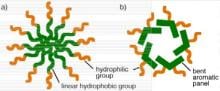
(Tokyo, 30 January 2013) Researchers at Tokyo Institute of Technology have produced a new form of photoactive micelles with potential applications in photofunctional dyes and sensors. The research was published in Angewandte Chemie recently.
29 Jan 2013
The Agency for Science, Technology and Research (A*STAR)
Singapore, 29 Jan 2013- A*STAR’s Institute of Microelectronics (IME) and Physical Logic Ltd, a wholly-owned subsidiary of Physical Logic AG, have extended their collaboration in micro-electro-mechanical-systems (MEMS) sensor accelerometer research and development.
25 Jan 2013
The Hong Kong Polytechnic University (PolyU)
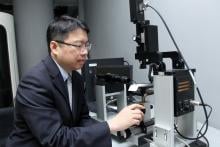
Chinese and Dutch scientists have developed a special surface modified cotton fabric that absorbs water from misty air for up to 340% of its own weight. The cotton then releases the collected water as temperature rises, a potential solution to provide water to the desert regions, for example for agricultural purposes.
25 Jan 2013
The Hong Kong Polytechnic University (PolyU)
On 22nd of January, The Hong Kong Polytechnic University (PolyU) signed an agreement with the Australian Mathematics Trust (AMT) to launch the "Mathematics Challenge for Young Australians" (MCYA) in Hong Kong.
22 Jan 2013
Okayama University
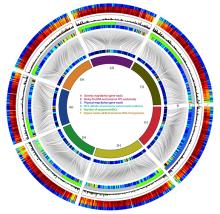
A Japanese team led by Kazuhiro Sato of Okayama University participates in the International Barley Sequencing Consortium (IBSC) to produce a high resolution assembly of the majority of barley genes.
15 Jan 2013
National Institute for Materials Science (NIMS)
World’s First Successful Power Switch Using a Diamond Semiconductor. In the future, this technology may contribute to a new energy strategy in Japan through offshore wind energy, efficient power transmission across the Japanese archipelago, and more.

15 Jan 2013
Waseda University
Professor Oka and his research team at Waseda University have succeeded in developing the world's first conceptual nuclear reactor design of high plutonium breeding by light water cooling.

08 Jan 2013
(Aichi, Japan, 8 January, 2013) – Aisin Seki Co., Ltd welcomes visitors to experience its latest innovative ITS technology on exhibition at North American International Auto Show, Detroit, 14–27 January 2013.
Giants in history

Turkish astrophysicist Dilhan Eryurt (29 November 1926 – 13 September 2012) conducted research on how the sun affects environmental conditions on the moon.
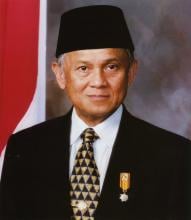
Bacharuddin Jusuf Habibie (25 June 1936 – 11 September 2019) was an Indonesian engineer who was President of Indonesia from 1998 to 1999.

Physicist Narinder Singh Kapany (31 October 1926 – 4 December 2020) pioneered the use of optical fibres to transmit images, and founded several optical technology companies. Born in Punjab, India, he worked at a local optical instruments factory before moving to London for PhD studies at Imperial College. There, he devised a flexible fibrescope to convey images along bundles of glass fibres.

Sir Mokshagundam Srinivasa Shastry Vishveshwarayya (15 September 1860 – 14 April 1962) is widely regarded as India’s most outstanding engineer. In a career that spanned almost his entire life, Vishveshwarayya played a pivotal role in several engineering projects, including designing the Krishnarajasagara dam that is still the source of irrigation and drinking water for parts of Karnataka today.
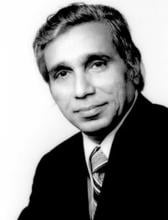
Fazlur Rahman Khan (3 April 1929 – 27 March 1982) was a Bangladeshi-American structural engineer and architect who invented the tube principle, which formed the basis for modern skyscraper design.
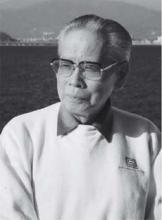
A Japanese surgeon, Tetsuzo Akutsu (20 August 1922 – 9 August 2007) built the first artificial heart capable of keeping an animal alive.

Lin Lanying (7 February 1918 – 4 March 2003) was a Chinese material engineer remembered for her contributions to the field of semiconductor and aerospace materials. Lanying was born into a family who did not believe in educating girls and she was not allowed to go to school.

Gregorio Y. Zara (8 March 1902 – 15 October 1978) was a Filipino engineer and physicist best remembered for inventing the first two-way video telephone. Zara’s video telephone invention enabled the caller and recipient to see each other while conversing, laying the foundation for video-conferencing