

Technology
News
28 Aug 2012
National Institute for Materials Science (NIMS)
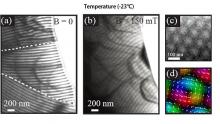
RIKEN, the University of Tokyo, and NIMS succeeded in forming a skyrmion crystal, in which electron spin is aligned in a vortex shape, in a microdevice using the helimagnet FeGe, and driving the skyrmion crystal with an ultra-low current density less than 1/100,000 that of the current necessary to drive magnetic domain walls in ferromagnets.

28 Aug 2012
The Agency for Science, Technology and Research (A*STAR)
Toronto, Ontario; Ithaca, NY; Singapore, August 28th, 2012 - Optical coherence tomography (OCT) has attracted interest from the medical imaging community for its ability to provide live 3D images at near microscopic levels, offering an ‘optical ultrasound’ alternative for doctors.
28 Aug 2012
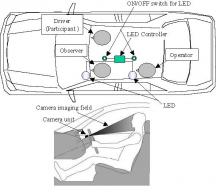
(Aichi, Japan, 28, 2012) - Aisin Seki Co., Ltd, Japan, has developed an eyelid monitor and identified symptoms in eyelid behaviour that indicate drowsiness in motorists. The new automated technology (Intelligent Transport System (ITS)) eliminates the fallibility of human judgement in gauging when drowsiness is becoming a driving hazard.
28 Aug 2012
The Agency for Science, Technology and Research (A*STAR)
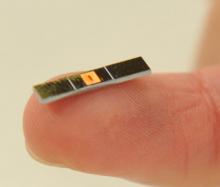
Singapore, 28 Aug 2012 ― Researchers from A*STAR’s Institute of Microelectronics (IME) have developed the first compact high performance silicon-based cavity-backed slot (CBS) antenna that operates at 135 GHz.
27 Aug 2012
Tokyo Institute of Technology
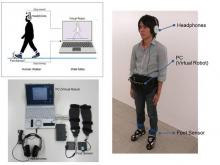
(Tokyo, 27 August 2012) Tokyo Tech ‘s Yoshihiro Miyake and colleagues have developed an innovative, non-invasive therapeutic intervention that may improve the mobility, stability, and quality of life of Parkinson’s disease patients.

27 Aug 2012
Tokyo Institute of Technology
(Tokyo, 27 August 2012) The bulletin contains cutting research from fish collagen for cosmetics and medical applications to multi-petaflop supercomputing, and environmentally responsive organic materials.
24 Aug 2012
Tokyo Institute of Technology
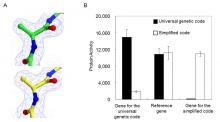
(Tokyo, 24 August 2012) Tokyo Institute of Technology researchers show simpler versions of the universal genetic code can still function in protein synthesis. In addition to understanding early primordial organisms, the research could lead to applications preventing non-natural genetically modified materials from entering the natural world.
17 Aug 2012
The Agency for Science, Technology and Research (A*STAR)
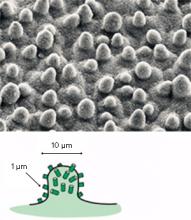
Studies reveal a new way to make superhydrophobic surfaces with better self-cleaning capabilities
17 Aug 2012
The Agency for Science, Technology and Research (A*STAR)
Researchers from A*STAR IME have developed an analog-to-digital converter (ADC) that uses only 400 nW, the lowest power consumption reported to date amongst today’s standard processing technology.
17 Aug 2012
The Agency for Science, Technology and Research (A*STAR)
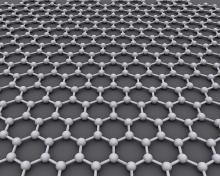
Transistors made from graphene nanoribbons make efficient magnetic field sensors

17 Aug 2012
The Agency for Science, Technology and Research (A*STAR)
A*STAR Institute of Microelectronics (IME) and Futurewei Technologies, Inc., a subsidiary of Huawei Technologies Co., Ltd. (Huawei), have signed a Memorandum Of Understanding (MOU) to develop and advance Through Silicon Interposer (TSI) technology.

14 Aug 2012
The Agency for Science, Technology and Research (A*STAR)
I2R’s Techfest 2012 showcases the latest exciting innovations from revolutionary big data analytics to next-generation entertainment technologies. Techfest 2012 and ICM Horizons will be open to the public from 10am to 6pm on 15th and 16th August 2012.

12 Aug 2012
Nature Publishing Group
A method for printing colours at the highest possible resolution is reported in a paper published online this week in Nature Nanotechnology. The resolution of about 100,000 dots per inch could be useful for high-resolution printing for security purposes or for high-density optical data storage.

12 Aug 2012
The Agency for Science, Technology and Research (A*STAR)
Singapore, 12 August 2012 - Inspired by colourful stained-glass windows, researchers from Singapore have demonstrated an innovative method for producing sharp, full-spectrum colour images at 100,000 dpi which can be applicable in reflective colour displays, anti-counterfeiting, and high-density optical data recording.

09 Aug 2012
Universiti Teknologi MARA (UiTM)
University Teknologi MARA researchers studied carotene and antibacterial effects of microwave heated and conventional heated red palm oil (RPO). They discovered that conventional heating reduced its carotene levels but microwave heating retained a higher carotene content.
08 Aug 2012
Nature Publishing Group
A quantum communication experiment represents a significant step towards a global quantum network. These findings have high practical relevance for quantum communications between satellites and ground stations, and may enable large-scale tests of quantum foundations.
07 Aug 2012
Tamagawa University Quantum ICT Research Institute
(Tokyo, August 7, 2012) – Researchers at Tamagawa University announced today that they had proved the incompleteness and limit of the security theory in quantum key distribution. The present theory cannot guarantee unconditional security. Details will be given at the SPIE conference on Quantum Communication and Quantum Imaging on August 15, 2012.
02 Aug 2012
The Agency for Science, Technology and Research (A*STAR)
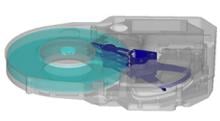
Fluid dynamics simulations aim to better predict how air circulating in a hard disk drive perturbs the vibrating read/write head
02 Aug 2012
The Agency for Science, Technology and Research (A*STAR)
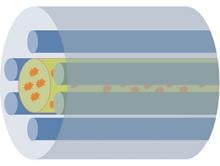
Hollow optical fibers containing light-emitting liquids hold big promises for biological sensing applications

02 Aug 2012
The Agency for Science, Technology and Research (A*STAR)
Using the correct annealing temperature is key to making fast, non-volatile computer memory
02 Aug 2012
The Agency for Science, Technology and Research (A*STAR)
A*STAR Institute of Microelectronics (IME), has signed a research collaboration agreement with Delta Networks, Inc. (Delta), a global leader in power, thermal management solutions and networking products, to develop a metamaterial (MTM) antenna for wireless application that offers improvements in performance with reduced power and cost.

02 Aug 2012
The Agency for Science, Technology and Research (A*STAR)
Scientists from A*STAR’s Institute of Materials Research and Engineering (IMRE) will partner companies to develop, prototype and conduct pilot large scale manufacturing of nanoimprinted materials with better performance and at potentially lower cost than current production methods.

31 Jul 2012
Toyohashi University of Technology
The Irago Conference 2012 (Asia-Pacific Interdisciplinary Research Conference 2012) will be held November 15-16, 2012 in Irago, Aichi prefecture, Japan.

26 Jul 2012
The Agency for Science, Technology and Research (A*STAR)
Leading global Chinese language Internet search provider Baidu opens its first overseas joint laboratory with I2R to develop language processing technologies
23 Jul 2012
National Institute for Materials Science (NIMS)
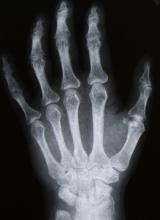
An artificial bone scaffold produced by researchers in South Korea could enhance the treatment of bone damage and defects through bone grafts.
18 Jul 2012
The Agency for Science, Technology and Research (A*STAR)
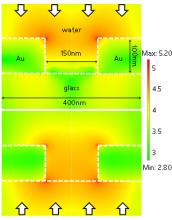
Molecular sensors based on nanoholes in metallic films are shown to be ideal for medical diagnosis
18 Jul 2012
National Institute for Materials Science (NIMS)
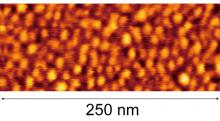
Will Further Accelerate Research toward Realization of High Performance Quantum Dot Devices
18 Jul 2012
The Agency for Science, Technology and Research (A*STAR)
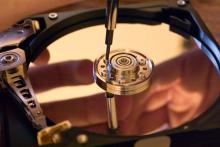
New insights into the stable magnetism of phase-change semiconductors could enable the development of ultra-high-speed data storage

18 Jul 2012
The Agency for Science, Technology and Research (A*STAR)
A simple new method of extracting viral RNA from blood samples allows quick, on-the-spot identification of dengue fever in patients

12 Jul 2012
Tokyo Institute of Technology
The fluorescent molecular nanocapsules have potential applications as sensors, displays, and drug delivery systems (DDS).
Giants in history

Turkish astrophysicist Dilhan Eryurt (29 November 1926 – 13 September 2012) conducted research on how the sun affects environmental conditions on the moon.

Bacharuddin Jusuf Habibie (25 June 1936 – 11 September 2019) was an Indonesian engineer who was President of Indonesia from 1998 to 1999.

Physicist Narinder Singh Kapany (31 October 1926 – 4 December 2020) pioneered the use of optical fibres to transmit images, and founded several optical technology companies. Born in Punjab, India, he worked at a local optical instruments factory before moving to London for PhD studies at Imperial College. There, he devised a flexible fibrescope to convey images along bundles of glass fibres.

Sir Mokshagundam Srinivasa Shastry Vishveshwarayya (15 September 1860 – 14 April 1962) is widely regarded as India’s most outstanding engineer. In a career that spanned almost his entire life, Vishveshwarayya played a pivotal role in several engineering projects, including designing the Krishnarajasagara dam that is still the source of irrigation and drinking water for parts of Karnataka today.

Fazlur Rahman Khan (3 April 1929 – 27 March 1982) was a Bangladeshi-American structural engineer and architect who invented the tube principle, which formed the basis for modern skyscraper design.

A Japanese surgeon, Tetsuzo Akutsu (20 August 1922 – 9 August 2007) built the first artificial heart capable of keeping an animal alive.

Lin Lanying (7 February 1918 – 4 March 2003) was a Chinese material engineer remembered for her contributions to the field of semiconductor and aerospace materials. Lanying was born into a family who did not believe in educating girls and she was not allowed to go to school.

Gregorio Y. Zara (8 March 1902 – 15 October 1978) was a Filipino engineer and physicist best remembered for inventing the first two-way video telephone. Zara’s video telephone invention enabled the caller and recipient to see each other while conversing, laying the foundation for video-conferencing