

Technology
News
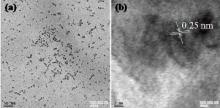
13 Sep 2012
National Institute for Materials Science (NIMS)
Work led by Amita Pathak at the Indian Institute of Technology has produced water-soluble C-dots that selectively emit light across the entire visible range without any surface coating. The properties of these new C-dots make them ideal for a variety of bioimaging applications and for medical diagnostics.

13 Sep 2012
The Agency for Science, Technology and Research (A*STAR)
A*STAR’s Institute of Microelectronics (IME), and Hitachi Chemical Co., Ltd (Hitachi Chemical) in Japan, will be collaborating on a joint research of high performance material technologies to support thin wafer processing for 3 dimensional integrated circuit (3D IC) packaging.
12 Sep 2012
The Agency for Science, Technology and Research (A*STAR)
Faster signal storage and optical processing in nanomachined devices edge closer to realization

12 Sep 2012
The Agency for Science, Technology and Research (A*STAR)
Inexpensive hybrid metal and oxide nanostructures prove to be a catalyst that enhance sunlight-powered hydrogen production
12 Sep 2012
The Agency for Science, Technology and Research (A*STAR)
Mechanical failure of short nanowires is characterized by smooth, ductile deformations, while long nanowires fail catastrophically

30 Aug 2012
National Institute for Materials Science (NIMS)
The improved process enables formation of high quality titanium alloy coating films, which had been difficult with the conventional technique.

30 Aug 2012
The low cost, high efficiency electric pump offers an environmentally friendly alternative to mechanical counterparts. Aisin Seki Co., Ltd has now successfully developed a smaller, cheaper electric cooling pump through some effective efficiency optimisations.

30 Aug 2012
The Agency for Science, Technology and Research (A*STAR)
Institute of Microelectronics (IME) has signed a Memorandum of Understanding (MOU) with MOSIS, a provider of low-cost prototyping and small volume production services for custom ICs, to offer its multiple-project wafer (MPW) service to MOSIS’ customers.

29 Aug 2012
The Agency for Science, Technology and Research (A*STAR)
The latest advance in imaging technology helps optimize catalysts for use in onboard fuel processing. A*STAR researchers have identified the subtle, atomic-scale structural transformations that can activate and de-activate gold nanoparticle catalysts, a finding that may lead to longer-lasting hydrogen fuel cells.

29 Aug 2012
The Agency for Science, Technology and Research (A*STAR)
Flat panel displays and many digital devices require thin, efficient and low-cost light-emitters for applications. The pixels that make up the different colors on the display are typically wired to complex electronic circuits, but now researchers at A*STAR have developed a display technology that requires a much simpler architecture for operation.
29 Aug 2012
The Agency for Science, Technology and Research (A*STAR)
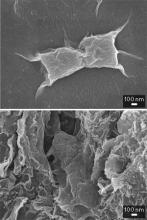
Graphene-based materials kill bacteria through one of two possible mechanisms. Researchers at A*STAR Singapore Institute of Manufacturing Technology and co-workers have now compared the antibacterial activity of graphite, graphite oxide, graphene oxide and reduced graphene oxide using the model bacterium Escherichia coli.
28 Aug 2012
National Institute for Materials Science (NIMS)
Japanese scientists have succeeded in fabricating a crystalline thin film with a film thickness of nanometer order, in which molecules of a 3-dimensionally strong porous coordination polymer (PCP) are oriented in a designated direction, and demonstrated that this thin film has a reversible gas adsorption/desorption reaction function.
28 Aug 2012
National Institute for Materials Science (NIMS)
A research group including the NIMS Superconducting Properties Unit and others, in joint work with the University of Fukui, discovered a new material, NaCr2O4, which was developed by ultra-high pressure synthesis and displays a novel type of colossal magnetoresistance effect.
28 Aug 2012
National Institute for Materials Science (NIMS)
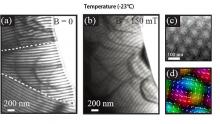
RIKEN, the University of Tokyo, and NIMS succeeded in forming a skyrmion crystal, in which electron spin is aligned in a vortex shape, in a microdevice using the helimagnet FeGe, and driving the skyrmion crystal with an ultra-low current density less than 1/100,000 that of the current necessary to drive magnetic domain walls in ferromagnets.
28 Aug 2012
The Agency for Science, Technology and Research (A*STAR)
Toronto, Ontario; Ithaca, NY; Singapore, August 28th, 2012 - Optical coherence tomography (OCT) has attracted interest from the medical imaging community for its ability to provide live 3D images at near microscopic levels, offering an ‘optical ultrasound’ alternative for doctors.
28 Aug 2012
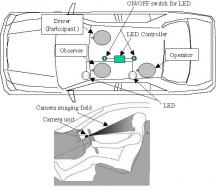
(Aichi, Japan, 28, 2012) - Aisin Seki Co., Ltd, Japan, has developed an eyelid monitor and identified symptoms in eyelid behaviour that indicate drowsiness in motorists. The new automated technology (Intelligent Transport System (ITS)) eliminates the fallibility of human judgement in gauging when drowsiness is becoming a driving hazard.
28 Aug 2012
The Agency for Science, Technology and Research (A*STAR)
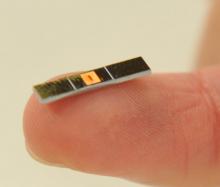
Singapore, 28 Aug 2012 ― Researchers from A*STAR’s Institute of Microelectronics (IME) have developed the first compact high performance silicon-based cavity-backed slot (CBS) antenna that operates at 135 GHz.
27 Aug 2012
Tokyo Institute of Technology
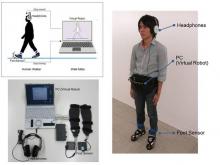
(Tokyo, 27 August 2012) Tokyo Tech ‘s Yoshihiro Miyake and colleagues have developed an innovative, non-invasive therapeutic intervention that may improve the mobility, stability, and quality of life of Parkinson’s disease patients.

27 Aug 2012
Tokyo Institute of Technology
(Tokyo, 27 August 2012) The bulletin contains cutting research from fish collagen for cosmetics and medical applications to multi-petaflop supercomputing, and environmentally responsive organic materials.
24 Aug 2012
Tokyo Institute of Technology
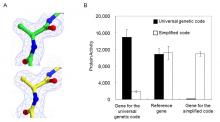
(Tokyo, 24 August 2012) Tokyo Institute of Technology researchers show simpler versions of the universal genetic code can still function in protein synthesis. In addition to understanding early primordial organisms, the research could lead to applications preventing non-natural genetically modified materials from entering the natural world.
17 Aug 2012
The Agency for Science, Technology and Research (A*STAR)
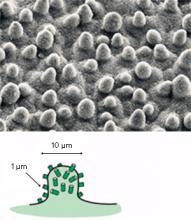
Studies reveal a new way to make superhydrophobic surfaces with better self-cleaning capabilities
17 Aug 2012
The Agency for Science, Technology and Research (A*STAR)
Researchers from A*STAR IME have developed an analog-to-digital converter (ADC) that uses only 400 nW, the lowest power consumption reported to date amongst today’s standard processing technology.
17 Aug 2012
The Agency for Science, Technology and Research (A*STAR)
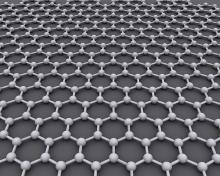
Transistors made from graphene nanoribbons make efficient magnetic field sensors

17 Aug 2012
The Agency for Science, Technology and Research (A*STAR)
A*STAR Institute of Microelectronics (IME) and Futurewei Technologies, Inc., a subsidiary of Huawei Technologies Co., Ltd. (Huawei), have signed a Memorandum Of Understanding (MOU) to develop and advance Through Silicon Interposer (TSI) technology.

14 Aug 2012
The Agency for Science, Technology and Research (A*STAR)
I2R’s Techfest 2012 showcases the latest exciting innovations from revolutionary big data analytics to next-generation entertainment technologies. Techfest 2012 and ICM Horizons will be open to the public from 10am to 6pm on 15th and 16th August 2012.

12 Aug 2012
Nature Publishing Group
A method for printing colours at the highest possible resolution is reported in a paper published online this week in Nature Nanotechnology. The resolution of about 100,000 dots per inch could be useful for high-resolution printing for security purposes or for high-density optical data storage.

12 Aug 2012
The Agency for Science, Technology and Research (A*STAR)
Singapore, 12 August 2012 - Inspired by colourful stained-glass windows, researchers from Singapore have demonstrated an innovative method for producing sharp, full-spectrum colour images at 100,000 dpi which can be applicable in reflective colour displays, anti-counterfeiting, and high-density optical data recording.

09 Aug 2012
Universiti Teknologi MARA (UiTM)
University Teknologi MARA researchers studied carotene and antibacterial effects of microwave heated and conventional heated red palm oil (RPO). They discovered that conventional heating reduced its carotene levels but microwave heating retained a higher carotene content.
08 Aug 2012
Nature Publishing Group
A quantum communication experiment represents a significant step towards a global quantum network. These findings have high practical relevance for quantum communications between satellites and ground stations, and may enable large-scale tests of quantum foundations.
07 Aug 2012
Tamagawa University Quantum ICT Research Institute
(Tokyo, August 7, 2012) – Researchers at Tamagawa University announced today that they had proved the incompleteness and limit of the security theory in quantum key distribution. The present theory cannot guarantee unconditional security. Details will be given at the SPIE conference on Quantum Communication and Quantum Imaging on August 15, 2012.
Giants in history

Turkish astrophysicist Dilhan Eryurt (29 November 1926 – 13 September 2012) conducted research on how the sun affects environmental conditions on the moon.

Bacharuddin Jusuf Habibie (25 June 1936 – 11 September 2019) was an Indonesian engineer who was President of Indonesia from 1998 to 1999.

Physicist Narinder Singh Kapany (31 October 1926 – 4 December 2020) pioneered the use of optical fibres to transmit images, and founded several optical technology companies. Born in Punjab, India, he worked at a local optical instruments factory before moving to London for PhD studies at Imperial College. There, he devised a flexible fibrescope to convey images along bundles of glass fibres.

Sir Mokshagundam Srinivasa Shastry Vishveshwarayya (15 September 1860 – 14 April 1962) is widely regarded as India’s most outstanding engineer. In a career that spanned almost his entire life, Vishveshwarayya played a pivotal role in several engineering projects, including designing the Krishnarajasagara dam that is still the source of irrigation and drinking water for parts of Karnataka today.

Fazlur Rahman Khan (3 April 1929 – 27 March 1982) was a Bangladeshi-American structural engineer and architect who invented the tube principle, which formed the basis for modern skyscraper design.

A Japanese surgeon, Tetsuzo Akutsu (20 August 1922 – 9 August 2007) built the first artificial heart capable of keeping an animal alive.

Lin Lanying (7 February 1918 – 4 March 2003) was a Chinese material engineer remembered for her contributions to the field of semiconductor and aerospace materials. Lanying was born into a family who did not believe in educating girls and she was not allowed to go to school.

Gregorio Y. Zara (8 March 1902 – 15 October 1978) was a Filipino engineer and physicist best remembered for inventing the first two-way video telephone. Zara’s video telephone invention enabled the caller and recipient to see each other while conversing, laying the foundation for video-conferencing