

Technology
News

24 May 2012
The Agency for Science, Technology and Research (A*STAR)
The IME and NXP team will collaborate on the development of process technologies for the manufacturing of GaN devices on 200mm wafer, which is expected to bring about considerable reduction in manufacturing cost compared to using smaller size wafers.
23 May 2012
The Agency for Science, Technology and Research (A*STAR)
‘Tractor beams’ of light that pull objects towards them are no longer science fiction. Haifeng Wang at the A*STAR Data Storage Institute and co-workers have now demonstrated how a tractor beam can in fact be realized on a small scale.
23 May 2012
The Agency for Science, Technology and Research (A*STAR)
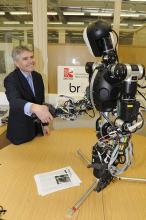
New intelligent algorithms could help robots to quickly recognize and respond to human gestures. Researchers at A*STAR Institute for Infocomm Research in Singapore have created a computer program which recognises human gestures quickly and accurately, and requires very little training.
23 May 2012
The Agency for Science, Technology and Research (A*STAR)
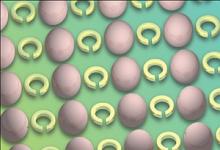
A novel approach to designing artificial materials could enable magnetic devices with a wider range of properties than those now available. An international team of researchers have now extended the properties and potential uses of metamaterials by using not one but two very different classes of nanostructures, or metamolecules.
23 May 2012
The Agency for Science, Technology and Research (A*STAR)
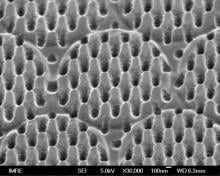
The innovative plastics offer improved performance and wider viewing angles over existing anti-reflective plastics in the market. This plastic uses a locally-developed nanotechnology method that creates a complex pattern of super tiny structures that mimic the patterns found on a moth’s eye, which has a unique method of diffusing light.
20 May 2012
RIKEN
Saitama, Japan, 20 May 2012 - The relativistic Hall effect describing objects rotating at speeds comparable with the speed of light has now been reported.
18 May 2012
Asia Research News
The 10th International Nanotech Symposium & Nano-convergence Expo in Korea.

13 May 2012
Nature Publishing Group
Volcanoes on the sea floor can grow and collapse in rapid pulses, reports a study published online this week in Nature Geoscience. Due to their inaccessible nature, little is known about the evolution of submarine volcanoes. This study provides insights into the frequency and rate at which such volcanoes can erupt and grow.
10 May 2012
The Agency for Science, Technology and Research (A*STAR)
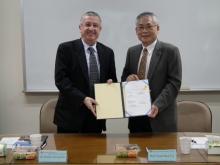
SINGAPORE, 8 May 2012: Singapore’s Data Storage Institute (DSI) has signed a collaboration agreement with Taiwan’s National Tsing Hua University (NTHU) to pursue research on flexible cable which will be assembled into the world’s first 5mm hybrid hard disk drive (HDD), targeted to launch at the end of the year.
09 May 2012
The Agency for Science, Technology and Research (A*STAR)
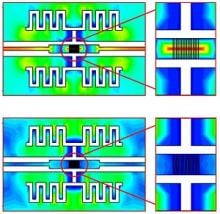
A new approach to generating terahertz radiation will lead to new imaging and sensing applications. The low energy of the radiation means that it can pass through materials that are otherwise opaque, opening up uses in imaging and sensing — for example, in new security scanners. In practice, however, applications have been difficult to implement.
09 May 2012
The Agency for Science, Technology and Research (A*STAR)
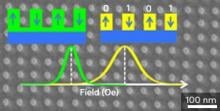
A modified approach to fabrication of magnetic memory elements may lead to a new generation of stable, ultra-high-capacity hard drives
09 May 2012
The Agency for Science, Technology and Research (A*STAR)
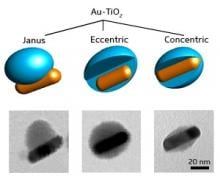
Hybrid 'Janus' nanoparticles made from gold and titania have high catalytic activity and extraordinary durability
09 May 2012
The Agency for Science, Technology and Research (A*STAR)
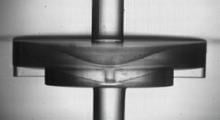
A quiet revolution is taking place in the fields of biology and chemistry. Microfluidic devices, which allow fluid manipulation in micro-scale channels, are slowly but surely finding their place on the lab bench. A new microfluidic device can operate as a mixer or a valve, improving the efficiency of micro-scale laboratory apparatus.

08 May 2012
Asia Research News
Summary of Science and Innovation news from the British Embassy, Tokyo. This month’s article is “The Power Under the Ocean”, looking at the potential of methane hydrate as a source of energy.

02 May 2012
The Agency for Science, Technology and Research (A*STAR)
Bin Chen of the A*STAR Institute of High Performance Computing and Huajian Gao at Brown University, US, have built a model to illustrate the process of skeletal muscle contraction. A combination of random protein movements and the elasticity inside muscles helps to maintain a steady force during skeletal muscle contraction.
01 May 2012
Waseda University
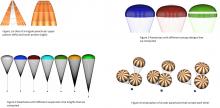
OPINION - To me, space meant NASA and the space shuttle. But last year, finally, the space shuttle was retired. Therefore, the only way to return from space now is by using parachutes.
01 May 2012
Universiti Teknologi MARA (UiTM)
Two teams from UiTM won third and fourth placing in Hack@10, a hacking competition organised by Universiti Tenaga Nasional (UNITEN) and Time Engineering Bhd, as game provider.
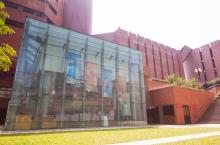
27 Apr 2012
The Hong Kong Polytechnic University (PolyU)
House of Innovation Reopens...

27 Apr 2012
Toyohashi University of Technology
We are pleased to announce that on 12th of April, 2012, Toyohashi Tech had made an exchange agreement between School of Innovation Science, Eindhoven University of Technology (TU/e).
27 Apr 2012
Asia Research News
"Nanotechnology Platform Program" newly starts on 2012 with MEXT support.
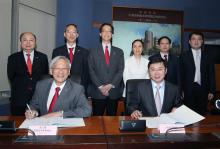
23 Apr 2012
The Hong Kong Polytechnic University (PolyU)
The signing of an agreement between The Hong Kong Polytechnic University and China Academy of Space Technology has brought together top-notch experts from both sides to work on the development of sophisticated space tool for collecting sample of lunar rock in the third phase of China's lunar exploration programme.
22 Apr 2012
Nature Publishing Group
Latest News from Nature 22 April 2012
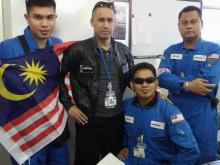
19 Apr 2012
Universiti Kuala Lumpur
The Parabolic Team of Universiti Kuala Lumpur had actuated Parabolic Flights from March 23 till 28, 2012 over the airspace of Nagoya Japan. The flights were performed using a modified jet of the Japanese Space Agency (JAXA).

19 Apr 2012
National Institute for Materials Science (NIMS)
The High Energy Accelerator Research Organization (KEK), recently joined to TIA-nano as a new core institute, in addition to the existing core institutes, the National Institute of Advanced Industrial Science and Technology (AIST), the National Institute for Materials Science (NIMS), and the University of Tsukuba.
15 Apr 2012
Nature Publishing Group
Latest news from Nature 15 April 2012
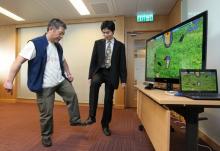
12 Apr 2012
The Hong Kong Polytechnic University (PolyU)
"KineLabs" is a free software platform with three rehabilitation games for elderly people and persons after stroke to have fun while enhancing their motor skills in a 3D virtual environment.

12 Apr 2012
The World Academy of Sciences (TWAS)
TWAS and ISTIC are collaborating on a project aimed at identifying, rewarding and disseminating best practices in the innovative use of science and technology in the development of new products, processes or services that have had impacts on economic development in the South.
12 Apr 2012
University of Sindh, Jamshoro, Pakistan
Summary
Pakistan Journal of Biotechnology Vol. 9 No. 1 will be published in the first week of June and No. 2 will be published in the first week of January 2013
11 Apr 2012
International Development Research Centre (IDRC)
Guest article by Rohan Samarajiva
11 Apr 2012
The Agency for Science, Technology and Research (A*STAR)
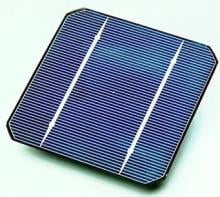
A low-temperature method could be used to ‘grow’ transparent zinc oxide films for use in displays and solar cells
Giants in history

Turkish astrophysicist Dilhan Eryurt (29 November 1926 – 13 September 2012) conducted research on how the sun affects environmental conditions on the moon.
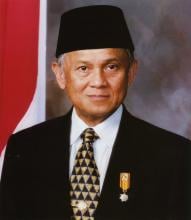
Bacharuddin Jusuf Habibie (25 June 1936 – 11 September 2019) was an Indonesian engineer who was President of Indonesia from 1998 to 1999.

Physicist Narinder Singh Kapany (31 October 1926 – 4 December 2020) pioneered the use of optical fibres to transmit images, and founded several optical technology companies. Born in Punjab, India, he worked at a local optical instruments factory before moving to London for PhD studies at Imperial College. There, he devised a flexible fibrescope to convey images along bundles of glass fibres.

Sir Mokshagundam Srinivasa Shastry Vishveshwarayya (15 September 1860 – 14 April 1962) is widely regarded as India’s most outstanding engineer. In a career that spanned almost his entire life, Vishveshwarayya played a pivotal role in several engineering projects, including designing the Krishnarajasagara dam that is still the source of irrigation and drinking water for parts of Karnataka today.

Fazlur Rahman Khan (3 April 1929 – 27 March 1982) was a Bangladeshi-American structural engineer and architect who invented the tube principle, which formed the basis for modern skyscraper design.

A Japanese surgeon, Tetsuzo Akutsu (20 August 1922 – 9 August 2007) built the first artificial heart capable of keeping an animal alive.

Lin Lanying (7 February 1918 – 4 March 2003) was a Chinese material engineer remembered for her contributions to the field of semiconductor and aerospace materials. Lanying was born into a family who did not believe in educating girls and she was not allowed to go to school.

Gregorio Y. Zara (8 March 1902 – 15 October 1978) was a Filipino engineer and physicist best remembered for inventing the first two-way video telephone. Zara’s video telephone invention enabled the caller and recipient to see each other while conversing, laying the foundation for video-conferencing