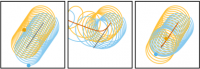
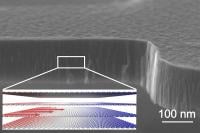
To discover and preserve conservation laws in the data of physical phenomena, researchers from Osaka University developed FINDE, which uses a neural network to represent the underlying conservation laws of a system as opposed to its superficial dynamics.
Institute of Industrial Science, The University of Tokyo (UTokyo-IIS)
26 Apr 2023
Researchers at the Institute of Industrial Science, The University of Tokyo, have developed a desktop charger with voltages high enough to replenish the electric charge on N95 and surgical masks, which is required for effective use
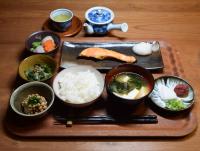
A research group at the Osaka Metropolitan University analyzed the relationship between diet, muscle mass, and liver fibrosis progression in 136 patients with nonalcoholic fatty liver disease attending the Osaka Metropolitan University Hospital. The research group found that the group with the highest Japanese diet score had less advanced liver fibrosis, and that the intake of soy products, seafood, and seaweed was important.
Singapore scientists find use of healthcare resources, absenteeism and reduced productivity due to mental health issues place a significant burden on Singapore’s economy.
Osaka Metropolitan University researcher demonstrates that social and educational indicators strongly affect the population decline rate. This indicates that municipalities that invest more in education for children tend to have lower population decline rates. Surprisingly, educational indicators have a greater influence than economic indicators, such as the financial strength index.
Institute of Industrial Science, The University of Tokyo (UTokyo-IIS)
25 Apr 2023
Researchers from The University of Tokyo find a new approach to successfully identify areas at risk of flooding that can be missed by historical hazard maps.
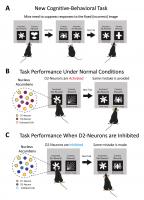
The Nobel prize winning physicist Niels Bohr once said, “An expert is a (person) that has made all the mistakes that can be made in a narrow field.” This idea that to master a skill we must learn from our mistakes and avoid making them in future has long been recognized; however, the brain mechanisms and pathways that control this ability have been poorly understood.
We revealed a specific brain pathway that allows us to identify and learn from our mistakes to guide better decision-making in fu
This study by Dr Chrysa Keung Pui-chi, Assistant Professor at the Department of Education Policy and Leadership, The Education University of Hong Kong, examined the relationships between leadership practices, professional learning communities, teachers’ efficacy beliefs and perceptions of whole-child development in the context of kindergarten education.
Born out of the changing society of nineteenth-century Calcutta, Kalighat painting was a popular medium among the patuas (painters) who worked in the vicinity of the Kalighat temple. Though these paintings were originally intended to be souvenirs for devotees visiting the temple and featured primarily Hindu imagery, they expanded over time to include other religious traditions as well as socio-political commentary.
Asia Research News monitors the latest research news in Asia. Some highlights that caught our attention this week are bioprinting organs and tissues, settling a debate on a monster, and shedding light on dark matter.
Institute of Industrial Science, The University of Tokyo (UTokyo-IIS)
20 Apr 2023
Researchers at the Institute of Industrial Science, The University of Tokyo use isotopically purified graphite to study the phenomenon of heat flowing like a fluid, which can lead to new heat-sink devices for electronics.
In the quantum world particles can instantaneously know about each other’s state, even when separated by large distances. This is known as nonlocality. Now, A research group has produced some interesting findings on the Hardy nonlocality that have important ramifications for understanding quantum mechanics and its potential applications in communications.
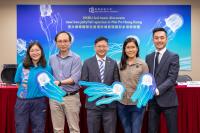
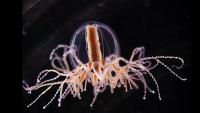
A Hong Kong Baptist University (HKBU)-led team has discovered a new species of box jellyfish in the Mai Po Nature Reserve in Hong Kong. The new jellyfish species, which belongs to the family Tripedaliidae, was named Tripedalia maipoensis by the research team. It is the first discovery of a new box jellyfish species from the waters of China. The discovery also adds a fourth species to the Tripedaliidae family.
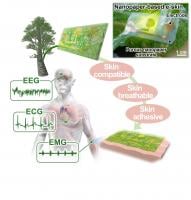
Researchers from SANKEN (The Institute of Scientific and Industrial Research), at Osaka University designed a cellulose nanofiber paper (nanopaper) that can be used as a substrate for on-skin electronics. The porous structure of the nanopaper means that it can conform and adhere to the skin well enough for effective signal transfer and allows moisture to pass through for breathability and comfort.
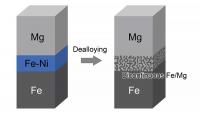
Transport relies heavily on steel. But steel is heavy, and scientists are turning to alternatives to lessen the transportation industry’s carbon emissions. Magnesium alloys are one such alternative. But developing bonding technology that bonds magnesium alloys with structural steels has been severely limited because magnesium and iron are immiscible.
Asia Research News monitors the latest research news in Asia. Some highlights that caught our attention this week are a foldable buggy that can be used on the moon, synthetic nano-nets to help combat antibiotic resistance, and how that new car smell may not be a good thing.
We typically think of robots as metal objects, filled with motors and circuits. But the field of molecular robotics is starting to change that. Like the formation of complex living organisms, molecular robots derive their form and functionality from assembled molecules stored in a single unit, i.e., a body. Yet manufacturing this body at the microscopic level is an engineering nightmare. Now, a Tohoku University team has created a simple workaround.
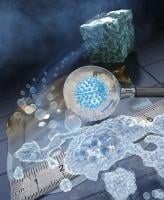
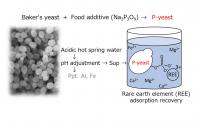
A research group at Osaka Metropolitan University has succeeded in selectively recovering trace rare earth elements in synthetic seawater and environmental water, such as hot spring water, using baker’s yeast with a phosphate group added. The phosphorylated yeast is expected to be utilized as a material for recovering useful metals and removing toxic metals, thereby contributing to the realization of a metal resource-circulating society.
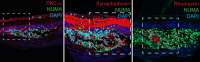
Research reveals a promising stem cell approach to correct photoreceptor cell degeneration, which underlies several forms of visual decline and blindness.
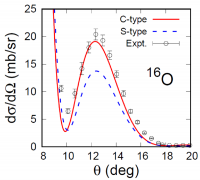
Osaka Metropolitan University scientists have developed a theory to experimentally determine differences in nuclear structure. Using this method to assess carbon and oxygen nuclei revealed that they contain more components in their cluster structure than in their shell structure. This enables visualization of nuclear structures without large-scale numerical calculations, which are expected to be applied to heavier nuclei in the future.
To survive, all organisms must regulate their appetite. Hormones and small proteins called neuropeptides perform this process, stimulating feelings of hunger and fullness. When researchers noted the similarities between GAWamide, a neuropeptide that regulates feeding in the Cladonema jellyfish, and myoinhibitory peptide, a neuropeptide that regulates feeding in fruit flies, they decided to test whether they could exchange the two.
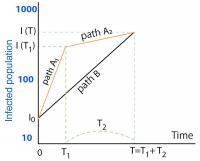
With many countries enacting strict lockdowns in the wake of the COVID-19 pandemic, economists have begun looking at the wider implications of such policies. Typically, they employ a cost-benefit analysis, but this has certain limitations. To overcome these limitations, a Tohoku University professor has turned to a surprising source: physics
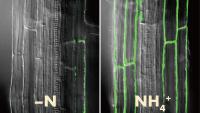
Nitrogen is such a crucial nutrient for plants that vast quantities of nitrogen-containing fertilizers are spread on farmlands worldwide. However, excess nitrogen in the soil and in drainage run-off into lakes and rivers causes serious ecological imbalances.
Doctors at King Chulalongkorn Memorial Hospital have developed lightweight and easy-to-use Parkinson's gloves that can automatically reduce tremors, allowing patients to enjoy social life and reducing side effects from medication and risk from brain surgery.
AI finds the first stars ✨were not alone, Auto-switch for large electronic devices, A metabolite against autoimmune diseases, & Converting fruit waste 🍊🍉into solar stills. Plus in our blog: A career worth doing, a life worth living. Read all in the latest Editor's Choice.
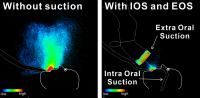
The COVID-19 pandemic has made us more aware of the aerosols that hang around in the air and spread certain infectious diseases. Common dental procedures can be potentially hazardous in this regard. Therefore, it is crucial for researchers to be able to measure how aerosols spread so they can reduce them.
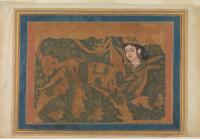
Often regarded as Prophet Muhammad's vehicle in Islamic mythology, the Buraq is a winged creature often depicted with a human head and the body of a horse. It has been depicted in visual art across the Islamic world and continues to be a motif used by artists in the region.
Asia Research News monitors the latest research news in Asia. Some highlights that caught our attention this week are snakes that do gymnastics to get out of danger, 3 species of ancient spiders discovered in China, and how monkeys can fall for magic tricks.