
Lingnan University joint research analyses genome of global agricultural pest ‘apple snail’: Ancient viral gene-driven evolution of ‘terrestrial oviposition’ ability.
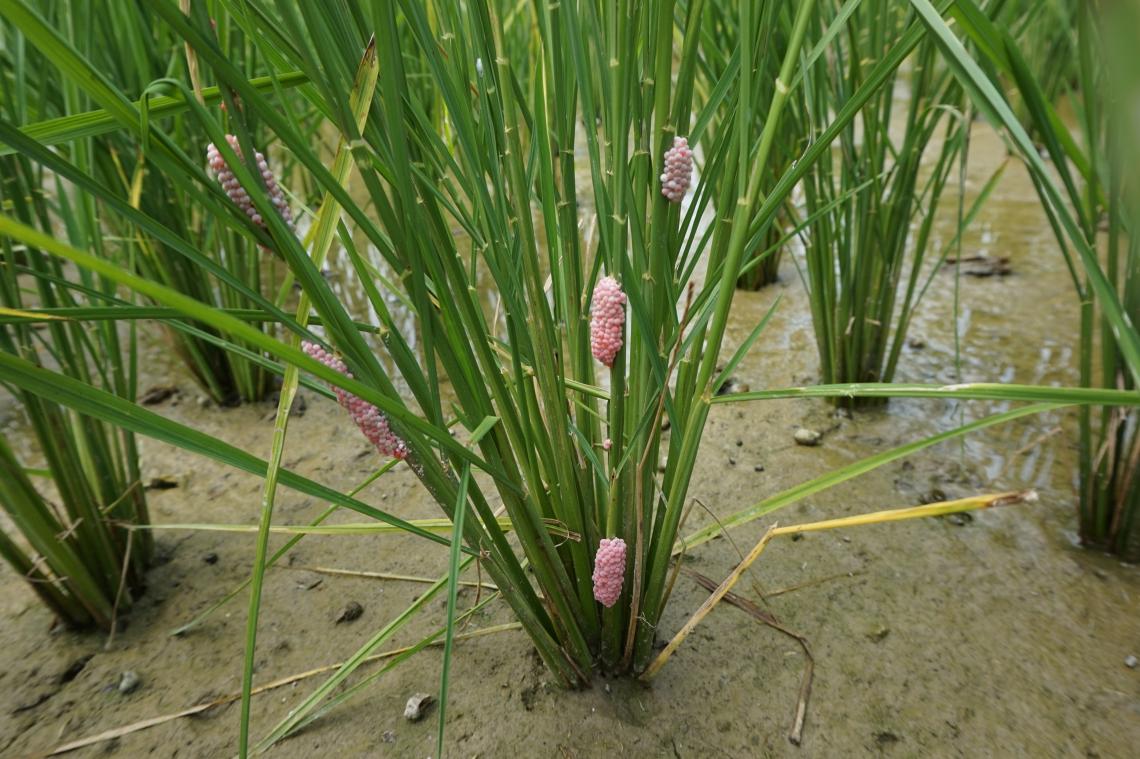
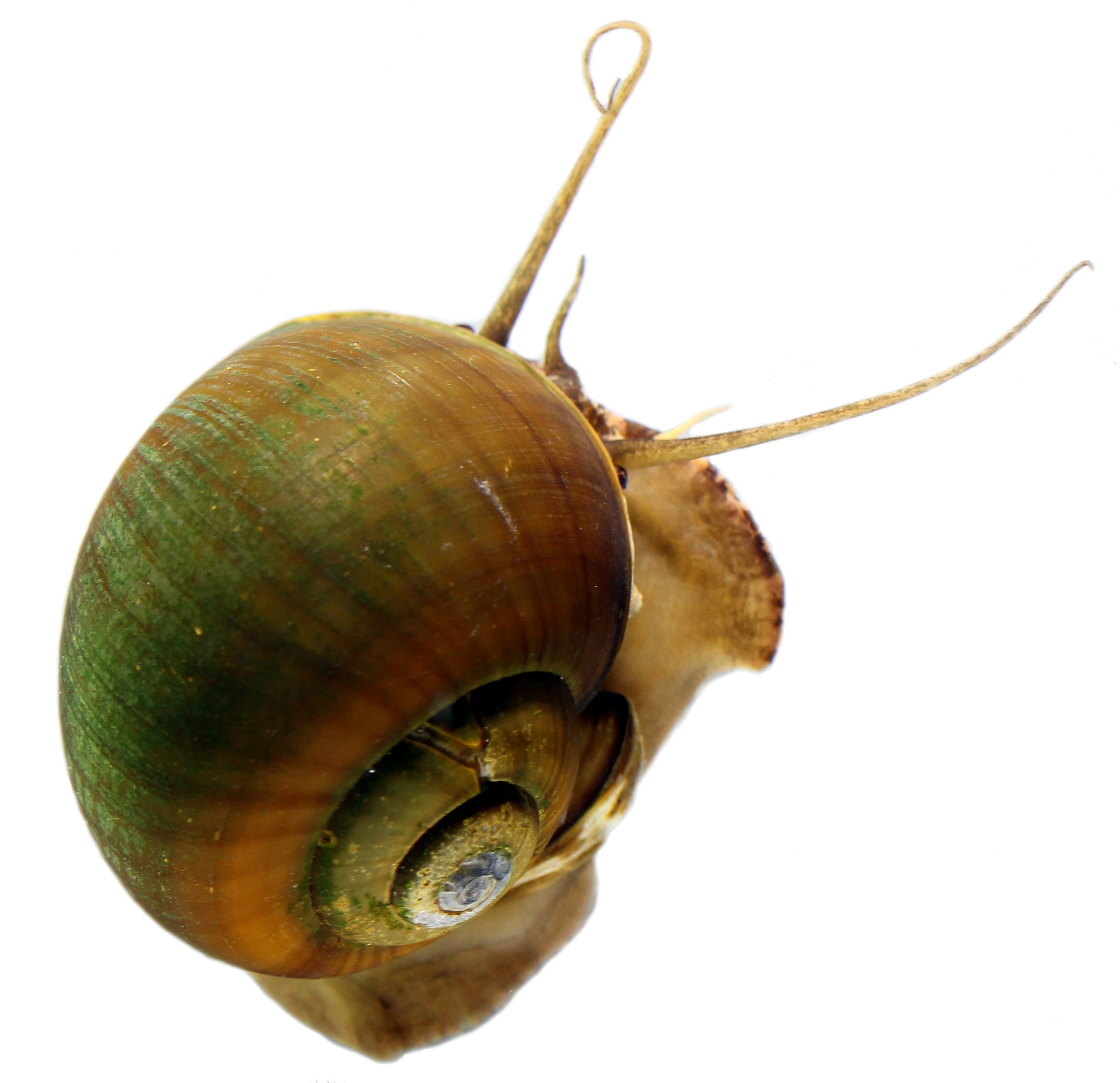
The Pomacea canaliculata is a common agricultural pest in Hong Kong. It produces toxic pink egg masses resembling miniature grapes adhered to plants or stone bunds, and is listed by the International Union for Conservation of Nature (IUCN) as one of the “100 of the World's Worst Invasive Alien Species”.
The research team was led by corresponding author Prof Jack Ip Chi-Ho, Assistant Professor (Presidential Early Career Scholar) of the Division of Science (DoS) at Lingnan University, in close collaboration with Prof Jian-Wen Qiu (Hong Kong Baptist University) and Prof Jin Sun (Ocean University of China), together with international malacological experts.
The team pointed out that after the ancient continent split around 128 million years ago, the ancestors of the Pomacea canaliculata living in freshwater environments parted ways and evolved independently across Asia, Africa, and the Americas. Interestingly, a similar land-laying reproductive trait evolved independently in two apple snail lineages that diverged more than 100 million years ago—one in Asia and Africa (Pila) and one in the Americas (Pomacea). The team deduced that the ancestors of the apple snail were infected by a virus before the split as early as 145 million years ago during the Jurassic period. By integrating the viral gene into their own genome, they drove the evolution of the reproductive trait of laying eggs on land, thereby reducing the threat of aquatic predators such as fish to the egg masses.
Using comparative genomics, the team analysed the genome of six apple snail species (from Asia, Africa, and the Americas), and conducted a genome-wide comparison with their close relatives, including the family Viviparidae (river snails) and other molluscs. The results revealed that in the terrestrial egg-laying species of the Old World genus Pila and the New World genus Pomacea, their egg fluid contains over 80 per cent of the protein PV1, which helps enhance their ability to resist desiccation and ultraviolet rays.
Further analysis indicated that within the New World genus Pomacea, including Pomacea canaliculata and Pomacea maculata, there is also a neurotoxic protein called PV2, which provides additional toxic defence to deter predators. Together, these key egg-fluid proteins exhibit unique neurotoxic and physical protective characteristics, which may have helped drive the apple snail to enhance its reproductive capacity—producing red-pink, toxic egg masses resembling miniature grapes that deter terrestrial predators such as birds and insects while allowing the egg masses to maintain water balance in the air, resisting desiccation and ultraviolet rays.
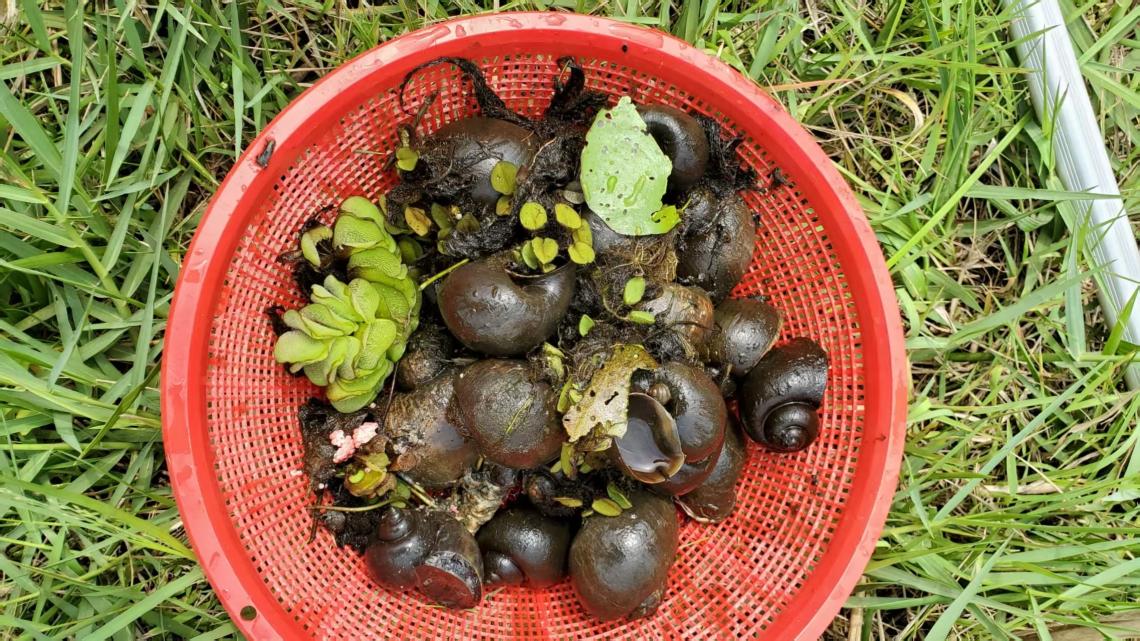
Prof Ip explained that the Pomacea, originally native to the Amazon River basin in South America, was introduced to Asia for food, but because it harbours parasites that can cause severe diseases in humans, it ultimately became an invasive species in freshwater ecosystems worldwide, including Hong Kong. Each apple snail can produce up to 500 eggs in a single week, and eats aquatic plants such as water spinach and watercress, affecting crop growth. Its astonishing reproductive capacity allows it to compete with native freshwater snails for living space, disrupting the ecological balance of wetlands, affecting the habitats of birds and amphibians, and causing severe damage to the environment.
Prof Ip said, “In the past, controlling the snail pest in Hong Kong relied mainly on manual removal of egg masses and the application of chemical pesticides, which yielded limited efficacy. The use of chemical agents could also cause pollution to wetland ecosystems and crops. The Pomacea is not the only aquatic animal to have evolved terrestrial reproductive traits, and this study reveals an important transition in the evolutionary history of animals moving from water to land for reproduction. We found that two apple snail lineages, which evolved independently for over 100 million years, could develop a similar trait of terrestrial oviposition, and this helps the academic community understand the critical evolutionary role played by viral infections in driving environmental adaptation and species evolution. In the future, we hope to conduct an in-depth study on the PV1 protein that protects the snail eggs, in order to develop biological inhibitors targeting this protein to eradicate the snail pest, opening up a new direction to mitigate its ecological destruction.”
He expects to suppress the reproductive capacity of the Pomacea from the root in a way that does not damage the wetland environment and crops, providing a definitive solution for local and international ecological conservation and sustainable agriculture.