
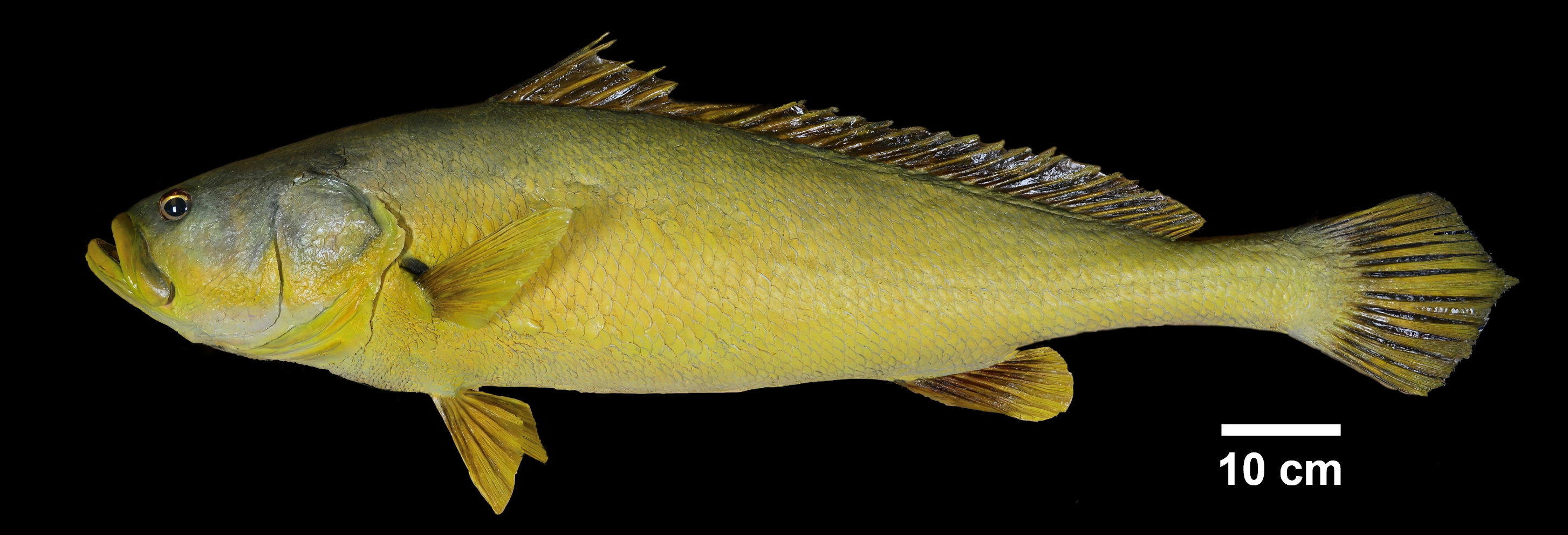
The Division of Science at Lingnan University has co-developed a species-specific qPCR-based environmental DNA (eDNA) monitoring technology tailored for the Chinese bahaba. Using the new technology, the research team can detect traces of the species for the first time in over a decade in western Hong Kong SAR waters.
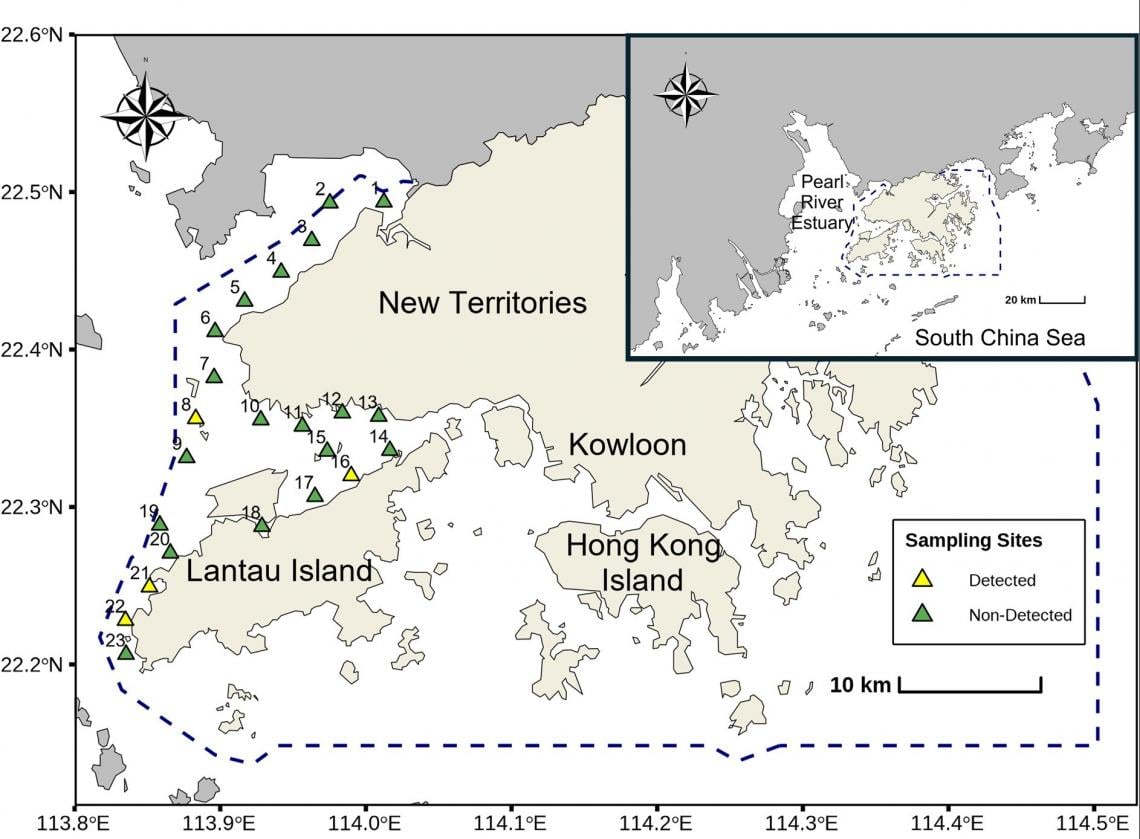
Using the new technology, the research team carried out a survey at 23 sites in western Hong Kong SAR waters between January and September 2025, collecting 414 natural seawater samples.
The Chinese bahaba is the largest member of the croaker family found in the South China Sea, and can growup to two metres in length. It was abundant in the estuarine waters around Tai O, Hong Kong SAR, during the 20th century and known locally as the “Tai O fish”. Owing to the medicinal value of its swim bladder, the species has been heavily overfished, resulting in a dramatic decline in its wild population and making it extremely difficult to monitor. To address this issue, the research team analysed its mitochondrial genome sequences and developed a highly sensitive genetic identification technology capable of detecting eDNA, including traces from mucus and faeces, left behind in seawater. Computational analysis and laboratory validation have confirmed that the technology can accurately identify the Chinese bahaba without confusing it with DNA from other fish species, even when only trace amounts of eDNA are present in seawater samples.
Using this new technology, the research team carried out surveys at 23 sites covering the entirety of western Hong Kong SAR waters, including areas near the Mai Po Nature Reserve, the Sha Chau and Lung Kwu Chau Marine Park, The Brothers Marine Park, and the Southwest Lantau Marine Park between January and September 2025. At each site, three one-litre seawater samples were collected, resulting in a total of 414 natural seawater samples. Sterile distilled water was also used as a control throughout the sampling and testing process to ensure that the results were not affected by contamination from external DNA.
Analysis showed that eDNA from the Chinese bahaba was detected in seawater samples collected at four survey sites in September 2025: Tai O, Sha Chau and Lung Kwu Chau Marine Park, the Southwest Lantau Marine Park, and Sunny Bay (near The Brothers Marine Park). Among these, Tai O recorded the highest frequency and the highest concentration of eDNA. This coincides with a stock enhancement release of approximately 1,300 hatchery-reared juvenile Chinese bahaba into the Pearl River Estuary in August 2025, suggesting that some of the released juveniles may have entered western Hong Kong SAR waters.
Prof Jack Ip Chi-ho, Assistant Professor (Presidential Early Career Scholar) of the Division of Science at Lingnan University, said “There has been no recorded occurrence of the Chinese bahaba in Hong Kong SAR waters for more than a decade. Given the species’ extreme rarity, the chance of encountering it through conventional survey methods is exceptionally low, making it difficult to understand its distribution. Reliable advanced monitoring technology is essential for effectively tracking wild populations and evaluating the survival and adaptation of released juveniles in their natural habitats. The new detection technology developed by our research team is highly sensitive, and if a fish has passed through an area and left behind even a tiny amount of eDNA, its presence can be accurately determined enabling researchers to monitor the movement of released fish populations without the need for capture.”
Prof Ip added that conventional marine fish surveys rely heavily on trawling or capture methods, which require skilled manpower and substantial financial resources, while also damaging seabed habitats and posing a risk to non-target species.
The professor explained, “The greatest advantage of eDNA technology lies in its non-invasive nature. It enables scientists to confirm the presence of a species without capturing or disturbing individual fish. Researchers simply need to collect seawater samples to conduct large scale marine surveys within a short period of time, significantly reducing sampling efforts. The technology also provides conservation organisations with an effective tool to evaluate the outcomes of juvenile fish release programmes. Beyond long-term monitoring of the Chinese bahaba in the Pearl River Estuary and nearby waters, the technology can also be integrated with other eDNA approaches to support biodiversity monitoring and provide valuable reference data for conservation planning across the Guangdong-Hong Kong-Macao Greater Bay Area.”
The study was led by Prof Jack Ip Chi-Ho, Assistant Professor (Presidential Early Career Scholar) of the Division of Science (DoS) at Lingnan University, and Prof Junjie Wang of South China Normal University, and supported by the Marine Ecology Enhancement Fund (MEEF) of the Airport Authority Hong Kong, the Ministry of Agriculture and Rural Affairs project “Investigation of Fishery Resources and Habitat in the Pearl River Basin”, and the project “Monitoring of Marine Biological Resources and Environment in Dongguan Bahaba taipingensisNature Reserve”.