
Chemistry Biochemistry
News
03 Sep 2026
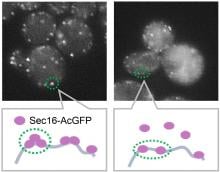
A study in budding yeast suggests that changes in membrane lipids trigger a braking system that slows internal protein transport when the endoplasmic reticulum comes under stress, comparable to modern logistics networks where shipments are slowed when distribution hubs are under stress.
03 Sep 2026
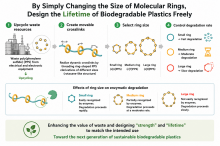
Researchers at the University of Osaka used cyclic PPS manufacturing by-products as movable molecular crosslinks in biodegradable PCL. Medium-sized c [7] PS rings approximately doubled toughness while slowing enzymatic degradation, whereas larger c [9] PS rings accelerated degradation to no residual film mass after 48 hours. The findings identify molecular ring size as a design parameter for tuning material lifetime while also offering a waste-to-value route toward more sustainable polymer systems with programmable properties.
27 Aug 2026
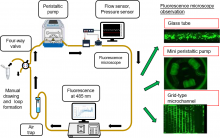
Researchers from the University of Osaka found that amyloid formation is promoted by a combination of shear stress and constrained geometry in an in vitro model of amyloidogenic light chain disease. Applying mechanical agitation or pressure, as well as disaggregating agents, effectively removed amyloid deposits. These findings provide a novel framework for understanding amyloid deposition in organs.
25 Aug 2026
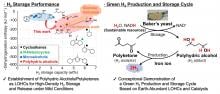
Hydrogen may be a clean fuel, but not all hydrogen is green. Most H₂ is still produced from fossil fuels, while storing and transporting it remain costly and technically challenging. For hydrogen to truly live up to its green promise, we need cleaner and less costly ways to produce and store it. Looking for a more sustainable way forward, researchers at Tohoku University have developed a potential solution. Their new recyclable system uses baker’s yeast to store hydrogen directly in organic molecules and abundant, inexpensive iron ions to release it when needed.
19 Aug 2026
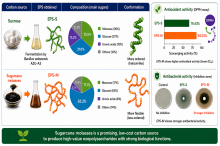
Feeding bacteria a cheap agricultural by-product enables the production of high-value biomaterials with promising biomedical and industrial applications.
06 Aug 2026
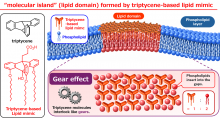
Researchers from the University of Osaka, Gunma University and Kyushu University created lipid mimic molecules that form “island”-like groups called lipid domains in artificial lipid membranes. The domains are thermally stable because the propellor-shaped moiety of the lipid mimic molecules interlock and the surrounding lipids fit into the spaces between. This new method of forming domains may allow artificial lipid membrane materials to be created for catalysis, capturing molecules, and drug delivery.
06 Apr 2026
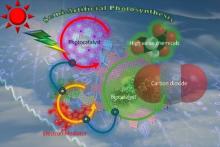
Professor Yutaka Amao’s review gives a comprehensive overview of natural photosynthesis, the principles and history of artificial photosynthesis research, and carbon dioxide capture, utilization, and storage technologies.
26 Feb 2026
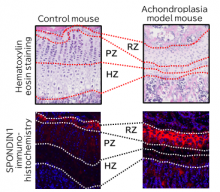
Researchers from The University of Osaka have developed a mouse model for achondroplasia. The model identified the importance of a signaling molecule called FGFR3 and a pathway called CREB in regulating bone growth. This pathway is also at least partially responsible for the pathology associated with achondroplasia and impaired bone growth. Their findings advance our understanding of the process of bone growth and provide novel therapeutic targets for achondroplasia.

29 Jan 2026
Sticky life beginnings. Precarious pitcher plant, Breaking the cobalt "cage", Toxic algae killer & “Pure-bred” stem cell medium. Read all in the latest Editor's Choice. Plus Asia Research News 2026 is out now and SciCom Coffee talk by Rachael Smith at Wellcome Sanger Institute.
19 Jan 2026
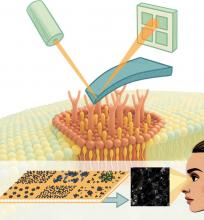
A collaborative team of four professors and several graduate students from the Departments of Chemistry and Biochemical Science and Technology at National Taiwan University, together with the Department of Applied Chemistry at National Chi Nan University, has achieved a long-sought breakthrough. By combining atomic force microscopy (AFM) with a Hadamard product–based image reconstruction algorithm, the researchers successfully visualized, for the first time, the nanoscopic dynamics of membrane rafts in live cells—making visible what had long remained invisible on the cell membrane.
16 Dec 2025
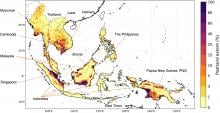
A new regional assessment shows that Southeast Asia is a major net source of greenhouse gases, with land-use change and rising fossil fuel use overwhelming natural carbon sinks, reservoirs that store carbon-containing chemical compounds for a long period.

01 Dec 2025
Surface-bound gels may have provided the structure and chemistry for life to take root on Earth, and perhaps beyond
26 Nov 2025
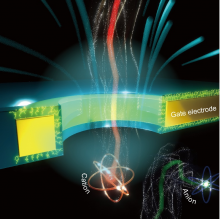
Researchers from The University of Osaka fabricated a nanopore surrounded by a gate as a cooling system with enhanced efficiency for semiconductor chips. Applying a voltage to the gate induces the flow of ions through the nanopore. Creating a salt gradient makes the ion flow unidirectional. Heat is dragged along with the ions, resulting in heat transfer. Changing the applied voltage from negative to positive switches the system from cooling to heating.
28 Oct 2025
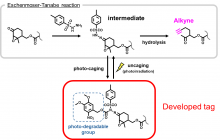
Researchers at The University of Osaka and The University of Tokyo developed a photoactivatable alkyne tag that enables stable, selective visualization of biomolecules inside living cells. The technology would contribute to reveal previously unseen molecular communication, paving the way for advances in cell biology and drug discovery.
03 Sep 2025
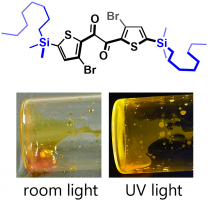
A metal-free organic liquid has been developed that phosphoresces at room temperature. Rapid phosphorescence endows the liquid with the highest phosphorescence efficiency in air among organic liquids. The new molecule has a 3-bromo-2-thienyl diketone backbone with attached dimethylocylsilyl (DMOS) groups. Attaching one DMOS group liquefies the backbone, whereas attaching two DMOS groups prevents molecular aggregation, which typically weakens phosphorescence. This new, flexible liquid can be applied to develop flexible electronic devices.
03 Sep 2025
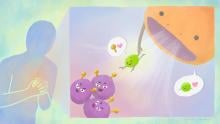
A customizable protein has been developed to help the body remove harmful cells, such as those involved in cancer or autoimmune diseases, offering a potential new direction for treatments.
02 Sep 2025
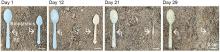
To reduce plastic pollution and promote environmental sustainability, scholars from the Lingnan University School of Interdisciplinary Studies and their research team have developed a successful new eco-friendly bioplastic material. Unlike conventional plastics, it degrades naturally into harmless water and carbon dioxide in as little as 29 days under ambient conditions, and is a practical way to mitigate global plastic pollution. Their study, “Sustainable DNA-polysaccharide hydrogels as recyclable bioplastics”, was recently published in the respected journal Nature Communications.

03 Jul 2025
Comparing picosecond and nanosecond lasers usage with a newly developed index

12 Jun 2025
A surgeon can excise breast cancer from the body, but even the most skilled scalpel may not be able to remove every cell — especially when the cells have spread from the original disease site elsewhere in the body. This proliferation and migration of breast cancer cells involves many still unknown molecular means, but researchers at Hiroshima University have elucidated at least one mechanism, involving protein receptors that bind to one another. With the discovery, they may have also uncovered how short chains of protein building blocks could serve as a novel anticancer drug.

14 May 2025
Researchers from The University of Osaka have developed a new technology that allows accurate visualization of the different parts that make up a single cell

29 Apr 2025
Smart neural electrode, "Rhinoceros beetle" robot, Halting the thief of sight, Together at last & Lighting hardy plants. Plus latest SciCom Coffee talk. Read all in the latest Editor's Choice.

22 Apr 2025
New light-powered DNA detection enables more accessible, affordable genetic analysis

21 Mar 2025
Constructed strain achieves record-high yield from methanol, advancing eco-friendly biomanufacturing

20 Feb 2025
Asteroid contains life’s building blocks, How fish detect color, Eco-friendly artificial muscles, Cell imaging gets a glow-up, Quantum gem, Healing skin with milkfish. Plus the 2025 Magazine is here, Read all in the latest Editor's Choice.

20 Feb 2025
Replacing chemical phosphorus and nitrogen with sustainable sources

22 Jan 2025
Technology uses biomass-derived compounds and ammonia to produce an eco-friendly alternative plastic

17 Jan 2025
Lingnan University’s School of Interdisciplinary Studies (SIS) and the Center of International Innovation for Technology and Science (CIITS), signed a Cooperation Framework Agreement at the InnoBay · Future Industry Forum——Shenzhen-Hong Kong Exchange Session (CIITS) in the Shenzhen Park of Hetao Shenzhen-Hong Kong Science and Technology Innovation Cooperation Zone yesterday (16 January). Prof Chen Xi, Dean of SIS, and Mr Liu Renchen, Director of the CIITS, signed on behalf of both parties, injecting new momentum into promoting scientific and technological innovation cooperation.

16 Dec 2024
Cell wall proteins exhibit emulsifying action, offer possible alternative to emulsifiers derived from milk, other known allergens

04 Oct 2024
Future of bioplastics made from carbon dioxide and biomass molecules could rely on more enzymes, shorter incubation periods

19 Sep 2024
Light-induced immunoassay coated with novel coronavirus spike proteins found highly sensitive even with weak light like a laser pointer
Events
Sorry, nothing coming up for this discipline
Researchers
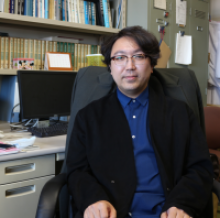
Prof. Muneyuki Matsuo is an Assistant Professor at the Department of Chemistry, School of Science / Program of Mathematical and Life Sciences, Graduate School of Integrated Sciences for Life, Hiroshima University

Carla Portugal is currently an Assistant Researcher at LAQV-Requimte, NOVA.iD.FCT and is experienced in the development, implementation and monitoring of membrane based processes.

Tony Z. Jia is a researcher at Japan’s Earth-Life Science Institute (ELSI), based at the Tokyo Institute of Technology. His research focuses on astrobiology, prebiotic chemistry, and origins of life.

I do research on dysmennorrhoea and gender-based violence. I am a pioneer in registered clinical trials on indigenous and Ayurveda medicines in Sri Lanka. I have approval for a herbal preparation, for COVID patients.

Dr.Ms.Aruna Dhathathreyan is a professor and emeritus scientist at the Advanced Materials Lab, CSIR-Central Leather Research Institute, India.

Dr. Mashura Shammi is an associate professor at the Department of Environmental Sciences, Jahangirnagar University, Bangladesh.
Giants in history
Sorry, nothing coming up for this discipline