When your research becomes big news
By Ruth Francis
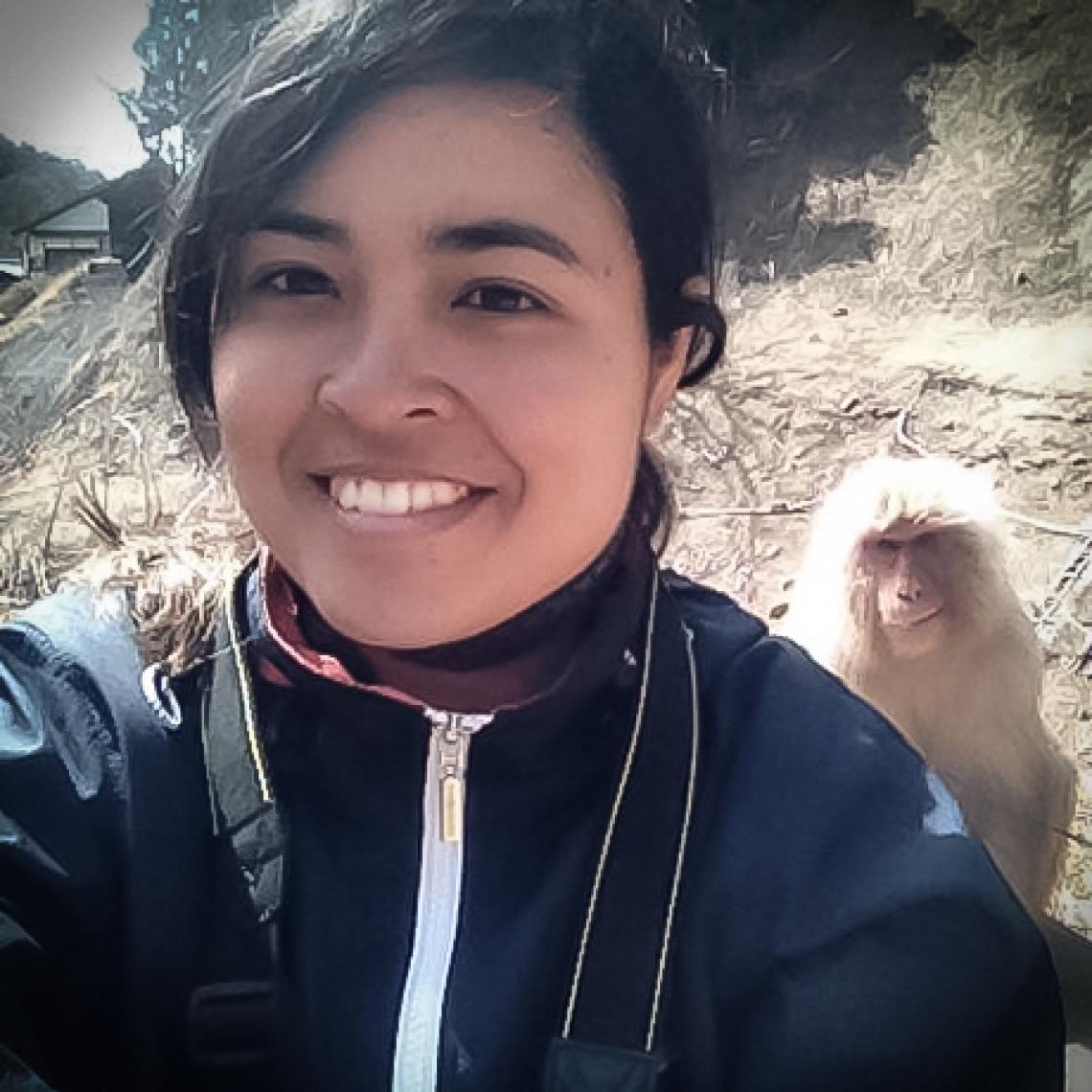
How does it feel when your research becomes the centre of media attention? We asked Rafaela Takeshita of the Primate Research Institute of Kyoto University. After her paper on snow monkeys in northern Japan was accepted in the journal Primates, the editor-in-chief flagged it to the Public Relations Office at Kyoto University. From there, a press release and press conference were prepared, but was Rafaela Takeshita prepared for the media interest?
Q: Did you imagine your research would get this much attention around the world?
A: Not really, especially considering that it took a year to get the paper accepted. When I heard about the press conference I thought interest would be limited to Japan, but then we got in touch with New York Times. From there, it was quite a surprise how it spread. I got messages from friends in Austria saying that they saw me on a German TV channel.
Q: How many calls and emails did you get and how did you handle them all?
A: After the press conference and before the embargo lifted, I received phone calls from five journalists who had attended the conference, and emails and one phone interview from the New York Times. After the embargo lifted, I received phone calls and emails from at least five journalists in Japan and three abroad – and I just received another one today!
It wasn’t easy to handle, but I got a lot of support from the Public Relations team at the University. The journalists were all flexible, and worked with my schedule. Their persistence really amazed me. One journalist from Japan called me four times in one day, but I was always either in public transportation or attending a seminar. In the end, I talked to him during my walk from the train station to my house around 10PM.
Q: What did you think of the coverage? Do you have a favourite headline?
A: I really like the coverage. Most of the articles are pretty good, but I did see a lot of wrong information in some that did not contact me; for example, mentioning blood sampling or measurement of heart rate, which I never did. I found other common mistakes such as referring to monkeys as apes, or using pictures of the wrong monkey species. I was also very surprised to see the study cited in some very non-scientific media, such as fashion and mechanics websites.
A favorite headline? The original press release by Springer is the most accurate and summarizes better the study “Spa therapy helps Japan’s snow monkeys cope with cold”. But I really like the headline from Live Science “Snow monkeys love hot baths just like humans do, and now we know why”. It its somehow mysterious and captivating, probably because the comparison with humans make people feel closer to the monkeys.
Q: What was it like being the center of attention for a few days?
A: Well, I won’t deny that it was quite nice to receive so many positive messages from friends, family, professors and colleagues. I must say that I would have enjoyed it a lot more if it was during a less busy time – I had my PhD graduation ceremony, two workshops to attend, a lecture to prepare, two important deadlines to meet, and I was in the transition from the student position to research associate at the Primate Research Institute. Friends were also leaving the institute, and new students were arriving, so there was a lot of dinners and gatherings going on at that time. It was hard to find time for all of that, on top of the media attention.
Q: Why did you think it was important to make the time?
A: The ultimate goal of science is to inform. Besides publications in scientific journals, I believe it is very important to inform the general public, which sometimes is not an easy task. The media makes the dissemination of information a lot easier, and usually very effective. I saw a couple of articles prepared with the purpose of education, and it was really gratifying to hear that children enjoyed learning about the monkeys. This would not have been possible without the media.
Q: Do you have any tips for researchers who may find themselves dealing with media?
A: Have fun! Take some time to explain your study to the press. It will avoid the publication of wrong information or misinterpretation of your results. Some reporters will let you see the article, or just your quotes before publication. Also, I learned that numbers matter. Pay attention to values and percentages. Media likes that. And always keep good pictures and videos of your study.
----------------------------------------------------
Ruth Francis is a communications expert with over 17 years experience working in academia and publishing, including Springer Nature, BioMed Central, Cancer Research UK and King's College London.