

China
News
30 Dec 2025
Lingnan University
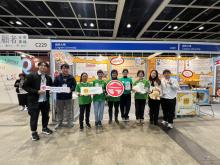
In order to understand Hong Kong citizens' views on the development of gerontechnology, Lingnan University recently held a public opinion survey. The results show that gerontechnology products related to healthcare and exercise are of the greatest interest to the public, although about 60 per cent of respondents find the cost of such products prohibitively high, which presents a barrier to purchase. At the same time, over 90 per cent hope that the government will increase support for elderly service organisations to adopt gerontechnology, and for research and development. This would stimulate growth and the silver economy, ultimately benefiting more older adults and caregivers.
22 Dec 2025
Lingnan University
In today’s highly competitive society, many parents insist their children learn more and learn faster in order to “win at the starting line”. A recent study by the Department of Psychology at Lingnan University examining the relationship between stress and creativity has found that different types of stress, such as competition, noise, confined environments, and engaging in challenging tasks, may actually reduce children’s creative performance, but adolescents and adults tend to show more innovative ability under moderate competitive pressure. The research findings have been published in top-tier international academic journal Neuroscience & Biobehavioral Reviews, and provide important insights in workplace management strategies, and for the education sector and creative industries.
15 Dec 2025
Lingnan University
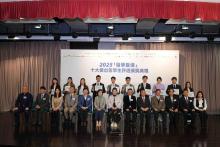
Three Lingnan University students, He Shiwei, Lu Beian, and Xing Zixuan, stood out in the 2025 Study Hong Kong 10 Outstanding International Students in Hong Kong Selection, and received HK$3,000 scholarships at the ceremony on 14 December.
12 Dec 2025
Lingnan University
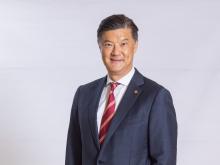
Lingnan University is pleased to announce that Mr John Lee, Chief Executive of the Hong Kong SAR and Chancellor of Lingnan University, has re-appointed Mr Andrew Yao Cho-fai as Chairman of the Council and an ex-officio member of the Court for a further term of three years with effect from 1 January 2026.
12 Dec 2025
Lingnan University
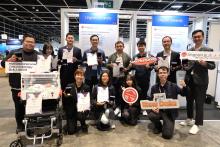
Lingnan University participated in the two-day 5th Asia Exhibition of Innovations and Inventions Hong Kong (AEII), and delivered an outstanding performance. Among more than 140 innovative research projects presented by experts and inventors worldwide, all nine of Lingnan's participating projects received awards, securing two gold, four silver, and three bronze medals. This marks a remarkable leap from last year, when the University made its debut and achieved one gold and two silver medals.
11 Dec 2025
Lingnan University
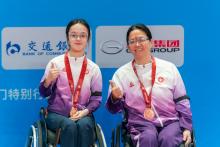
Lingnan University congratulates elite student-athlete Yuen Wing-ki on winning a bronze medal for the Hong Kong Special Administrative Region (HKSAR) in the Women’s Table Tennis Doubles (Class TT5) at the 12th National Games for Persons with Disabilities and the 9th National Special Olympic Games (NGD). Her brilliant performance also sets a record for Lingnan’s outstanding sporting achievements.
09 Dec 2025
Lingnan University
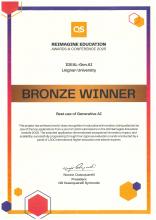
Lingnan University’s Teaching and Learning Centre is proud to advise that its innovative IDEAL-Gen.AI (Instructional Design Enhanced Active Learning through Generative Artificial Intelligence) platform has garnered international recognition by winning the Bronze Award in the “Best Use of AI” category at the prestigious QS Reimagine Education Awards and Conference 2025.
25 Nov 2025
Lingnan University
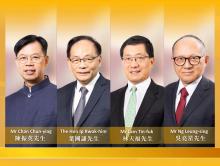
Lingnan University will confer four honorary fellowships, recognising the outstanding professional achievements and valuable contributions to the community and the education sector of the distinguished recipients, Mr Chan Chun-ying, BBS, JP; The Hon Ip Kwok-him, GBM, GBS, JP; Mr Lam Tin-fuk, GBS, JP; and Mr Ng Leung-sing, SBS, JP, whose biographies follow:
24 Nov 2025
Lingnan University
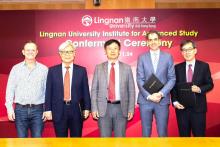
The Lingnan University Institute for Advanced Study (LUIAS) held a conferment ceremony today, 24 November, to honour three renowned scholars: Prof Kim Jeong-Bon, Distinguished SFU Professor at Simon Fraser University; Prof Li Lianjiang, Professor of the Department of Politics and Public Administration at The University of Hong Kong; and Prof Lars Tummers, Chair Professor of Public Administration and Organisational Science at Utrecht University.
21 Nov 2025
Lingnan University
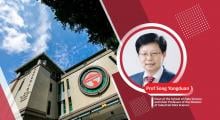
Prof Song Yongduan, Dean of the School of Data Science and Chair Professor of the Division of Industrial Data Science at Lingnan University, has been elected as a Foreign Member of the Chinese Academy of Engineering (CAE). The result was announced today (21 November), naming him one of the 24 newly elected foreign academicians for 2025. The honour recognises Prof Song’s outstanding contributions to control science and engineering at the international level.
19 Nov 2025
Lingnan University
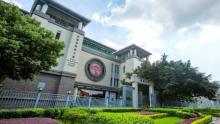
On November 17th, Lingnan University’s Teaching and Learning Centre (TLC) and The University of Sydney’s Educational Innovation (EI) Team co-hosted a pivotal seminar titled “The Transformation of Global Higher Education Learning Pedagogies: Harnessing the Innovation and Technology Revolution”. With an attendance of approximately 300 participants, both in person and online, the event highlighted the urgency to rethink and revolutionise educational practices to adapt to the AI era.
13 Nov 2025
Lingnan University
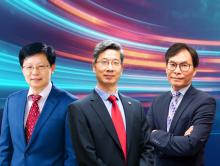
Three distinguished scholars from Lingnan University have been named Highly Cited Researchers 2025 in the annual list compiled by leading global analytics company in academia and research Clarivate. The list is of exceptional researchers who have demonstrated significant and wide-ranging influence in their respective fields through the publication of multiple highly cited papers reflecting their substantial contributions to advancing innovation and addressing global challenges.
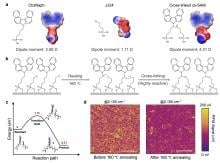
12 Nov 2025
Lingnan University
Perovskite solar cells (PSCs), known for their high efficiency and low manufacturing costs, are considered a revolutionary photovoltaic (PV) technology that can further reduce the levelised cost of electricity (LCOE), thus promoting the development of green and renewable energy technology in order to reach our carbon reduction goals. However, state-of-the-art PSCs still face serious stability problems, especially during long-term continuous operation at high temperatures, which seriously hinder commercialisation.

04 Nov 2025
Springer Nature
More than 40% of existing and planned offshore wind farm sites in Europe and Asia are exposed to wind speeds above the maximum capacity of some turbines, highlighting the need for these energy infrastructures to adapt to extreme wind events associated with climate change.
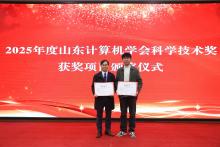
03 Nov 2025
Lingnan University
The use of drones in search and rescue, patrolling, and environmental monitoring has become increasingly common. However, their performance is still constrained by complex environmental factors such as harsh weather conditions, and Prof Sam Kwong Tak-wu, a leading scholar in artificial intelligence (AI), Associate Vice-President (Strategic Research), Dean of the School of Graduate Studies and J.K. Lee Chair Professor of Computational Intelligence at Lingnan University in Hong Kong, and his research team have conducted a pioneering project titled “Key Technologies for Intelligent Enhancement and Content Understanding in Constrained Environments”.
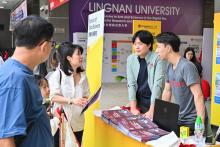
01 Nov 2025
Lingnan University
Today, 1 November, Lingnan University held its Information Day “Your Future Begins Now” for undergraduate admissions, introducing a new flexible arrangement offering more tailored study pathways for Joint University Programmes Admissions System (JUPAS) applicants with diverse talents. The hybrid event featured over 70 interactive sessions with the latest information on programmes, admissions requirements, and study guidance, so as to familiarise secondary school students and parents with campus life. Highlights included AI-focused lectures presented by the Departments of Chinese, Philosophy, and Translation, and Lingnan scholars also demonstrated how artificial intelligence (AI) proposes innovative approaches on traditional Chinese culture, ethical decision-making, and language learning.
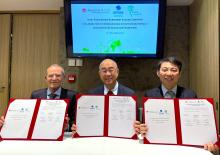
31 Oct 2025
Lingnan University
Lingnan University signed a partnership agreement today, 31 October, with the European Federation of Financial Analysts Societies (EFFAS), a pan-European organisation representing financial analyst societies from over 20 countries. Under the agreement, the internationally established ESG Essentials®️ programme will be integrated into Lingnan’s relevant undergraduate and postgraduate curricula, making Lingnan the first university in Asia to include this professional ESG programme in its education framework to cultivate interdisciplinary ESG and green finance talents in Hong Kong.
28 Oct 2025
Lingnan University
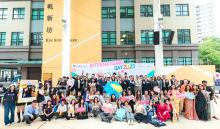
The campus of Lingnan University became a whirlwind journey across continents as the Office of Global Education (OGE) and Office of Student Affairs (OSA) successfully hosted International Day 2025 “Around the World” recently, a dynamic celebration of cultural diversity that brought the globe to the doorstep and drew over 800 participants, marking a remarkable 60 per cent increase in attendance.

28 Oct 2025
Springer Nature
Female individuals may experience a three-fold reduction in mortality risk from coronary heart diseases, when following recommended exercise guidelines, compared to male individuals, according to a study published in Nature Cardiovascular Research.
26 Oct 2025
Lingnan University
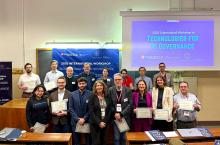
The regulatory directions of Agentic AI systems and Open-Source AI have become hot topics globally. In light of this, Lingnan University and the University of Bologna in Italy co-hosted the 2nd International Workshop on Technologies for AI Governance (TAIG) from 25 to 26 October, as part of the 28th European Conference on Artificial Intelligence (ECAI 2025). The workshop brought together numerous world-leading experts, academics, and policymakers, aiming to enhance governance in areas such as AI risk assessment, accountability tracking, and safety assurance, and to foster cross-regional exchange on AI governance between Asia and Europe. The two-day event attracted over 150 academics and students.
25 Oct 2025
Lingnan University
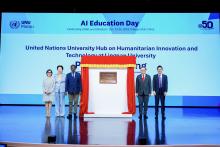
The official plaque unveiling ceremony of Asia’s first UNU Hub on Humanitarian Innovation and Technology at Lingnan University (UNU Hub at Lingnan University) was held today (25 Oct), marking a new milestone in advancing international collaboration between Lingnan and the United Nations. The ceremony was officiated by Prof Tshilidzi Marwala, Rector of the United Nations University and Under-Secretary-General of the United Nations, together with Mr Ernest Chan, Vice-President (Administration) of Lingnan University.
24 Oct 2025
Lingnan University
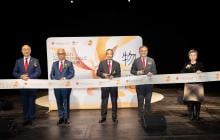
As Artificial intelligence (AI) gradually becomes integrated into artistic creation, how can traditional artistic and cultural values be preserved and passed down? Organised by the Faculty of Arts of Lingnan University, the Lingnan Arts Biennale 2025, “Metamorphoses”, opened officially today, 24 October, at The Box, Freespace of the West Kowloon Cultural District, bringing together creative forces from multiple disciplines to explore the relationships between life, technology, and culture through forms such as dance, opera, music, and the digital arts. The event is open to the public free of charge, and audiences are invited to consider the significance of art and cultural inheritance in this digital age.
22 Oct 2025
Lingnan University
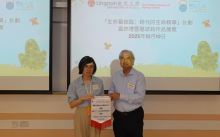
The Asia-Pacific Institute of Ageing Studies (APIAS) at Lingnan University celebrated its "Life Story and Epitaph" project with an opening ceremony for the Epitaph Exhibition on 10 October 2025. The event brought together nearly 70 participants included older adults from three community centres in Tuen Mun and Kowloon City, Lingnan University students, and members of the public.
18 Oct 2025
Lingnan University
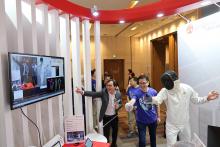
Lingnan University continues to participate in annual innovation and technology event the InnoCarnival 2025 (the Carnival), organised by the Innovation and Technology Commission (ITC). As one of the programme partners, Lingnan University is showcasing eight innovative "Smart Healthy City" research projects, integrating artificial intelligence (AI) and interdisciplinary research. These projects cover healthcare, transportation, sports training, environmental monitoring, and elderly care, and demonstrate how Lingnan’s innovation teams address societal needs and advancing smart city development through technology.

07 Oct 2025
Springer Nature
Researchers have developed a method to produce strong, biodegradable plastic from bamboo.

06 Oct 2025
Springer Nature
Researchers from China engineered a system that captures carbon dioxide from seawater and converts it into biodegradable plastic precursors at high efficiency and low energy consumption.
01 Oct 2025
Lingnan University
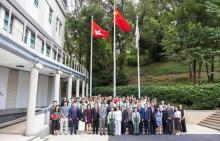
Lingnan University held a flag-raising ceremony to celebrate the 76th anniversary of the founding of the People’s Republic of China.
22 Sep 2025
Lingnan University
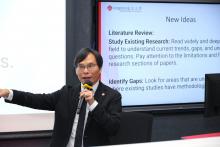
Leading scholar in artificial intelligence (AI) Prof Sam Kwong Tak-wu, Associate Vice-President (Strategic Research), Dean of the School of Graduate Studies and J.K. Lee Chair Professor of Computational Intelligence at Lingnan University, has been honoured with the 2026 IEEE Transactions on Evolutionary Computation Outstanding Paper Award for his co-authored paper Learning-Aided Evolution for Optimization. It is the sole paper to receive this award this year, underscoring its importance in the fields of evolutionary computation and AI.
Events
Sorry, no events coming up for this topic.
Researchers
Sorry, no researchers coming up for this topic.
Giants in history

Chinese-American physicist Tsung-Dao Lee (24 November 1926 – 4 August 2024) was awarded the Nobel Prize for Physics in 1957 together with Chen-Ning Yang for their work challenging the symmetry law in subatomic particles. They were the first Chinese Nobel prize winners, with Lee becoming the second-youngest laureate. Born in Shanghai, he went to the United States on scholarship and studied under another Nobel winner, Enrico Fermi.

Tu Youyou (born 30 December 1930) is a Chinese pharmaceutical scientist who was awarded the 2015 Nobel Prize in Physiology or Medicine for her work on extracting artemisin from sweet wormwood to treat malaria.
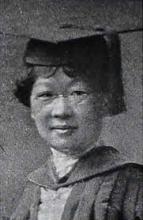
Chinese biochemist Chi Che Wang (1894 - 1979), one of the first Chinese women to study abroad, advanced to prominent research positions at American institutions including the University of Chicago and the Northwestern University Medical School.
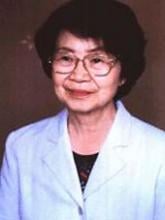
Chinese electron microscopy specialist Li Fanghua (6 January 1932 – 24 January 2020) facilitated the high-resolution imaging of crystal structures by eliminating interference.
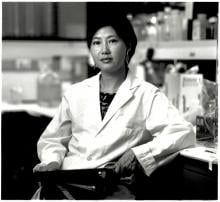
Chinese-American virologist and molecular biologist Flossie Wong-Staal (27 August 1946 – 8 July 2020) was the first scientist to clone HIV and determine the function of its genes.
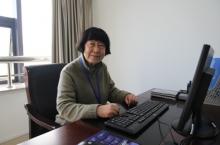
Meemann Chang (born 17 April 1936) is a Chinese palaeontologist who studied the fossils of ancient fish to understand the evolution of life. By examining fossils, she uncovered new insights on how vertebrates, animals with a backbone, migrated from the sea and became adapted to live on land.
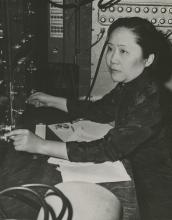
Chien-Shiung Wu (31 May 1912 – 16 February 1997) was an experimental physicist who made several important contributions to nuclear physics. Wu worked on the Manhattan Project – a top-secret program for the production of nuclear weapons during World War II and helped to develop a process for separating uranium into U235 and U238.
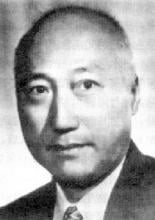
Hsien Wu (24 November 1893 – 8 August 1959) is widely regarded as the founder of biochemistry and nutrition science in China. He was the first to propose that protein denaturation was caused by the unfolding of the protein, instead of chemical alteration.
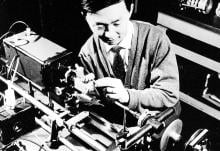
Charles Kuen Kao (Nov. 4, 1933 to Sept. 23, 2018) was an engineer who is regarded as the father of fibre optics. His work in the 1960s on long distance signal transmission using very pure glass fibres revolutionized telecommunications, enabling innovations such as the Internet.

Chinese physicist Xie Xide (19 March 1921 – 4 March 2000) was an influential educator and one of China’s pioneer researchers of solid-state physics.
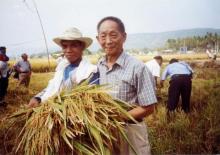
Chinese agronomist Yuan Longping (7 September 1930 – 22 May 2021) developed the first varieties of the high-yield, hybrid rice that brought food security to multiple countries including China, which had been ravaged by food shortages as recently as the mid-20th century.
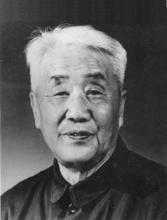
Chinese palaeontologist, archaeologist and anthropologist Pei Wenzhong (January 19, 1904 – September 18, 1982) is regarded as a founder of Chinese anthropology.

Chinese biochemist Cao Tianqin (5 December 1920 – 8 January 1995) discovered the myosin light chain, a subunit of myosin, a protein crucial for muscle contraction.
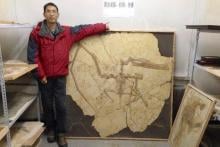
Lü Junchang (1965–9 October 2018) was a Chinese palaeontologist who is remembered as one of the most important dinosaur researchers of the last 50 years. Lü was an expert on reptiles that lived during the Mesozoic period about 252 million years ago. Cumulatively, Lü and his colleague/competitor Xiaolin Wang described and named more than 50 new species of flying dinosaurs known as pterosaurs.
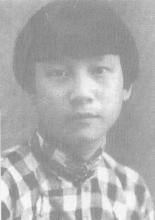
Palaeontologist Yichun Hao (1920 – 2001) co-authored the first Chinese textbooks on palaeontology and micropalaeontology. Her research on Foraminifera – amoeba-like organisms with shells – was vital for the exploration and utilisation of marine energy resources.
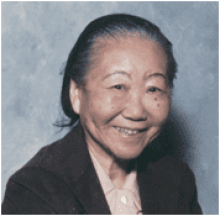
Tsai-Fan Yu (1911 – 2 March 2007) was a Chinese-American physician and researcher who was the first female full professor at Mount Sinai School of Medicine. She discovered that gout, a condition characterized by the painful inflammation of joints, was caused by elevated levels of uric acid in the bloodstream.
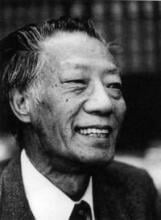
Min Chueh Chang (10 October 1908 – 5 June 1991) was a Chinese-American biologist who studied fertilization in mammalian reproduction.

Lin Lanying (7 February 1918 – 4 March 2003) was a Chinese material engineer remembered for her contributions to the field of semiconductor and aerospace materials. Lanying was born into a family who did not believe in educating girls and she was not allowed to go to school.