
Japan
News
24 Aug 2015
The University of Tokyo
University of Tokyo researchers discovered an increase in a helium isotope during a ten-year period before the 2014 Mount Ontake eruption in central Japan. The finding suggests this anomaly is related to activation of the volcano’s magma system and could be a valuable marker for long-term risk mitigation.
21 Aug 2015
Institute of Transformative Bio-Molecules (WPI-ITbM), Nagoya University
In a new study reported in Science, scientists have developed a new visualizing molecule to examine the process of Striga germination. The outcome of this study is expected to accelerate research to control Striga growth and to save crop losses worth of billions of U.S. dollars every year.
19 Aug 2015
National Institute for Materials Science (NIMS)
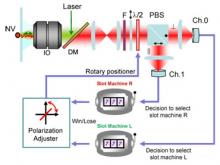
A joint research has demonstrated experimentally that single photons can be used to make decisions in uncertain, dynamically changing environments.
19 Aug 2015
Tohoku University
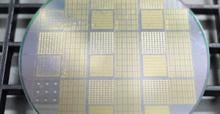
Researchers in Japan have developed a sensor for the living body that can detect the bio-magnetic field with high sensitivity and high resolution.
18 Aug 2015
National Institute for Materials Science (NIMS)
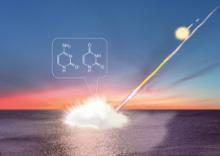
A new study shown that meteorite impacts on ancient oceans may have created nucleobases and amino acids.

18 Aug 2015
National Institute for Materials Science (NIMS)
Dr. Masamitsu Hayashi of NIMS's magnetic materials unit was awarded the IUPAP Young Scientist Prize in Magnetism at the 20th International Conference on Magnetism (ICM).
10 Aug 2015
Tohoku University
The agreement brings Tohoku University closer towards incorporating the field of Data Science into its International Joint Graduate Programme project.
07 Aug 2015
Tohoku University
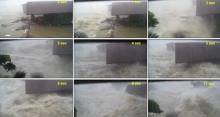
Researchers in Japan have been looking into how tsunami-type waves can originate from massive storm systems, independent of earthquakes or landslides.

06 Aug 2015
Tohoku University
An ultra-high-speed CMOS image sensor that offers 10 million frames per second with ISO16,000 photosensitivity has been developed by researchers at Tohoku University.
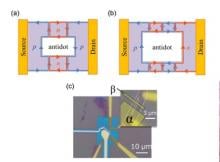
05 Aug 2015
National Institute for Materials Science (NIMS)
A new phenomenon in which flow of electricity completely changes with odd and even numbers of junctions
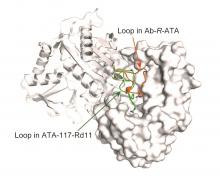
03 Aug 2015
The University of Tokyo
Increased use of enzymes producing chiral amines
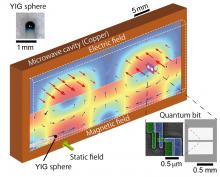
03 Aug 2015
The University of Tokyo
Quantum behavior of millimeter-sized magnets unraveled

29 Jul 2015
Institute for Integrated Cell-Material Sciences (iCeMS) at Kyoto University
For the first time, researchers have directly seen how organic molecules bind to other materials at the atomic level. Using a special kind of electron microscopy, this information can lead to increasing the life span of electronic devices, for example.
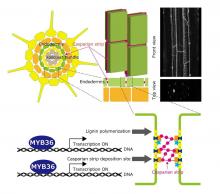
27 Jul 2015
The University of Tokyo
Single gene regulates Casparian strip formation
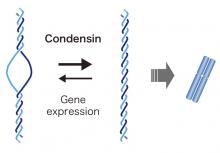
27 Jul 2015
The University of Tokyo
Restoration of DNA structure shown to be prerequisite
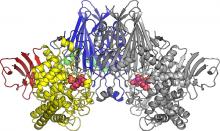
27 Jul 2015
The University of Tokyo
Missing link in microbial cellulose decomposition

24 Jul 2015
Institute of Transformative Bio-Molecules (WPI-ITbM), Nagoya University
From ancient times, people have been aware of the rooster’s “cock-a-doodle-do” that marks the break of dawn, but has anyone wondered who crows first? In a new study, ITbM’s biologists have revealed that there is actually a systematic rule based on social ranking that determines the order of crowing in roosters.
22 Jul 2015
Kavli Institute for the Physics and Mathematics of the Universe (Kavli IPMU)
A new theory says dark matter acts remarkably similar to pions, subatomic particles known to science since the 1930s.

14 Jul 2015
Tohoku University
The South African Ambassador to Japan Her Excellency Mohau Pheko's recent lecture at Tohoku University.

14 Jul 2015
Institute of Transformative Bio-Molecules (WPI-ITbM), Nagoya University
Professor Steve Kay speaks to the Fortune magazine about his research on using molecules to control the speed of the circadian rhythm in organisms.
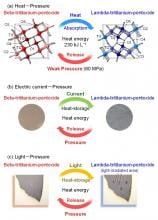
13 Jul 2015
The University of Tokyo
New material releases stored heat under weak pressure
13 Jul 2015
The University of Tokyo
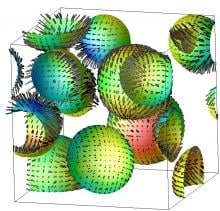
A novel mechanism of droplet phase separation
10 Jul 2015
Tohoku University
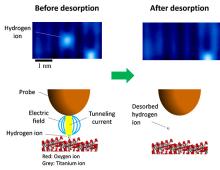
A research team comprising scientists from Tohoku University, RIKEN, the University of Tokyo, Chiba University and University College London have discovered a new chemical reaction pathway on titanium dioxide (TiO2), an important photocatalytic material.
06 Jul 2015
The University of Tokyo
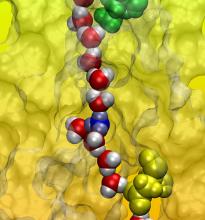
Elucidating flagellar motor ion transfer process
06 Jul 2015
The University of Tokyo
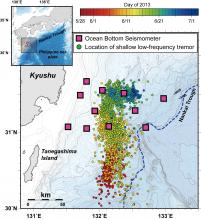
Slow episodic slip probably occurs in the plate boundary
06 Jul 2015
The University of Tokyo
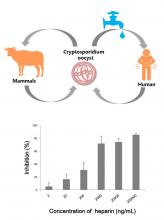
Understanding mechanism of Cryptosporidium infection will support drug development
06 Jul 2015
The University of Tokyo
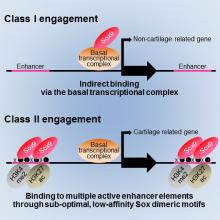
Genome-wide identification of Sox9 regulatory system
06 Jul 2015
The University of Tokyo
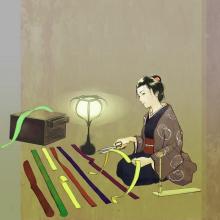
How does single "RISC" accurately cleave and release target RNAs?
03 Jul 2015
Tohoku University
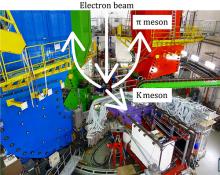
An international team has been developing a new experimental technique - the decay-pion spectroscopy of electro-produced hypernuclei since 2011.
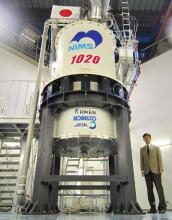
01 Jul 2015
National Institute for Materials Science (NIMS)
Application of High-Temperature Superconductor Was the Key. A Big Step Forward in Accelerating the Development of New Drugs and Materials
Researchers
Sorry, no researchers coming up for this topic.
Giants in history

Japanese biochemist Akira Endo (1933 – 2024) discovered the first statin, called mevastatin, which lowered cholesterol levels in the blood by inhibiting a key enzyme in the cholesterol biosynthesis pathway. His work laid the foundation for the development of statins to help patients lower their blood cholesterol levels and reduce their risk of heart disease or stroke.
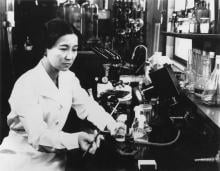
Ruby Sakae Hirose (1904 – 1960) was a Japanese-American scientist whose research contributed significantly to our understanding of blood clotting, allergies and cancer.
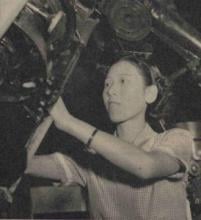
Haisako Koyama (1916 – 1997) was a Japanese solar observer whose dedication to recording sunspots – cooler parts of the sun’s surface that appear dark – produced a sunspot record of historic importance.
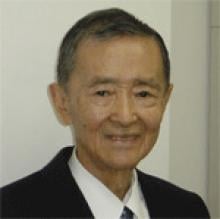
Michiaki Takahashi (17 February 1928 – 16 December 2013) was a Japanese virologist who developed the first chickenpox vaccine.
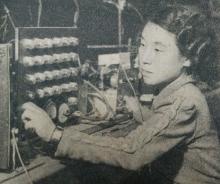
Toshiko Yuasa (11 December 1909 – 1 February 1980) was the first Japanese female physicist whose research on radioactivity shed light on beta decay – the process in which an atom emits a beta particle (electron) and turns into a different element.
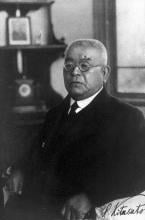
Baron Kitasato Shibasaburo (29 January 1856 – 13 June 1931) was a Japanese physician and bacteriologist whose work led to a new understanding of preventing and treating tetanus, diphtheria and anthrax.
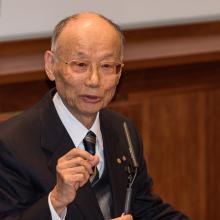
By isolating soil microorganisms and studying the compounds they produce, Satoshi Omura (born 1935) discovered almost 500 organic compounds with unique properties that were produced by these microorganisms, including many new antibiotics.
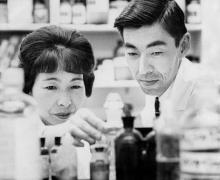
Husband and wife team, Kimishige (3 December 1925 – 6 July 2018) and Teruko Ishizaka (28 September 1926 – 4 June 2019) discovered the antibody class Immunoglobulin E (IgE) that triggers allergic reactions. They also discovered that IgE antibodies attach to white blood cells, known as mast cells, releasing histamine, which causes allergic reactions.
Husband and wife team, Kimishige (3 December 1925 – 6 July 2018) and Teruko Ishizaka (28 September 1926 – 4 June 2019) discovered the antibody class Immunoglobulin E (IgE) that triggers allergic reactions. They also discovered that IgE antibodies attach to white blood cells, known as mast cells, releasing histamine, which causes allergic reactions.
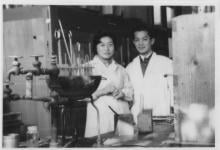
Reiji Okazaki (8 October 1930 – 1 August 1975) and Tsuneko (7 June 1933) were a Japanese couple who discovered Okazaki fragments – short sequences of DNA that are synthesized during DNA replication and linked together to form a continuous strand.
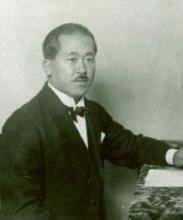
In 1915, Koichi Ichikawa along with pathologist Katsusaburo Yamagiwa became the first to prove that chronic exposure to chemicals can cause cancer.
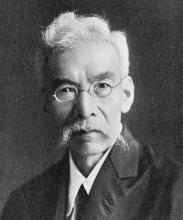
In 1915, pathologist Katsusaburo Yamagiwa and his research assistant Koichi Ichikawa became the first to prove that chronic exposure to chemicals can cause cancer.
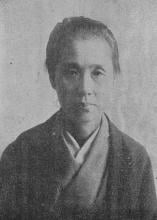
Ogino Ginko (3 March 1851 – 23 June 1913) was the first registered female doctor to practise modern medicine in Japan.
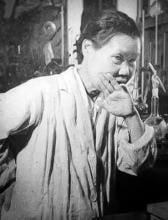
Michiyo Tsujimura (17 September 1888 – 1 June 1969) was a Japanese agricultural scientist and biochemist recognized for her research of green tea components.
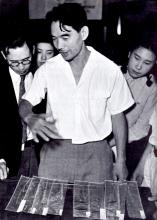
Hitoshi Kihara (1893 – 1986) was one of the most famous Japanese geneticists of the 20th century. One of his most significant contributions was identifying sex chromosomes (X and Y) in flowering plants.
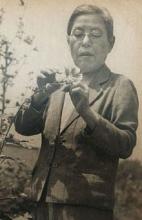
Kono Yasui (16 February 1880 – 24 March 1971) was a Japanese botanist who researched the genetics of poppies, corn and spiderworts and surveyed the plants that had been affected by the nuclear fallout after the atomic bombings of Hiroshima and Nagasaki.
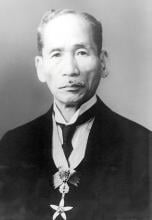
Umetaro Suzuki (7 April 1874 – 20 September 1943) was a Japanese scientist best remembered for his research on beriberi, a disease caused by vitamin B1 deficiency, characterized by limb stiffness, paralysis and pain.
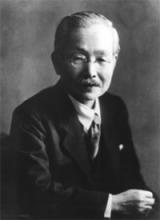
Kikunae Ikeda (8 October 1864 – 3 May 1936) was a Japanese chemist who discovered the fifth basic taste, umami.
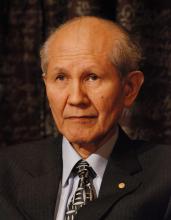
Osamu Shimomura (27 August 1928 – 19 October 2018) was a Japanese organic chemist and marine biologist who dedicated his career to understanding how organisms emitted light.
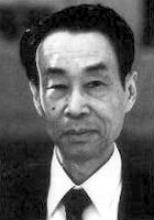
Motoo Kimura (13 November 1924 – 13 November 1994) was a Japanese theoretical population geneticist who is best remembered for developing the neutral theory of molecular evolution.

Chika Kuroda (24 March 1884 – 8 November 1968) was a Japanese chemist whose research focussed on the structures of natural pigments.
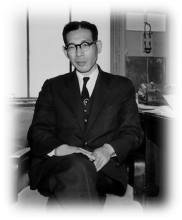
The field of solid-state ionics originated in Europe, but Takehiko Takahashi of Nagoya University in Japan was the first to coin the term ‘solid ionics’ in 1967. ‘Solid-state ionics’ first appeared in 1971 in another of his papers, and was likely a play on ‘solid-state electronics’, another rapidly growing field at the time.
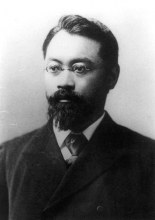
The techniques that make industrial pearl culturing possible were developed over a century ago at the Misaki Marine Biological Station in Japan. The station’s first director, Professor Kakichi Mitsukuri, emphasized to Kokichi Mikimoto in 1890 that stimulating pearl sac formation was important for pearl growth, and they went on to successfully develop methods for culturing pearls.
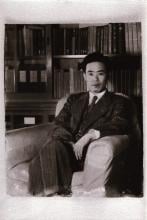
Japanese physicist Ukichiro Nakaya (1900-1962) made the world’s first artificial snowflakes. He started his research on snow crystals in the early 1930s at Hokkaido University, where there is an unlimited supply of natural snow in winter. By taking over 3,000 photographs, he established a classification of natural snow crystals and described their relationship with weather conditions.
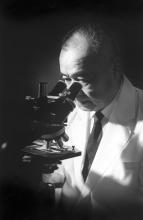
Minoru Shirota (April 23, 1899 – March 10, 1982) was a Japanese microbiologist who invented the popular fermented drink Yakult.
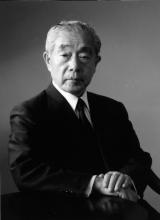
Japanese chemist Kenichi Fukui (4 October 1918 – 9 January 1998) was the first Asian scientist to be awarded the Nobel Prize in Chemistry. Together with Roald Hoffman, he received this honour in 1981 for his independent research into the mechanisms of chemical reactions.
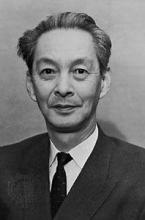
Shinichiro Tomonaga (31 March 1906 – 8 July 1979), together with Richard Feynman and Julian Schwinger, was awarded the Nobel Prize in Physics in 1965, for their contributions to advance the field of quantum electrodynamics. Tomonaga was also a strong proponent of peace, who actively campaigned against the proliferation of nuclear weapons and promoted the peaceful use of nuclear energy.
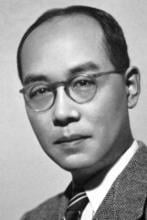
Hideki Yukawa (23 January 1907 – 8 September 1981) was awarded the Nobel Prize in Physics in 1949 for predicting the existence of the pi meson subatomic particle. Japan’s first Nobel laureate, Yakawa also expressed his support for nuclear disarmament by signing the Russell–Einstein Manifesto in 1955.
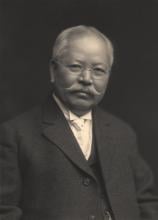
Japanese chemist Takamine Jokichi (3 November 1854 – 22 July 1922) founded the Tokyo Artificial Fertilizer Company, where he isolated a starch-digesting enzyme (named takadiastase) from the fungus Aspergillus oryzae.
Tsuneko (7 June 1933) and Reiji Okazaki (8 October 1930 – 1 August 1975) were a Japanese couple who discovered Okazaki fragments – short sequences of DNA that are synthesized during DNA replication and linked together to form a continuous strand.
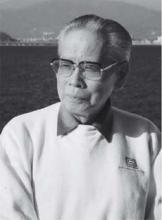
A Japanese surgeon, Tetsuzo Akutsu (20 August 1922 – 9 August 2007) built the first artificial heart capable of keeping an animal alive.
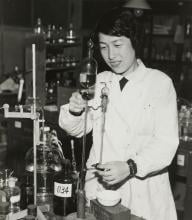
Japanese geochemist Katsuko Saruhashi developed the first method and tools for measuring carbon dioxide in seawater