

Mechanical Engineering Robotics
News
20 Oct 2026
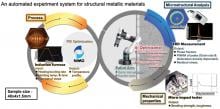
Self-running experiments that improve from AI input sound too good to be true, but researchers at Tohoku University found a way. Their findings could help us develop stronger and tougher structural metals more efficiently.

01 Oct 2026
Researchers at SUTD have built a robotic platform that can be dropped from the air onto remote waters and sail autonomously using wind energy, pairing rapid aerial deployment with the potential for long duration marine monitoring.

24 Sep 2026
A four-legged robot completed a marathon in 4 hours and 19 minutes alongside human runners, on a single battery charge

15 Sep 2026
AI-powered cyborg cockroaches, Undiagnosed kidney disease, Plants as genetic engineers, AI and mental workload, Carnivorous plants confirm Darwin prediction, Moisture conveyor belt and Forever chemicals in furry friends. Read all in the latest Editor's Choice.
27 Aug 2026
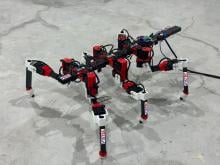
Think you could learn a brand new skill from a five-second video clip? AI was trained on footage from just a few steps of a stick insect, and learned how to walk, navigate bumpy terrain, and adapt to limb loss in a robot with six legs.
21 Aug 2026
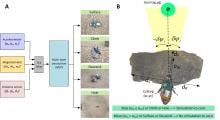
Researchers from the University of Osaka and Diponegoro University developed an AI-powered navigation system for cyborg cockroaches. Using onboard sensors and a multilayer perceptron, the system recognizes flat ground, climbs, descents, and holes in real time, then adapts electrical stimulation accordingly. By supporting natural climbing while reducing unnecessary steering, the approach shortened obstacle-crossing and total navigation times, reduced travel distance and stimulation, and significantly improved efficient movement across complex terrain.
17 Jul 2026
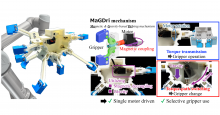
A conventional robotic hand is equipped with multiple motors or peripheral devices for grasping a wide variety of objects. This study presents a robotic hand equipped with multiple grippers that are driven by a single motor with the transmission of motor power switched via a mechanism using gravity (Magnetic and Gravity-based Driving mechanism). Thus, it provides design guidelines for a new robotic hand capable of accommodating diverse grasping actions while maintaining a relatively simple structure.
28 May 2026
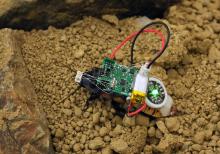
Researchers from The University of Osaka and collaborators proposed the Insect Synergy Circuit (ISC), a new concept for bio-hybrid control that uses AI to interpret internal biological signals from insects. By integrating heartbeat, neural signal features, and body movement data, the team developed a cyborg cockroach system that can estimate environment-associated internal states and guide movement while reducing unnecessary stimulation.
15 Apr 2026
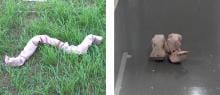
Researchers have succeeded in improving mobility efficiency by having the snake-like robot move using an “undulating motion” on uneven terrain and a “rolling motion” on level ground.
16 Oct 2025
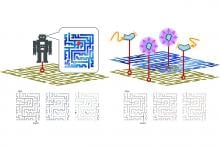
Researchers from The University of Tokyo have found that single cells in collective chemotaxis act like agents in distributed reinforcement learning, utilizing the environment as an “external memory” and exhibiting highly intelligent behavior.

04 Sep 2025
Self-healing hydrogel, Cool crawler, AI and world's longest crop experiment & Freeze-framing cells. Plus how media interest helps engineers and society. Read all in the latest Editor's Choice

06 Aug 2025
Researchers from South Korea engineered a robotic folding sheet that can crawl across a surface as well as grasp and lift various objects.

13 May 2025
Researchers unveil a bio-intelligent insect system using UV light to guide movement, reducing harm while improving control.

16 Apr 2025
Autonomous driving algorithm for robot using lidar shows promise with high-bed cultivation methods

13 Feb 2025
A research team from Osaka University and Diponegoro University, Indonesia has developed two new autonomous navigation systems for cyborg insects to better navigate unknown, complex environments. The algorithms utilized only simple circuits that leveraged natural insect behaviors, like wall-following and climbing, to navigate challenging terrain, such as sandy, rock-strewn surfaces. For all difficulties of terrain tested, the cyborg insects were able to reach their target destination, demonstrating the potential of cyborg insects for surveillance, disaster-site exploration, and more.

24 Jan 2025
The sticky secret of a gecko’s foot has inspired scientists to develop robots that can pick up and release fragile objects without damage.

13 Jan 2025
Crossing the uncanny valley, Batteries that don’t explode, Tiny climate change fighters, Liver-friendly mushroom & Foetal defence. Read all in the latest Editor's Choice.

28 Feb 2024
Magnetic nanorobots delivering nerve cells to targeted tissues could potentially be used to repair damaged brain tissue, as well as other organs.
10 Nov 2023
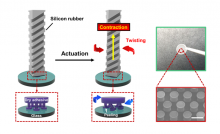
Researchers develop a technique to allow fragile objects to be transferred and released by robotics, without damage, while using a gecko inspired adhesive.
09 Nov 2023
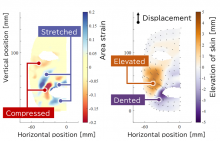
A research team led by Osaka University used 125 physical markers to understand the detailed mechanics of 44 different human facial motions. The aim was to better understand how to convey emotions with artificial faces. Beyond helping with the design of robots and androids, this research can also benefit computer graphics, facial recognition, and medical diagnoses.

23 Aug 2023
The search for innovative materials will be greatly assisted by software that can suggest new experimental possibilities and also control the robotic systems that check them out.

10 Mar 2023
Scientists have shown that swarming molecular robots can deliver cargo five times more efficiently than a robot working on its own.

10 Mar 2023
A new apparatus uses electromagnets to remotely control guidewires through tiny, tortuous blood vessels for the treatment of cardiovascular diseases.
17 Nov 2022
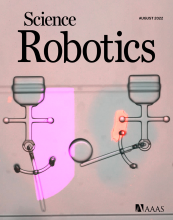
Osaka University researchers simplified the process of producing soft microrobots powered by biomolecular motor muscles by 3D-printing the constituent modules, including actuators and grabbers, in situ. This work may lead to significant advances in scalable production and microsurgery.
17 Aug 2022
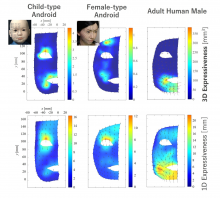
Osaka University researcher devises a scale for quantifying of the ability of android to produce artificial facial expressions. By measuring the range of motion compared with humans, this work may lead to more expressive robot helpers.
28 May 2021
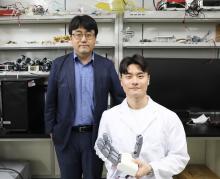
A reimagined robot hand combines strength with resilience, sidestepping the problems that accompany existing designs.

13 Jul 2020
A unique artificial intelligence approach is sifting through samples to find undiscovered fundamental particles that might clarify unexplainable physical phenomena.

06 May 2020
Scientists are finding safer ways to keep drug-loaded microrobots attached to cancer tissue.
05 Sep 2019
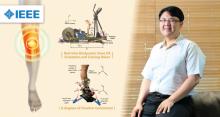
A research team, affiliated with South Korea's Ulsan National Institute of Science and Technology (UNIST) has presented a system that can quantitatively complement the diagnosis of knee arthritis, which was performed only by x-ray and doctor’s judgment.
03 Sep 2019
DGIST Professor Hongsoo Choi’s team developed a biodegradable micro-robot that performs both drug release and hyperthermia treatment into a desired area. Improved drug treatment and opened a new path of future anti-cancer treatment.
Events

22 Aug 2024 to 24 Aug 2024
International Conference on Advanced Robotics and Intelligent Systems (ARIS & NCAR 2024) serves as an innovation-driven catalyst for global dialogues in advancing science and technology spanning over 40 topics. To navigate the landscape of science and technology, the conference highlights interdisciplinary faculty interactions and promotes transnational research collaborations to map out cutting-edge scientific ecosystems of future in the ever-evolving world. The conference would be held from August 22 to 24, 2024 at National Taiwan University (NTU) in Taiwan.
Researchers

Dr. Sungwoong Jeon's research interests are biomedical micro/nano robot, animal in vivo experiments and MEMS piezoelectric artificial basilar membrane.

A robotics scientist focused on innovating robotic devices for interventions requiring magnetic resonance imaging (MRI) guidance, e.g. stereotactic neurosurgery and cardiac catheterization.

Prof. Oh is the director of the Creative Research Initiative Center for Functionally Antagonistic Nano-Engineering, and the director of the Active Materials and Dynamic Systems Lab at KAIST.
Giants in history
Sorry, nothing coming up for this discipline