

Science
News
03 Jul 2020
Institute for Integrated Cell-Material Sciences (iCeMS) at Kyoto University
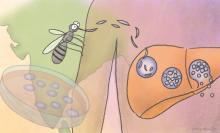
A method that involves infecting liver cells with mosquito-bred parasites could improve the study of malaria in India.
26 Jun 2020
Myanmar Institute for Peace and Security (MIPS)
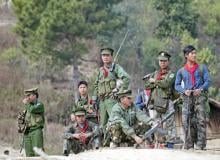
The Annual Peace & Security Review 2020 is a comprehensive overview of Myanmar’s security landscape, with insider information and in-depth analysis to inform and nudge the country one step closer towards peace.
24 Jun 2020
Ulsan National Institute of Science and Technology (UNIST)
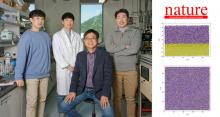
A recent study, affiliated with South Korea's Ulsan National Institute of Science and Technology (UNIST) has unveiled a novel material that could enable major leaps in the miniaturization of electronic devices.
22 Jun 2020
The Chinese University of Hong Kong (CUHK)
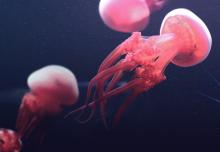
A research team led by Professor Jerome HUI Ho Lam from the School of Life Sciences at The Chinese University of Hong Kong (CUHK) has decoded for the first time the high-quality genomes of two jellyfish commonly found in Asian waters, including the edible flame jellyfish. Further studies have revealed many unexpected biological findings, including the identification of hormones which are thought to be only contained in arthropods like insects. The findings, just published in the top scientific journal Nature Communications, provide references for further studies on the evolution, ecological roles and population bloom of jellyfish.
20 Jun 2020
Kanazawa University
Researchers at Kanazawa University report in the Biophysical Journal that the process of cell removal from an epithelial layer follows from an inherent mechanical instability. Moreover, the forces generated by an extruding cell can drive the extrusion of other cells in a particular direction.
12 Jun 2020
International Institute for Integrative Sleep Medicine (WPI-IIIS), University of Tsukuba
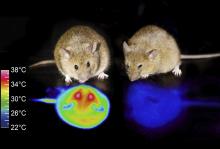
Researchers at the University of Tsukuba and RIKEN in Japan spark a hibernation-like state in mice—a species that does not naturally hibernate

11 Jun 2020
Tohoku University
We move our eyes several times per second. These fast eye movements, called saccades, create large image shifts on the retina - making our visual system work hard to maintain a stable perceptual world. Remapping the retinal image compensates for this; however, errors in actual eye movements cause image shifts, even with remapping.
04 Jun 2020
International Institute for Integrative Sleep Medicine (WPI-IIIS), University of Tsukuba
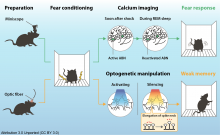
Researchers from University of Tsukuba and the University of Tokyo identify neurons responsible for memory consolidation during REM sleep
03 Jun 2020
Institute for Integrated Cell-Material Sciences (iCeMS) at Kyoto University
A highly accurate machine learning tool could help doctors tailor individualized treatments for people with glioma brain tumours.
03 Jun 2020
Hong Kong Baptist University (HKBU)
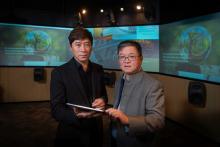
Hong Kong Baptist University (HKBU) has established six interdisciplinary research laboratories that expand on the University’s existing research strengths.
29 May 2020
Ehime University
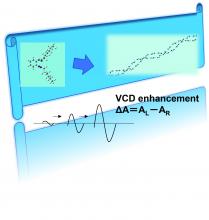
(1) The development of solid state and time-step VCD methods opened a new horizon to reveal the mechanism of chirality amplification from microscopic to supramolecular scales.
(2) The authors were selected as PCCP Emerging Investigators of the Royal Society of Chemistry.

28 May 2020
Osaka City University
This research focuses on formic acid (HCOOH) (which can be produced from carbon dioxide) as a vehicle to store hydrogen.
This research brings clarity to the mechanism of hydrogen production which has befuddled scientists until now.
28 May 2020
Kanazawa University
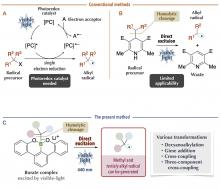
The generation of alkyl radicals was achieved by direct visible-light excitation of the organoborate complex, which was designed and synthesized from “boracene,” which has a boron atom in the tetracene-like skeleton. The alkyl radicals thus obtained could be used as a carbon source for chemical reactions, enabling the synthesis of complicated/bulky organic compounds. The present study offers a new protocol for organic synthesis, which is expected to accelerate e.g. drug discovery.

27 May 2020
Springer Nature
Nature Index 2020 South Korea, published in the May 28 issue of Nature, investigates South Korea’s strategy to become a “first mover” by investing in basic research grants and original discoveries.
18 May 2020
Kanazawa University
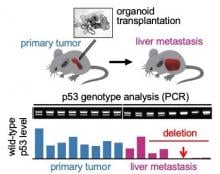
Research at Kanazawa University, Theragen Etex Bio Institute and Seoul National University as reported in Nature Communications points towards pathways for the metastasis and malignant transitions that result from changes in the protein p53. The results suggest that the cooperative development of mutations in the proteins helps tumours spread and metastasis.
15 May 2020
Osaka City University
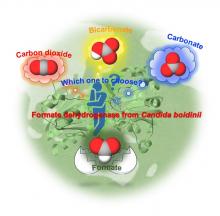
The group clarified for the first time whether formate dehydrogenase reduces carbon dioxide, biocarbonate ion, or carbonate ion to formic acid.
Points to a catalyst in developing and designing an artificial photosynthesis system that efficiently converts carbon dioxide into organic molecules.
13 May 2020
Institute for Integrated Cell-Material Sciences (iCeMS) at Kyoto University
Hydrogen fuel cells made with coordination polymer glass membranes could produce as much energy as their liquid-based counterparts while adding strength and flexibility.

13 May 2020
Tohoku University
There is currently a strong demand to replace organic liquid electrolytes used in conventional rechargeable batteries, with solid-state ionic conductors which will enable the batteries to be safer and have higher energy density.
12 May 2020
Kanazawa University
In a recent study published in Molecular Cell, researchers at Kanazawa University report the role of cellular structures called PML bodies in regulating gene function
27 Apr 2020
Springer Nature
Springer Nature and UNESCO have signed an agreement to publish open access books on a range of issues cutting across major research areas such as education, culture, the natural sciences, the human and social sciences and communication and information
27 Apr 2020
Springer Nature
Application period now open for award programme that acknowledges and celebrates outstanding women working in STEM* research and outreach
23 Apr 2020
Hokkaido University
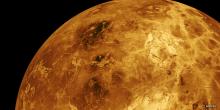
An international research team has revealed that this ‘super-rotation’ is maintained near the equator by atmospheric tidal waves formed from solar heating on the planet’s dayside and cooling on its nightside.
21 Apr 2020
Springer Nature
Researchers who have shown great courage and integrity in standing up for science and scientific reasoning can be nominated until 11 May 2020
14 Apr 2020
Ehime University
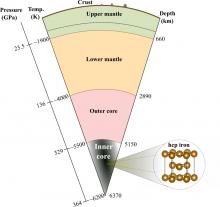
A theoretical mineral physics approach based on the ab initio methods was adopted to determine the viscosity of hexagonal, close-packed iron at the extreme pressures and temperatures corresponding to the Earth’s inner core. The results are found to deny geophysical observations of large fluctuations in the inner core rotation rate. The obtained viscosity also rules out inner core translation and provides support that the dynamics of the inner core may be governed by solid-state convection.
09 Apr 2020
The Chinese University of Hong Kong (CUHK)
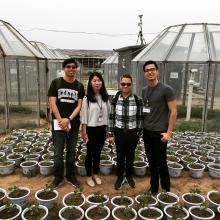
A research team led by Professor Amos Tai, Associate Professor of the Earth System Science Programme at The Chinese University of Hong Kong (CUHK), has successfully quantified and visualised the impact of Hong Kong air pollution especially ozone pollutant on plants and the environment. Although the experiment took place in a rural area and in Spring, which would usually have a lower average ozone concentration, the pollutant level still reached high enough to do significant damage to the bioindicator plant. The finding was recently published in Atmosphere.
07 Apr 2020
Kanazawa University
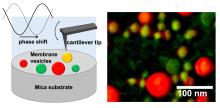
Researchers at Kanazawa University and Tsukuba University report in Nanoscale that the physical properties of extracellular bacterial membrane vesicles are significantly diverse. The properties for a single type of bacterium as well as for different types are found to be highly heterogeneous.
06 Apr 2020
Kavli Institute for the Physics and Mathematics of the Universe (Kavli IPMU)
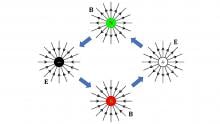
Two Kavli IPMU string theorists and a condensed-matter theorist have found a quantum mechanical anomaly in the duality between the electric field and the magnetic field, which could play a role in removing an inconsistency in string theory.
01 Apr 2020
The Chinese University of Hong Kong (CUHK)
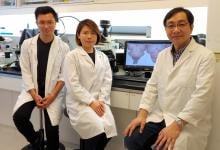
A research team led by Professor Kin-ming KWAN from the School of Life Sciences at The Chinese University of Hong Kong (CUHK) has recently discovered a novel mechanism by which extrinsic signaling factors modulate the fate transition of neural progenitors to allow the generation of specific neuronal subtypes. This work provides important insight into stem cell biology and the regeneration of neuronal cells, and contributes to the development of neurological therapy for diseases like autism spectrum disorders and hereditary cerebellar ataxia. The research is published in the renowned international scientific journal Cell Reports.

31 Mar 2020
eLife
New findings show that the formation of amyloid plaques drives damage and tissue loss in the brain during Alzheimer’s disease in animals, but lithium reduces the life-shortening effects of this loss.

27 Mar 2020
The World Academy of Sciences (TWAS)
A Communique from the InterAcademy Partnership urges countries to collaborate, use and share science-based information, and help the developing world.
Giants in history

Chinese-American physicist Tsung-Dao Lee (24 November 1926 – 4 August 2024) was awarded the Nobel Prize for Physics in 1957 together with Chen-Ning Yang for their work challenging the symmetry law in subatomic particles. They were the first Chinese Nobel prize winners, with Lee becoming the second-youngest laureate. Born in Shanghai, he went to the United States on scholarship and studied under another Nobel winner, Enrico Fermi.

Turkish astrophysicist Dilhan Eryurt (29 November 1926 – 13 September 2012) conducted research on how the sun affects environmental conditions on the moon.
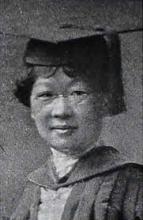
Chinese biochemist Chi Che Wang (1894 - 1979), one of the first Chinese women to study abroad, advanced to prominent research positions at American institutions including the University of Chicago and the Northwestern University Medical School.
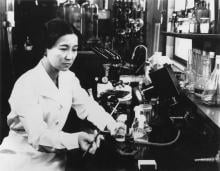
Ruby Sakae Hirose (1904 – 1960) was a Japanese-American scientist whose research contributed significantly to our understanding of blood clotting, allergies and cancer.

Chinese electron microscopy specialist Li Fanghua (6 January 1932 – 24 January 2020) facilitated the high-resolution imaging of crystal structures by eliminating interference.

Sálim Moizuddin Abdul Ali (12 November 1896 – 20 June 1987), commonly referred to as the Birdman of India, was the first person to conduct systematic surveys of birds from across India.

Haisako Koyama (1916 – 1997) was a Japanese solar observer whose dedication to recording sunspots – cooler parts of the sun’s surface that appear dark – produced a sunspot record of historic importance.
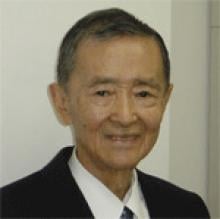
Michiaki Takahashi (17 February 1928 – 16 December 2013) was a Japanese virologist who developed the first chickenpox vaccine.
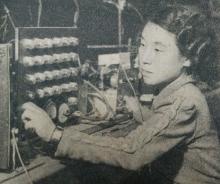
Toshiko Yuasa (11 December 1909 – 1 February 1980) was the first Japanese female physicist whose research on radioactivity shed light on beta decay – the process in which an atom emits a beta particle (electron) and turns into a different element.

Angelita Castro Kelly (1942-2015) was the first female Mission Operations Manager (MOM) of NASA. She spearheaded and supervised the Earth Observing System missions during its developmental stage.
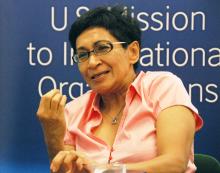
Malaysia’s first astrophysicist, Mazlan binti Othman (born 11 December 1951) was instrumental in launching the country’s first microsatellite, and in sending Malaysia’s first astronaut, Sheikh Muszaphar Shukor, into space.

Bibha Chowdhuri (1913 – 2 June 1991) was an Indian physicist who researched on particle physics and cosmic rays. In 1936, she was the only female to complete a M.Sc. degree at the University of Calcutta.

Meemann Chang (born 17 April 1936) is a Chinese palaeontologist who studied the fossils of ancient fish to understand the evolution of life. By examining fossils, she uncovered new insights on how vertebrates, animals with a backbone, migrated from the sea and became adapted to live on land.
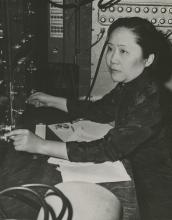
Chien-Shiung Wu (31 May 1912 – 16 February 1997) was an experimental physicist who made several important contributions to nuclear physics. Wu worked on the Manhattan Project – a top-secret program for the production of nuclear weapons during World War II and helped to develop a process for separating uranium into U235 and U238.

Hitoshi Kihara (1893 – 1986) was one of the most famous Japanese geneticists of the 20th century. One of his most significant contributions was identifying sex chromosomes (X and Y) in flowering plants.
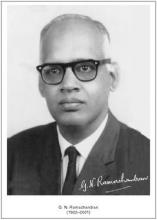
Gopalasamudram Narayanan Ramachandran (8 October 1922 – 7 April 2001) is best known for developing the Ramachandran plot to understand the structure of short chains of amino acids, known as peptides.

Srinivasa Ramanujan (22 December 1887 – 26 April 1920) was a math prodigy and widely considered one of India’s greatest mathematicians. Despite having almost no formal training in mathematics, he made substantial contributions to mathematical analysis, number theory, infinite series and continued fractions.
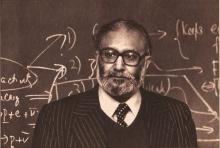
Mohammad Abdus Salam (29 January 1926 – 21 November 1996) was a theoretical physicist and the first Pakistani to receive a Nobel Prize in science.

Sir Chandrasekhara Venkata Raman (7 November 1888 – 21 November 1970) was an Indian physicist who performed ground-breaking research in the field of light-scattering.

Mathematician Maryam Mirzakhani (12 May 1977 – 14 July 2017) was the first and only woman and Iranian to date to win the Fields Medal in 2014 for her work on curved surfaces.

Joo-myung Seok (November 13, 1908 – October 6, 1950) was a Korean butterfly entomologist who made important contributions to the taxonomy of the native butterfly species in Korea.
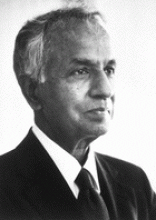
Subrahmanyan Chandrasekhar (19 October 1910 – 21 August 1995) was an Indian astrophysicist who studied the structure and evolution of stars.
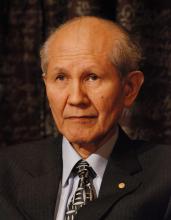
Osamu Shimomura (27 August 1928 – 19 October 2018) was a Japanese organic chemist and marine biologist who dedicated his career to understanding how organisms emitted light.
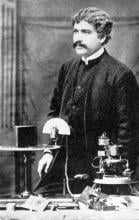
Sir Jagadish Chandra Bose (30 November 1858 – 23 November 1937) was a scientist and inventor who contributed to a wide range of scientific fields such as physics, botany and biology.
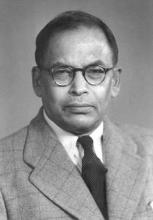
Meghnad Saha (6 October 1893 – 16 February 1956) was an Indian astrophysicist best known for formulating the Saha ionization equation which describes the chemical and physical properties of stars.
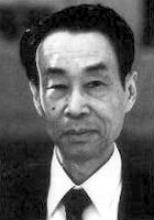
Motoo Kimura (13 November 1924 – 13 November 1994) was a Japanese theoretical population geneticist who is best remembered for developing the neutral theory of molecular evolution.

Chika Kuroda (24 March 1884 – 8 November 1968) was a Japanese chemist whose research focussed on the structures of natural pigments.
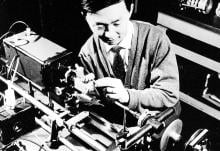
Charles Kuen Kao (Nov. 4, 1933 to Sept. 23, 2018) was an engineer who is regarded as the father of fibre optics. His work in the 1960s on long distance signal transmission using very pure glass fibres revolutionized telecommunications, enabling innovations such as the Internet.

The field of solid-state ionics originated in Europe, but Takehiko Takahashi of Nagoya University in Japan was the first to coin the term ‘solid ionics’ in 1967. ‘Solid-state ionics’ first appeared in 1971 in another of his papers, and was likely a play on ‘solid-state electronics’, another rapidly growing field at the time.

Japanese physicist Ukichiro Nakaya (1900-1962) made the world’s first artificial snowflakes. He started his research on snow crystals in the early 1930s at Hokkaido University, where there is an unlimited supply of natural snow in winter. By taking over 3,000 photographs, he established a classification of natural snow crystals and described their relationship with weather conditions.
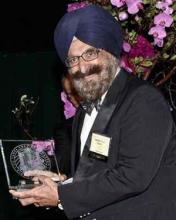
Physicist Narinder Singh Kapany (31 October 1926 – 4 December 2020) pioneered the use of optical fibres to transmit images, and founded several optical technology companies. Born in Punjab, India, he worked at a local optical instruments factory before moving to London for PhD studies at Imperial College. There, he devised a flexible fibrescope to convey images along bundles of glass fibres.
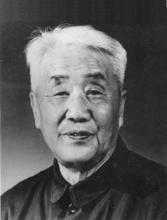
Chinese palaeontologist, archaeologist and anthropologist Pei Wenzhong (January 19, 1904 – September 18, 1982) is regarded as a founder of Chinese anthropology.
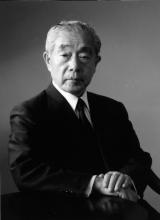
Japanese chemist Kenichi Fukui (4 October 1918 – 9 January 1998) was the first Asian scientist to be awarded the Nobel Prize in Chemistry. Together with Roald Hoffman, he received this honour in 1981 for his independent research into the mechanisms of chemical reactions.
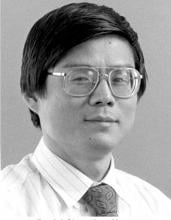
South Korean theoretical physicist Daniel Chonghan Hong (3 March 1956 – 6 July 2002) achieved fame in the public sphere through his research into the physics of popcorn.
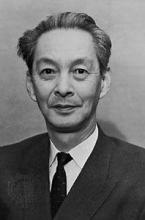
Shinichiro Tomonaga (31 March 1906 – 8 July 1979), together with Richard Feynman and Julian Schwinger, was awarded the Nobel Prize in Physics in 1965, for their contributions to advance the field of quantum electrodynamics. Tomonaga was also a strong proponent of peace, who actively campaigned against the proliferation of nuclear weapons and promoted the peaceful use of nuclear energy.

Known as Mr. Natural Rubber, chemist and researcher B. C. Shekhar (17 November 1929 – 6 September 2006) introduced a number of technical innovations that helped put Malaysia’s natural rubber industry on the world map.

Lin Lanying (7 February 1918 – 4 March 2003) was a Chinese material engineer remembered for her contributions to the field of semiconductor and aerospace materials. Lanying was born into a family who did not believe in educating girls and she was not allowed to go to school.
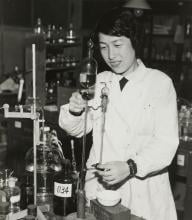
Japanese geochemist Katsuko Saruhashi developed the first method and tools for measuring carbon dioxide in seawater