
Technology
News

19 Jan 2016
The Agency for Science, Technology and Research (A*STAR)
Dr. Sun Sumei is the first Singaporean female to be conferred IEEE Fellowship and is recognised for achievements in Advanced Wireless Communications Systems.
19 Jan 2016
Korea Advanced Institute of Science and Technology (KAIST)
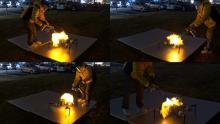
KAIST researchers developed a wall-climbing scout drone to fight fires in high-rises, finding the source of the fires and locating people trapped inside.

18 Jan 2016
Singapore Management University
The National Research Foundation (NRF) in Singapore, the United Kingdom (UK) Cabinet Office and the Engineering and Physical Sciences Research Council (EPSRC), jointly announced the launch of the Singapore-UK Joint Research in Cybersecurity to foster closer collaboration in cybersecurity research between the researchers of both countries.
18 Jan 2016
Singapore Management University
Singapore's Ministry of Education Academies Fund (MAF) aims to fund development and research projects that contribute to the enhancement of pedagogical practices or the professional development of teachers.

13 Jan 2016
National Institute for Materials Science (NIMS)
A joint research team in Japan has developed a “single-seed cast method,” a new casting method making it possible to grow high-quality mono silicon at low cost. New casting method may facilitate the return of a market-competitive solar cell industry.
13 Jan 2016
National Institute for Materials Science (NIMS)
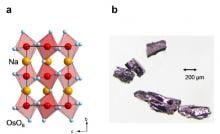
The Study May Contribute to the Development of High-Performance Functional Materials in Information & Communication and Electronics.
13 Jan 2016
National Institute for Materials Science (NIMS)
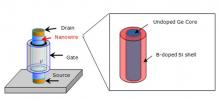
Research groups in Japan and the U.S. jointly developed a double-layered nanowire, consisting of a germanium core and a silicon shell, which is a promising material for high-speed transistor channels. This is a significant step toward the realization of three-dimensional transistors capable of high integration faster than conventional transistors.
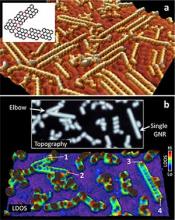
13 Jan 2016
Tohoku University
Chemical interconnection bridges electronic properties of graphene-nanoribbons with zigzag-edge features.
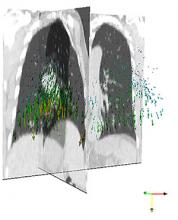
13 Jan 2016
The Agency for Science, Technology and Research (A*STAR)
Lung tumors can be accurately imaged by a method that combines the best aspects of two existing imaging techniques.
13 Jan 2016
International Development Research Centre (IDRC)
A new program aims to help leverage science and advanced technologies to drive innovation and sustainable growth in developing countries.
13 Jan 2016
Singapore Management University
Researcher at Singapore Management University takes on complex urban challenges by dynamically and continuously matching supply with demand.
05 Jan 2016
Asia Research News
Making Data Digital with the Internet of Things towards Building a Smart City

30 Dec 2015
Asia Research News
Oracle Continues to Drive Excellence in Customer Experience through Big Data

22 Dec 2015
Asia Research News
A smart city uses information and communication technologies (ICT) to enhance the efficiency, convenience accessibility, performance and interactivity of urban services, to reduce costs and resource consumption and to improve quality of life in the city.
21 Dec 2015
The Agency for Science, Technology and Research (A*STAR)
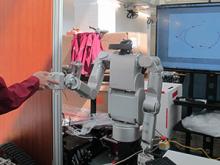
Continuous adaptation makes for more natural interactions between robots and humans in shared tasks.
18 Dec 2015
Asia Research News
Lab-on-a-Chip (LOAC) Asia Conference and Exhibition, held on 19-20 November at The Education Resource Centre, University Town, National University of Singapore.

17 Dec 2015
Electronics and Telecommunications Research Institute(ETRI)
Future SNS & 5G core technologies; mmWave, MHN and IFD.

16 Dec 2015
Korea Advanced Institute of Science and Technology (KAIST)
Researchers in Korea have developed an application that helps people restrain themselves from using smartphones during meetings or social gatherings. The app’s group limit mode enforces users to curtail their smartphone usage through peer-pressure while offering flexibility to use the phone in an emergency.

14 Dec 2015
Asia Research News
The extreme weather patterns and environmental occurrences experienced across the Asia Pacific region have brought to the forefront the urgent need for countries to work together...
11 Dec 2015
The Hong Kong Polytechnic University (PolyU)
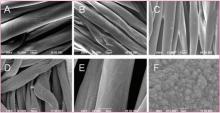
Using low-cost technology to manufacture high-performance conductive textiles for wearable electronics.
11 Dec 2015
The Hong Kong Polytechnic University (PolyU)
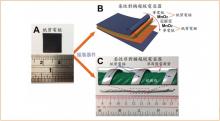
High efficiency energy storage devices created by printing with Manganese Dioxide (MnO2) Ink.
10 Dec 2015
The Hong Kong Polytechnic University (PolyU)
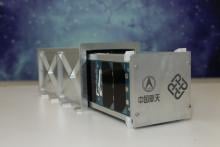
Researchers from Hong Kong and China jointly developed a microsatellite platform and a deployment system that was successfully applied to "Kaituo-1B", an achievement to bring low-cost aerospace technology to a wider range of civil uses.
10 Dec 2015
Tohoku University
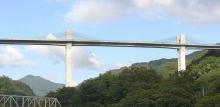
Damage to Steel Wires Inside External Cables Now Visible through Non-Contact/Non-Destructive Methods.
08 Dec 2015
The Hong Kong Polytechnic University (PolyU)
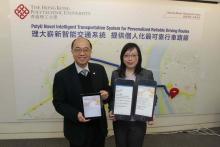
Researchers from Hong Kong have developed a novel intelligent transportation system, utilizing integrated algorithm for real-time journey time estimation.
08 Dec 2015
Tohoku University
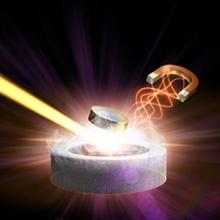
An international research team has found a surprising three-dimensional arrangement of electrons in the Y-based high-temperature superconductor.
08 Dec 2015
International Development Research Centre (IDRC)
Canada's International Development Research Centre’s 2014-2015 annual report is now available online.
02 Dec 2015
The Agency for Science, Technology and Research (A*STAR)
Robotic therapy works better if stroke patients’ brains are stimulated by electricity.

26 Nov 2015
Asia Research News
~Technology will be ubiquitous in every aspect of business and everyday living~
25 Nov 2015
Ulsan National Institute of Science and Technology (UNIST)
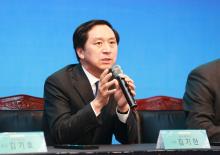
Korea’s largest scale personal genome project which aims to sequence 10,000 people and patients was launched in Ulsan Metropolitan City on November 25th, 2015.
Giants in history

Turkish astrophysicist Dilhan Eryurt (29 November 1926 – 13 September 2012) conducted research on how the sun affects environmental conditions on the moon.
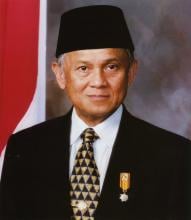
Bacharuddin Jusuf Habibie (25 June 1936 – 11 September 2019) was an Indonesian engineer who was President of Indonesia from 1998 to 1999.

Physicist Narinder Singh Kapany (31 October 1926 – 4 December 2020) pioneered the use of optical fibres to transmit images, and founded several optical technology companies. Born in Punjab, India, he worked at a local optical instruments factory before moving to London for PhD studies at Imperial College. There, he devised a flexible fibrescope to convey images along bundles of glass fibres.
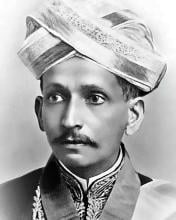
Sir Mokshagundam Srinivasa Shastry Vishveshwarayya (15 September 1860 – 14 April 1962) is widely regarded as India’s most outstanding engineer. In a career that spanned almost his entire life, Vishveshwarayya played a pivotal role in several engineering projects, including designing the Krishnarajasagara dam that is still the source of irrigation and drinking water for parts of Karnataka today.
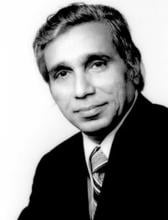
Fazlur Rahman Khan (3 April 1929 – 27 March 1982) was a Bangladeshi-American structural engineer and architect who invented the tube principle, which formed the basis for modern skyscraper design.
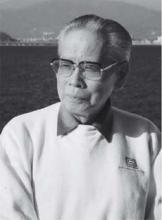
A Japanese surgeon, Tetsuzo Akutsu (20 August 1922 – 9 August 2007) built the first artificial heart capable of keeping an animal alive.

Lin Lanying (7 February 1918 – 4 March 2003) was a Chinese material engineer remembered for her contributions to the field of semiconductor and aerospace materials. Lanying was born into a family who did not believe in educating girls and she was not allowed to go to school.

Gregorio Y. Zara (8 March 1902 – 15 October 1978) was a Filipino engineer and physicist best remembered for inventing the first two-way video telephone. Zara’s video telephone invention enabled the caller and recipient to see each other while conversing, laying the foundation for video-conferencing