

Technology
News
16 Oct 2015
Tohoku University
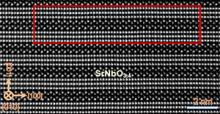
A collaborative study by researchers in Japan aimed at precisely controlling phase transformations with high spatial precision, which represents a significant step forward in realizing new functionalities in confined dimensions.

15 Oct 2015
Asia Research News
Select Biosciences South East Asia, the Singapore Institute of Manufacturing Technology (SIMTech) and The National University of Singapore (NUS), are pleased to present the Third Annual Lab-on-a-Chip Asia Conference and Exhibition, focusing on Microfluidic Technologies, Point-of-Care Diagnostics and Organ-on-a-Chip.
13 Oct 2015
The Hong Kong Polytechnic University (PolyU)
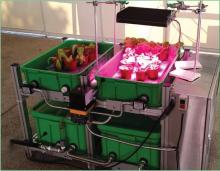
A green farming system that integrates the advantages of traditional soil based farming and modern hydroponic culture
13 Oct 2015
The Hong Kong Polytechnic University (PolyU)
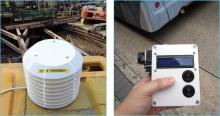
An automatic real-time monitoring system that can effectively assess and analyse the micro-environment in construction sites
13 Oct 2015
Asia Research News
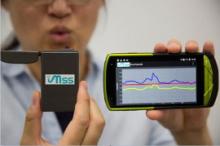
Six organizations including Japan's National Institute for Materials Science, Kyocera, Osaka University, NEC, Sumitomo Seika and NanoWorld jointly launched the Membrane-type Surface stress Sensor (MSS) Alliance, aiming to establish basic elements of MSS technology towards practical use.
12 Oct 2015
Asia Research News
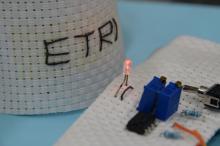
Scientists in Korea have developed wearable, graphene-coated fabrics that can detect dangerous gases present in the air, alerting the wearer by turning on an LED light.

08 Oct 2015
The Agency for Science, Technology and Research (A*STAR)
New programme allows local firms to acquire productivity know-how in order to be manpower-lean and drive business growth.
07 Oct 2015
Tohoku University
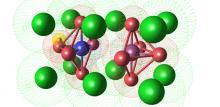
A new strategy to open a practical use of intermediate temperature solid oxide fuel cells.
07 Oct 2015
The Agency for Science, Technology and Research (A*STAR)
Tellurium electrodes have higher energy densities and may be charged and discharged faster than conventional electrode materials.
07 Oct 2015
The Agency for Science, Technology and Research (A*STAR)
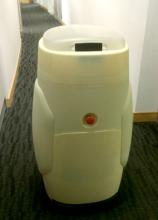
A computer algorithm that copies the navigation functionality of humans and animals helps robots navigate unfamiliar spaces.
05 Oct 2015
Singapore Management University
Researches at the Singapore Management University have developed an automated 'debugging' approach called Adaptive Multimodal Bug Localisation (AML). AML gleans debugging hints from both bug reports and test cases, and it performs a statistical analysis to pinpoint programme elements that are likely to contain bugs.
05 Oct 2015
Asia Research News
Focusing on the themes of Innovation, Digital Disruption and Convergence, this one-day Congress will see leading private and public sector participants share new ideas and fresh perspectives leveraging innovation as a resource to address global challenges.
01 Oct 2015
National Institute for Materials Science (NIMS)
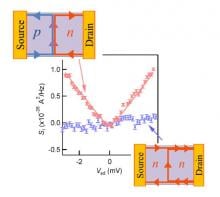
Toward the realization of electron interferometer devices which utilize the wave nature of electrons.
28 Sep 2015
University of Malaya
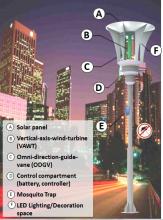
The smart outdoor lighting system is an innovative idea of combining hybrid wind-solar energy generation, LED lighting and mosquito trap into one compact design.

28 Sep 2015
Singapore Management University
Is it better to be an early adopter or wait till the technology matures? A study from the Singapore Management University helps companies make data-driven decisions.

28 Sep 2015
Singapore Management University
The Fujitsu-SMU Urban Computing and Engineering Corp. Lab is using technology to build cities free of taxi queues, congestion and crowding.
25 Sep 2015
The Agency for Science, Technology and Research (A*STAR)
Two-dimensional organic lattices are easier and safer to work with than inorganic materials for spintronic and quantum computing applications.

23 Sep 2015
Universiti Putra Malaysia (UPM)
Researchers at the Universiti Putra Malayasia (UPM) receive bioinnovation awards as part of the Pharma + Bio Asia 2015 exhibition organized by the Malaysian Association of Research Scientist (MARS) and Professional Trade Exhibition and Meeting Planners (PROTEMP), at the Kuala Lumpur Convention Centre (KLCC).
23 Sep 2015
The Hong Kong Polytechnic University (PolyU)
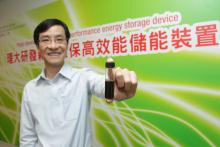
Researchers in Hong Kong have developed a simple approach to synthesize novel environmentally-friendly manganese dioxide (MnO2) ink by using glucose. The MnO2 ink could be used for the production of light, thin, flexible and high performance energy storage devices via ordinary printing or even home-used printers.
22 Sep 2015
Asia Research News
Select Biosciences South East Asia are pleased to present the inaugural Bioimaging Asia Conference and Exhibition, focusing on the area of Biological Imaging.
18 Sep 2015
National Institute for Materials Science (NIMS)
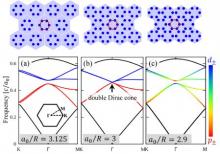
An international research team elucidated a new principle whereby electromagnetic waves including light propagate on the surface of a photonic crystal without being scattered.
18 Sep 2015
Universiti Kebangsaan Malaysia Centre for Collaborative Innovation (CCI)-UKM
A memorandum of understanding was signed between The National University of Malaysia (UKM) and The Aerospace Malaysia Innovation Centre (AMIC) as part of the research and technology collaboration in the cultivation of offshore tropical Macro-Algae for production of the jet fuel.

18 Sep 2015
Universiti Putra Malaysia (UPM)
Kenaf seeds as well as other seedlings such as corn can now be planted in an economical, easier and organized way and faster with the use of pneumatic seeding machine, developed by researchers in Malaysia.

18 Sep 2015
The Agency for Science, Technology and Research (A*STAR)
Sequencing of GBS strain by Genome Institute of Singapore aims to determine the reason for the recent increase in infection and to help combat the disease.

18 Sep 2015
International Development Research Centre (IDRC)
A call for proposals for research on digital learning innovation in developing countries in Asia. Four priority research themes have been identified: MOOCs or massive open online courses; Intelligent Tutoring Systems; Digital Game-Based Learning; and Learning Analytics.

17 Sep 2015
Asia Research News
Managed hosting services to outpace co-location; $272 million market value by 2020
11 Sep 2015
The Agency for Science, Technology and Research (A*STAR)
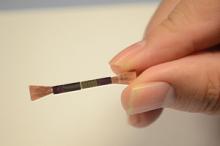
A new compact structure enables efficient lasers to be realized on silicon chips.
11 Sep 2015
The Agency for Science, Technology and Research (A*STAR)
Bioinspired carbon anodes enable high performance in lithium-ion batteries.
10 Sep 2015
National Institute for Materials Science (NIMS)
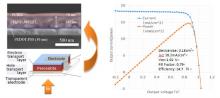
Researchers in Japan succeeded in producing highly reproducible and highly stable perovskite solar cells by a low-temperature solution process. The results were published the Journal of Materials Chemistry A issued by the Royal Society of Chemistry (UK).
09 Sep 2015
Universiti Putra Malaysia (UPM)
On September 3, the Pertanika Journal of Social Sciences & Humanities (JSSH) was granted the prestigious “CREAM” status in recognition of its consistently high quality, under the Malaysian Ministry of Higher Education’s Publication Incentive Scheme 2015.
Giants in history

Turkish astrophysicist Dilhan Eryurt (29 November 1926 – 13 September 2012) conducted research on how the sun affects environmental conditions on the moon.
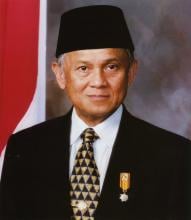
Bacharuddin Jusuf Habibie (25 June 1936 – 11 September 2019) was an Indonesian engineer who was President of Indonesia from 1998 to 1999.
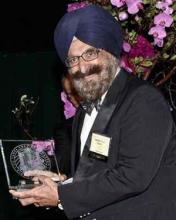
Physicist Narinder Singh Kapany (31 October 1926 – 4 December 2020) pioneered the use of optical fibres to transmit images, and founded several optical technology companies. Born in Punjab, India, he worked at a local optical instruments factory before moving to London for PhD studies at Imperial College. There, he devised a flexible fibrescope to convey images along bundles of glass fibres.
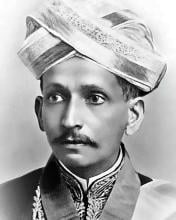
Sir Mokshagundam Srinivasa Shastry Vishveshwarayya (15 September 1860 – 14 April 1962) is widely regarded as India’s most outstanding engineer. In a career that spanned almost his entire life, Vishveshwarayya played a pivotal role in several engineering projects, including designing the Krishnarajasagara dam that is still the source of irrigation and drinking water for parts of Karnataka today.
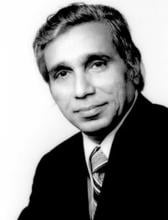
Fazlur Rahman Khan (3 April 1929 – 27 March 1982) was a Bangladeshi-American structural engineer and architect who invented the tube principle, which formed the basis for modern skyscraper design.
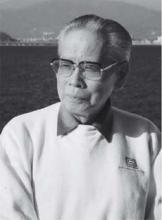
A Japanese surgeon, Tetsuzo Akutsu (20 August 1922 – 9 August 2007) built the first artificial heart capable of keeping an animal alive.

Lin Lanying (7 February 1918 – 4 March 2003) was a Chinese material engineer remembered for her contributions to the field of semiconductor and aerospace materials. Lanying was born into a family who did not believe in educating girls and she was not allowed to go to school.

Gregorio Y. Zara (8 March 1902 – 15 October 1978) was a Filipino engineer and physicist best remembered for inventing the first two-way video telephone. Zara’s video telephone invention enabled the caller and recipient to see each other while conversing, laying the foundation for video-conferencing