
Technology
News

08 Sep 2015
Singapore Management University
Researchers in Singapore are helping institutions understand both the benefits and risks of real-time business transactions. They have provided businesses with economic and strategic insights by their collaborative efforts in research areas that span data analytics to information security and software systems.
07 Sep 2015
The Hong Kong Polytechnic University (PolyU)
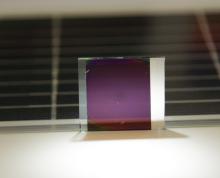
The new technology has power conversion efficiencies of around 12% when they are illuminated from fluorine-doped tin oxide bottom electrodes or the graphene top electrodes, compared with 7% of conventional semitransparent solar cells.

03 Sep 2015
Asia Research News
Pharma+Bio Asia 2015, an all-encompassing convention for the pharmaceutical and biopharmaceutical industries, will take place at Kuala Lumpur Convention Centre from 2 – 4 September 2015.
01 Sep 2015
National Institute for Materials Science (NIMS)
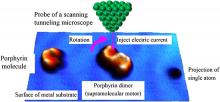
A research group in Japan has fabricated molecular motors on a metal substrate using supramolecules, and successfully reversed rotation of molecular motors by rearranging bonding between molecules that constitute a supramolecule.

31 Aug 2015
Singapore Management University
This research from Singapore aims to help businesses in Asia translate intellectual property rights into innovation and economic gains.
28 Aug 2015
Institute for Integrated Cell-Material Sciences (iCeMS) at Kyoto University
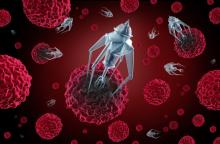
Scientists have developed a method, using a double layer of lipids, which facilitates the assembly of DNA origami units, bringing us one-step closer to DNA nanomachines.

26 Aug 2015
The Agency for Science, Technology and Research (A*STAR)
Using normal graphics processors, a new program for identifying repeated patterns in complex networks significantly boosts search performance.
26 Aug 2015
The Agency for Science, Technology and Research (A*STAR)
Simulations show why platinum nanoparticles become less effective catalysts at small sizes
26 Aug 2015
The Agency for Science, Technology and Research (A*STAR)
More efficient chips based on plasmonics are a step closer to reality through better control of the directional excitation of plasmons in a gold grating

26 Aug 2015
Universiti Putra Malaysia (UPM)
Dried sewage sludge could be an alternative cement material for concrete, researchers in Malaysia have found.
25 Aug 2015
National Institute for Materials Science (NIMS)
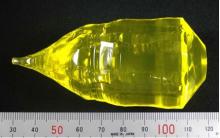
Researchers in Japan successfully developed single-crystal phosphors that use a blue LD (laser diode) as an excitation light source, are suitable for ultra-bright, high-power white lighting, and have outstanding temperature characteristics.

25 Aug 2015
Institute for Integrated Cell-Material Sciences (iCeMS) at Kyoto University
Scientists have developed a technique that could lead to therapies for pain relief in people with intractable pain, potentially including cancer-related pain.
21 Aug 2015
Institute of Transformative Bio-Molecules (WPI-ITbM), Nagoya University
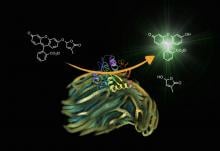
In a new study reported in Science, scientists have developed a new visualizing molecule to examine the process of Striga germination. The outcome of this study is expected to accelerate research to control Striga growth and to save crop losses worth of billions of U.S. dollars every year.
19 Aug 2015
Universiti Putra Malaysia (UPM)
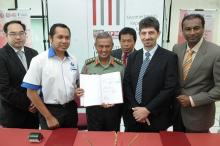
Researchers in Malaysia are using plant materials to produce a bio-sourced hybrid composite for aerospace and automotive application.

19 Aug 2015
Asia Research News
Frost & Sullivan’s New Mega Trends, ‘impact on convergence in the future’ has identified 4 types of convergence: Products, Technologies, Industries and Competition.

18 Aug 2015
IOP Publishing
Scientists in Korea and Germany have developed a brain-computer control interface for a lower limb exoskeleton by decoding specific signals from within the user’s brain.

18 Aug 2015
The Hong Kong Polytechnic University (PolyU)
A novel nanocomposite paste for green building application
14 Aug 2015
The University of Nottingham Malaysia Campus
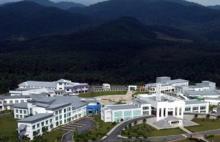
Professor Peter Leggat AM from James Cook University, Australia, partners with The University of Nottingham Malaysia Campus (UNMC) in the area of geospatial technologies used by public health sector in disaster management.
12 Aug 2015
The Agency for Science, Technology and Research (A*STAR)
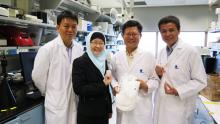
Researchers in Singapore have invented an “intelligent continence management system” comprising a thin disposable sensor strip which has the potential to improve the care of elderly and bedridden patients.
11 Aug 2015
Korea Advanced Institute of Science and Technology (KAIST)
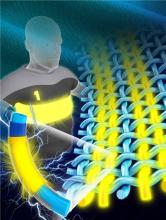
A research team at Korea Advanced Institute of Science and Technology (KAIST) has developed fiber-like light emitting diodes, applicable to wearable displays.

10 Aug 2015
Tohoku University
The agreement brings Tohoku University closer towards incorporating the field of Data Science into its International Joint Graduate Programme project.
07 Aug 2015
Tohoku University
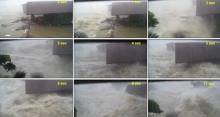
Researchers in Japan have been looking into how tsunami-type waves can originate from massive storm systems, independent of earthquakes or landslides.
06 Aug 2015
Tohoku University
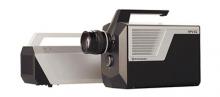
An ultra-high-speed CMOS image sensor that offers 10 million frames per second with ISO16,000 photosensitivity has been developed by researchers at Tohoku University.
06 Aug 2015
Asia Research News
Meet world-renowned speakers with hands-on knowledge on biotechnology - Kuala Lumpur, August 17-19, 2015
05 Aug 2015
Asia Research News
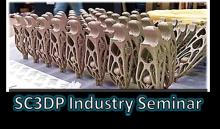
The application of multiple materials additive manufacturing on optical fibre preform fabrication: challenges and perspectives
05 Aug 2015
IOP Publishing
Inspired by animals, scientists working at the University of Illinois at Urbana-Champaign and Illinois Advanced Digital Sciences Centre in Singapore have developed a robotic ‘whisker’ tactile sensor array designed to produce tomographic images by measuring fluid flow.
05 Aug 2015
National Institute for Materials Science (NIMS)
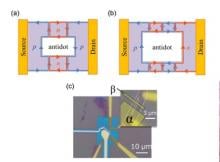
A new phenomenon in which flow of electricity completely changes with odd and even numbers of junctions
05 Aug 2015
The Agency for Science, Technology and Research (A*STAR)
IME and industry partners overcome limitations of IC packaging to enable higher density packages for more powerful and efficient electronic systems
05 Aug 2015
The Agency for Science, Technology and Research (A*STAR)
Singapore's Agency for Science, Technology and Research and Japan's Riken have marked a 10-year milestone of research partnership.

05 Aug 2015
The Hong Kong Polytechnic University (PolyU)
A novel high definition 3D lossless imaging system developed by researchers at The Hong Kong Polytechnic University.
Giants in history

Turkish astrophysicist Dilhan Eryurt (29 November 1926 – 13 September 2012) conducted research on how the sun affects environmental conditions on the moon.
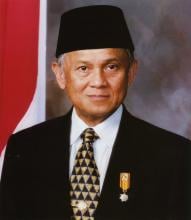
Bacharuddin Jusuf Habibie (25 June 1936 – 11 September 2019) was an Indonesian engineer who was President of Indonesia from 1998 to 1999.

Physicist Narinder Singh Kapany (31 October 1926 – 4 December 2020) pioneered the use of optical fibres to transmit images, and founded several optical technology companies. Born in Punjab, India, he worked at a local optical instruments factory before moving to London for PhD studies at Imperial College. There, he devised a flexible fibrescope to convey images along bundles of glass fibres.
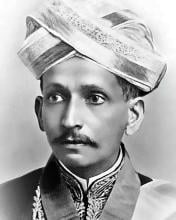
Sir Mokshagundam Srinivasa Shastry Vishveshwarayya (15 September 1860 – 14 April 1962) is widely regarded as India’s most outstanding engineer. In a career that spanned almost his entire life, Vishveshwarayya played a pivotal role in several engineering projects, including designing the Krishnarajasagara dam that is still the source of irrigation and drinking water for parts of Karnataka today.
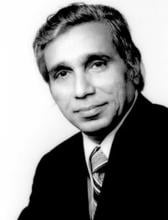
Fazlur Rahman Khan (3 April 1929 – 27 March 1982) was a Bangladeshi-American structural engineer and architect who invented the tube principle, which formed the basis for modern skyscraper design.
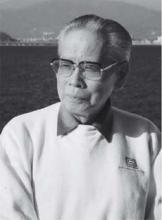
A Japanese surgeon, Tetsuzo Akutsu (20 August 1922 – 9 August 2007) built the first artificial heart capable of keeping an animal alive.

Lin Lanying (7 February 1918 – 4 March 2003) was a Chinese material engineer remembered for her contributions to the field of semiconductor and aerospace materials. Lanying was born into a family who did not believe in educating girls and she was not allowed to go to school.

Gregorio Y. Zara (8 March 1902 – 15 October 1978) was a Filipino engineer and physicist best remembered for inventing the first two-way video telephone. Zara’s video telephone invention enabled the caller and recipient to see each other while conversing, laying the foundation for video-conferencing