

Technology
News
14 Aug 2015
The University of Nottingham Malaysia Campus
Professor Peter Leggat AM from James Cook University, Australia, partners with The University of Nottingham Malaysia Campus (UNMC) in the area of geospatial technologies used by public health sector in disaster management.
12 Aug 2015
The Agency for Science, Technology and Research (A*STAR)
Researchers in Singapore have invented an “intelligent continence management system” comprising a thin disposable sensor strip which has the potential to improve the care of elderly and bedridden patients.
11 Aug 2015
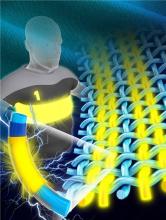
Korea Advanced Institute of Science and Technology (KAIST)
A research team at Korea Advanced Institute of Science and Technology (KAIST) has developed fiber-like light emitting diodes, applicable to wearable displays.

10 Aug 2015
Tohoku University
The agreement brings Tohoku University closer towards incorporating the field of Data Science into its International Joint Graduate Programme project.
07 Aug 2015
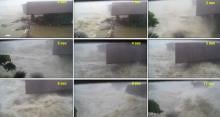
Tohoku University
Researchers in Japan have been looking into how tsunami-type waves can originate from massive storm systems, independent of earthquakes or landslides.
06 Aug 2015
Tohoku University
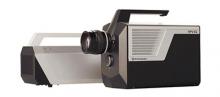
An ultra-high-speed CMOS image sensor that offers 10 million frames per second with ISO16,000 photosensitivity has been developed by researchers at Tohoku University.

06 Aug 2015
Asia Research News
Meet world-renowned speakers with hands-on knowledge on biotechnology - Kuala Lumpur, August 17-19, 2015
05 Aug 2015
Asia Research News
The application of multiple materials additive manufacturing on optical fibre preform fabrication: challenges and perspectives

05 Aug 2015
IOP Publishing
Inspired by animals, scientists working at the University of Illinois at Urbana-Champaign and Illinois Advanced Digital Sciences Centre in Singapore have developed a robotic ‘whisker’ tactile sensor array designed to produce tomographic images by measuring fluid flow.
05 Aug 2015
National Institute for Materials Science (NIMS)
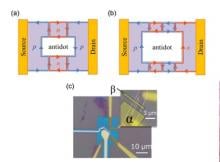
A new phenomenon in which flow of electricity completely changes with odd and even numbers of junctions

05 Aug 2015
The Agency for Science, Technology and Research (A*STAR)
IME and industry partners overcome limitations of IC packaging to enable higher density packages for more powerful and efficient electronic systems
05 Aug 2015
The Agency for Science, Technology and Research (A*STAR)
Singapore's Agency for Science, Technology and Research and Japan's Riken have marked a 10-year milestone of research partnership.

05 Aug 2015
The Hong Kong Polytechnic University (PolyU)
A novel high definition 3D lossless imaging system developed by researchers at The Hong Kong Polytechnic University.

31 Jul 2015
Korea Advanced Institute of Science and Technology (KAIST)
An exhibition, called “Mirror or Mirror,” displaying the integration of fashion design and technology took place at Dongdaemun Design Plaza (DDP) in Seoul from July 18-25, 2015. DDP is the centerpiece of Korea’s fashion hub.
31 Jul 2015
Korea Advanced Institute of Science and Technology (KAIST)
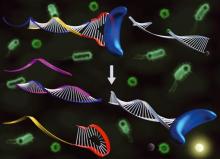
KAIST has developed a technique to analyze various target DNAs using an aptamer, a DNA fragment that can recognize and bind to a specific protein or enzyme.
30 Jul 2015
IOP Publishing
Graphene has been called the miracle material but the single-atomic layer material is still seeking its place in the materials world. Now a method to make ‘defective’ graphene could provide the answer.

29 Jul 2015
The Agency for Science, Technology and Research (A*STAR)
Printed Electronics is key in enabling smart packaging innovations, a fast growing market for industry.
29 Jul 2015
The Agency for Science, Technology and Research (A*STAR)
A phosphorus-based ligand facilitates palladium-catalyzed coupling of challenging building blocks
29 Jul 2015
The Agency for Science, Technology and Research (A*STAR)
A probe enables tumors to be investigated using complementary imaging techniques
29 Jul 2015
The Agency for Science, Technology and Research (A*STAR)
An advanced system based on discrete events paves the way for automated industrial monitoring

29 Jul 2015
Asia Research News
~ Apps and wearables across applications will be enabled with the IoT ~

29 Jul 2015
Institute for Integrated Cell-Material Sciences (iCeMS) at Kyoto University
For the first time, researchers have directly seen how organic molecules bind to other materials at the atomic level. Using a special kind of electron microscopy, this information can lead to increasing the life span of electronic devices, for example.

23 Jul 2015
The University of Nottingham Malaysia Campus
By modifying the infrared flash on automatic camera traps and forcing them into ‘night mode’ a team of wildlife experts has revealed the black leopard’s spots.
22 Jul 2015
Asia Research News
The 2nd Asian Science and Technology Innovation (STI) Forum will be held in Daejeon Convention Center, Korea, on 22 October 2015
16 Jul 2015
The Agency for Science, Technology and Research (A*STAR)
A light-triggered cleanable, recyclable chip makes fabrication feasible for all

16 Jul 2015
The Agency for Science, Technology and Research (A*STAR)
Engineered structures that can alter the speed of light could benefit optical communication systems

14 Jul 2015
Nanyang Technological University
Four-day courses on 3D printing will run in August and October 2015.

14 Jul 2015
Institute of Transformative Bio-Molecules (WPI-ITbM), Nagoya University
Professor Steve Kay speaks to the Fortune magazine about his research on using molecules to control the speed of the circadian rhythm in organisms.
13 Jul 2015
Asia Research News
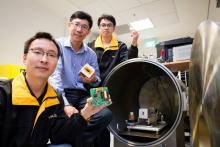
New nanosatellite to use NTU's micro-propulsion technology and Kyutech's Wi-Fi technology in space
10 Jul 2015
Tohoku University
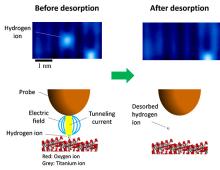
A research team comprising scientists from Tohoku University, RIKEN, the University of Tokyo, Chiba University and University College London have discovered a new chemical reaction pathway on titanium dioxide (TiO2), an important photocatalytic material.
Giants in history

Turkish astrophysicist Dilhan Eryurt (29 November 1926 – 13 September 2012) conducted research on how the sun affects environmental conditions on the moon.
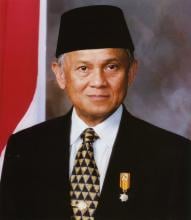
Bacharuddin Jusuf Habibie (25 June 1936 – 11 September 2019) was an Indonesian engineer who was President of Indonesia from 1998 to 1999.

Physicist Narinder Singh Kapany (31 October 1926 – 4 December 2020) pioneered the use of optical fibres to transmit images, and founded several optical technology companies. Born in Punjab, India, he worked at a local optical instruments factory before moving to London for PhD studies at Imperial College. There, he devised a flexible fibrescope to convey images along bundles of glass fibres.

Sir Mokshagundam Srinivasa Shastry Vishveshwarayya (15 September 1860 – 14 April 1962) is widely regarded as India’s most outstanding engineer. In a career that spanned almost his entire life, Vishveshwarayya played a pivotal role in several engineering projects, including designing the Krishnarajasagara dam that is still the source of irrigation and drinking water for parts of Karnataka today.
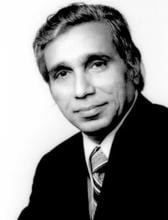
Fazlur Rahman Khan (3 April 1929 – 27 March 1982) was a Bangladeshi-American structural engineer and architect who invented the tube principle, which formed the basis for modern skyscraper design.

A Japanese surgeon, Tetsuzo Akutsu (20 August 1922 – 9 August 2007) built the first artificial heart capable of keeping an animal alive.

Lin Lanying (7 February 1918 – 4 March 2003) was a Chinese material engineer remembered for her contributions to the field of semiconductor and aerospace materials. Lanying was born into a family who did not believe in educating girls and she was not allowed to go to school.

Gregorio Y. Zara (8 March 1902 – 15 October 1978) was a Filipino engineer and physicist best remembered for inventing the first two-way video telephone. Zara’s video telephone invention enabled the caller and recipient to see each other while conversing, laying the foundation for video-conferencing