

Technology
News

27 May 2015
The Agency for Science, Technology and Research (A*STAR)
A*STAR researchers are extracting useful information from billions of social media posts to support businesses, governments and healthcare professionals.

26 May 2015
The Agency for Science, Technology and Research (A*STAR)
An electronic payment system developed in Singapore will protect the privacy of customers recharging their electric vehicles.
26 May 2015
Waseda University
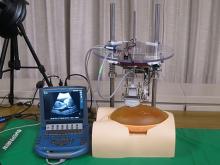
A Japanese researcher is developing a robot that can conduct prenatal ultrasound exams on pregnant women in remote locations.

26 May 2015
Universiti Putra Malaysia (UPM)
A prototype camera, which uses gamma ray detection to pinpoint breast cancer lesions in three dimensions, promises to extend the useful life of two-dimensional nuclear imaging devices in developing countries.
26 May 2015
IOP Publishing
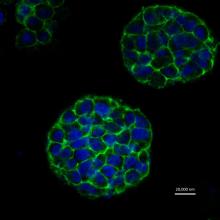
An international scientific team has successfully created a three-dimensional model of a cancerous tumour using a 3D printer. Their model could ultimately help discover new drugs and cast new light on how tumours develop, grow and spread.
25 May 2015
The Hong Kong Polytechnic University (PolyU)
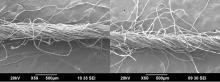
Researchers in Hong Kong have developed a new yarn manufacturing technology that can increase productivity with less energy consumption.

25 May 2015
Asia Research News
A powerful new antiseptic agent, called ozone nanobubble water, holds promise for the treatment of periodontitis, or severe gum infections, according to research published in the journal Science and Technology of Advanced Materials.
25 May 2015
The Agency for Science, Technology and Research (A*STAR)
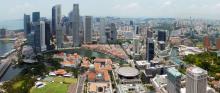
Researchers in Singapore are developing a microclimatic modelling tool to prevent further deterioration of the country’s urban heat island phenomenon.
25 May 2015
University of the Philippines Diliman
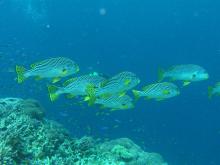
The world’s epicentre of marine biodiversity is under threat. Researchers in the Philippines are developing a marine biodiversity database to help identify local hotspots requiring urgent management.

25 May 2015
Universiti Teknologi MARA (UiTM)
Complementing the Government of Malaysia's efforts to encourage the use of environmentally friendly materials in the construction of green buildings, researchers from the faculty of civil engineering, Universiti Teknologi MARA in Malaysia have successfully developed an environment friendly version of building concrete called green-mix concrete.
25 May 2015
National Institute for Materials Science (NIMS)
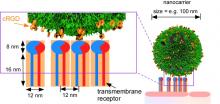
Japanese researchers have developed adaptable nano-capsules that can help in the diagnosis of glioblastoma cells – a highly invasive form of brain tumour.
22 May 2015
Korea Advanced Institute of Science and Technology (KAIST)
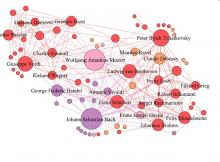
Professor Juyong Park of KAIST's Graduate School of Culture Technology and his research team recently published the result of their study (“Topology and Evolution of the Network of Western Classical Music Composers”) on the dynamics of how classical music is created, stylized and disseminated in EPJ Data Science online.
21 May 2015
Korea Advanced Institute of Science and Technology (KAIST)
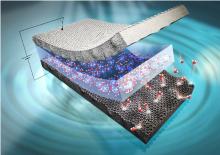
Researchers in South Korea have developed an electrode consisting of a single-atom-thick layer of carbon to help make more durable artificial muscles.
20 May 2015
National Institute for Materials Science (NIMS)
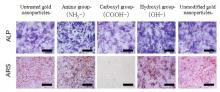
Surface Modification by Carboxyl Groups Suppressing Osteogenic Differentiation. Nanomaterials Paving the Way for Regenerative Medicine
20 May 2015
National Institute for Materials Science (NIMS)
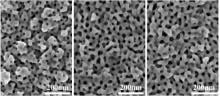
A research group led by Yusuke Yamauchi at National Institute for Materials Science (NIMS) in cooperation with other research organizations in Japan and overseas, successfully developed a nanoporous gold material with a regular, uniform pore arrangement using polymers as a template.
20 May 2015
National Institute for Materials Science (NIMS)
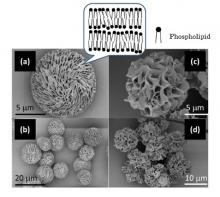
A research group at Materials Nanoarchitectonics (MANA), National Institute for Materials Science (NIMS), succeeded in developing porous particles (mesoporous particles) consisting solely of phospholipids, a biological component, that are suitable for use as a drug delivery system.
20 May 2015
The Hong Kong Polytechnic University (PolyU)
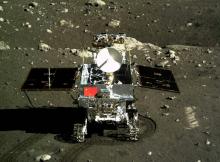
A rugged camera technology developed by researchers in Hong Kong and China successfully captured 360 degree panoramic views of the moon during China’s first lunar landing in 2013.
20 May 2015
University of the Philippines Diliman
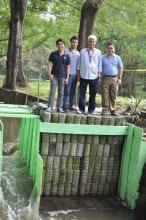
Researchers in the Philippines are using green engineering to develop a low-cost dam that aims to prevent flooding, generate electricity, and help end food and water shortages.
20 May 2015
Institute of Transformative Bio-Molecules (WPI-ITbM), Nagoya University
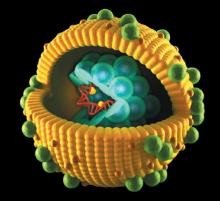
Researchers in Switzerland and Japan have developed a rapid, simple and safe method for generating large libraries of novel organic molecules in a fraction of the time required for traditional organic synthesis.
20 May 2015
The Agency for Science, Technology and Research (A*STAR)
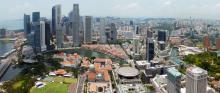
Researchers in Singapore are developing a microclimatic modelling tool to prevent further deterioration of the country’s urban heat island phenomenon.

20 May 2015
Seoul National University
Scientists in South Korea have developed a new way to store energy that also offers a solution to a growing environmental problem.
20 May 2015
International Development Research Centre (IDRC)
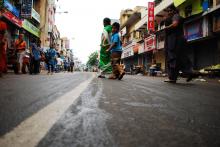
A research network is exploring how open data can help address specific challenges and bring about positive change in developing countries.
20 May 2015
The Agency for Science, Technology and Research (A*STAR)
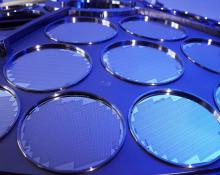
A new process for cutting silicon wafers could streamline the production of smaller and more powerful microchips for electronic devices.

20 May 2015
The University of Nottingham Malaysia Campus
An international team is developing artificial enzymes designed for industrial plants that could convert carbon dioxide into carbonates, with the ultimate aim of reducing CO2 emissions.

20 May 2015
The Agency for Science, Technology and Research (A*STAR)
The Agency for Science, Technology and Research (A*STAR) in Singapore is working with a Japanese multinational company to develop safer, anti-odour and anti-bacteria household products that eliminate the use of harmful biocides.
20 May 2015
Waseda University
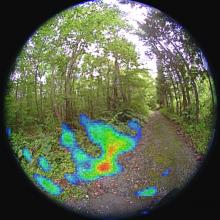
Japanese researchers have significantly improved the performance of a gamma ray-imaging “Compton” camera. The new technology has potential applications in scientific research, medical treatment and environmental monitoring, as well as radioactive decontamination work.
20 May 2015
Waseda University
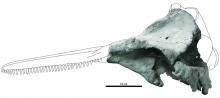
Japanese researchers have described the earliest species of a true dolphin in the known fossil record: the oldest Miocene delphinid fossil including a skull. Their research has huge implications for our understanding of dolphin evolution.
18 May 2015
The Hong Kong Polytechnic University (PolyU)
Using low-cost technology to manufacture high-performance conductive textiles for wearable electronics

18 May 2015
The Hong Kong Polytechnic University (PolyU)
Development and implementation of an advanced automobile parking navigation platform for parking services
15 May 2015
Asia Research News
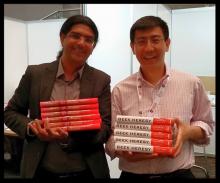
Singapore's Nanyang Technological University (NTU) hosts global ICT conference highlighting innovations that advance open, smart and inclusive socioeconomic development
Giants in history

Turkish astrophysicist Dilhan Eryurt (29 November 1926 – 13 September 2012) conducted research on how the sun affects environmental conditions on the moon.
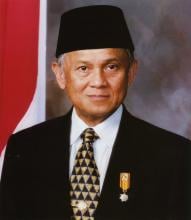
Bacharuddin Jusuf Habibie (25 June 1936 – 11 September 2019) was an Indonesian engineer who was President of Indonesia from 1998 to 1999.

Physicist Narinder Singh Kapany (31 October 1926 – 4 December 2020) pioneered the use of optical fibres to transmit images, and founded several optical technology companies. Born in Punjab, India, he worked at a local optical instruments factory before moving to London for PhD studies at Imperial College. There, he devised a flexible fibrescope to convey images along bundles of glass fibres.

Sir Mokshagundam Srinivasa Shastry Vishveshwarayya (15 September 1860 – 14 April 1962) is widely regarded as India’s most outstanding engineer. In a career that spanned almost his entire life, Vishveshwarayya played a pivotal role in several engineering projects, including designing the Krishnarajasagara dam that is still the source of irrigation and drinking water for parts of Karnataka today.
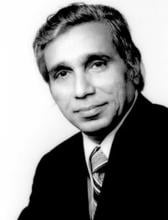
Fazlur Rahman Khan (3 April 1929 – 27 March 1982) was a Bangladeshi-American structural engineer and architect who invented the tube principle, which formed the basis for modern skyscraper design.

A Japanese surgeon, Tetsuzo Akutsu (20 August 1922 – 9 August 2007) built the first artificial heart capable of keeping an animal alive.

Lin Lanying (7 February 1918 – 4 March 2003) was a Chinese material engineer remembered for her contributions to the field of semiconductor and aerospace materials. Lanying was born into a family who did not believe in educating girls and she was not allowed to go to school.

Gregorio Y. Zara (8 March 1902 – 15 October 1978) was a Filipino engineer and physicist best remembered for inventing the first two-way video telephone. Zara’s video telephone invention enabled the caller and recipient to see each other while conversing, laying the foundation for video-conferencing