
Technology
News
15 May 2015
Korea Advanced Institute of Science and Technology (KAIST)
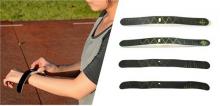
A research team of KAIST received the best paper award in the 2015 Association for Computing Machinery’s (ACM) Conference on Human Factors in Computing Systems (CHI).

14 May 2015
Universiti Kebangsaan Malaysia Centre for Collaborative Innovation (CCI)-UKM
Developed by the Universiti Kebangsaan Malaysia, this invention warns motorcycle riders if their helmet is worn incorrectly.
14 May 2015
Universiti Kebangsaan Malaysia Centre for Collaborative Innovation (CCI)-UKM
Researchers at the Universiti Kebangsaan Malaysia (UKM) have invented a new method for producing a catalyst for use in biodiesel production.
14 May 2015
The Hong Kong Polytechnic University (PolyU)
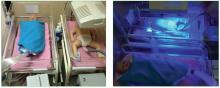
A wearable, air-permeable, washable and comfortable phototherapy device
14 May 2015
The Hong Kong Polytechnic University (PolyU)
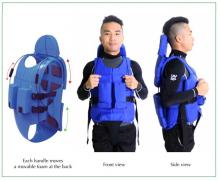
A user-operated wetsuit that allows wearers to change their positions in the water during hydrotherapy with minimal assistance
14 May 2015
The Agency for Science, Technology and Research (A*STAR)
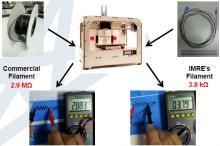
New material is 1,000 times more conductive than commercially available materials currently on the market.

13 May 2015
The Hong Kong Polytechnic University (PolyU)
Sensor-equipped Posture Correction Girdle for Adolescents with Early Scoliosis
13 May 2015
The Hong Kong Polytechnic University (PolyU)
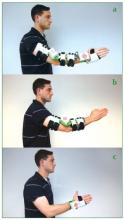
A wearable functional electrical stimulation (FES)-robotic system for comfortable and interactive upper limb rehabilitation

13 May 2015
The Agency for Science, Technology and Research (A*STAR)
A biocompatible polymer selectively targets and lights up cancer tumors for a noninvasive imaging system
13 May 2015
The Agency for Science, Technology and Research (A*STAR)
An expression for droplet deformation promises to simplify calculations for a wide range of applications
13 May 2015
The Agency for Science, Technology and Research (A*STAR)
A counterintuitive approach yields big benefits for high-dimensional, small-sized problems
13 May 2015
The Agency for Science, Technology and Research (A*STAR)
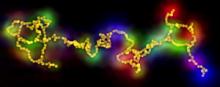
Researchers realize highly confined transport of light energy over long distances using networks of gold nanoparticles
13 May 2015
Universiti Teknologi MARA (UiTM)
Researchers from the Faculty of Education, Universiti Teknologi MARA, have devised a prototype assessing tool to gauge a candidate's critical thinking skills which appears to be a much sought after criteria among employers.

12 May 2015
The Hong Kong Polytechnic University (PolyU)
Researchers at The Hong Kong Polytechnic University have developed a durable catalyst for green biodiesel production from low grade feedstock through one-step catalysis

12 May 2015
The Hong Kong Polytechnic University (PolyU)
The Hong Kong Polytechnic University (PolyU) has developed a novel computer-aided detection system for acute stroke using computer intelligence technology. The detection accuracy is 90%, which is as high as that conducted by specialists, but at a much reduced time from 10-15 minutes to 3 minutes.

12 May 2015
Universiti Malaysia Sarawak
Malaysia Biotechnology Corporation (BiotechCorp) in partnership with Novartis Malaysia and supported by the Ministry of Education and Industry Centre of Excellence (ICoE), Healthcare Cluster hosted the first ever to be held in the country: The Malaysia BioCamp 2015.

12 May 2015
Institute of Transformative Bio-Molecules (WPI-ITbM), Nagoya University
Professor Kenichiro Itami's MBLA 10th Anniversary Special Lecture is now online on the Banyu Life Science Foundation website.
12 May 2015
Universiti Teknologi MARA (UiTM)
Researchers from the faculty of Computer Science & Mathematics, Universiti Teknologi MARA, have proposed prototype takes advantage of the principle on how the human mind works to innovate learning strategies for those with Learning Disabilities (LDs)
11 May 2015
Asia Research News
Strengthening Information Society Research Capacity Alliance (SIRCA) III - 2015-2017
Deadline for Proposals June 19, 2015
Expression of Interest due May 27, 2015
09 May 2015
Asia Research News
There is still time to register for the Seventh International Conference on Information and Communication Technologies and Development (ICTD 2015) hosted at the Nanyang Technological University in Singapore, May 15 – 18 2015.
06 May 2015
University of Malaya
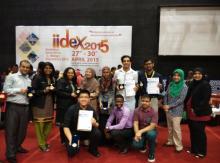
Faculty of Computer Science and Information Technology (FCSIT), University of Malaya has won 13 Medals at the 2015 Invention, Innovation & Design Exposition (iidex2015) held on April 27 – 30, 2015 at Universiti Teknologi MARA (UiTM) Shah Alam, Malaysia.
06 May 2015
The Hong Kong Polytechnic University (PolyU)
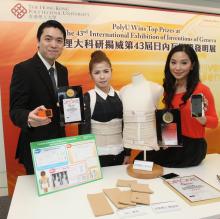
Award winning inventions include a robotic mannequin for the fashion industry, catalyst for green biodiesel from feedstock, posture correcting girdle for teenagers with scoliosis, blanket for neonatal jaundice and more

30 Apr 2015
Asia Research News
The NameExoWorlds contest, organised by the IAU and Zooniverse, is now entering its next stage. The 20 most popular ExoWorlds have been made available for naming proposals from registered clubs and non-profit organisations.
30 Apr 2015
Universiti Putra Malaysia (UPM)
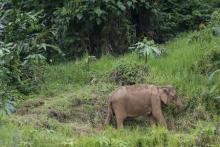
The results show that the elephants preferred secondary forests as it has more ground grass to eat and spend 75% of their time within 1.5 km of their water source.
28 Apr 2015
Asia Research News
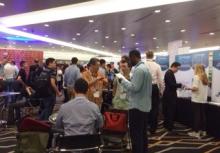
New programme supports entrepreneurs targeting the silver sector, with a $50,000 start-up fund
27 Apr 2015
Universiti Teknologi MARA (UiTM)
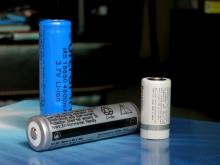
Researchers from the Institute of Science, University Teknologi MARA Selangor conducted a study into the possibility of using new and cost effective compounds in Li ION battery application.
23 Apr 2015
Korea Advanced Institute of Science and Technology (KAIST)
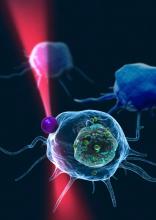
KAIST researchers published an article on the development of a novel technique to precisely track the 3-D positions of optically-trapped particles having complicated geometry in high speed in the April 2015 issue of Optica.
23 Apr 2015
University of Malaya
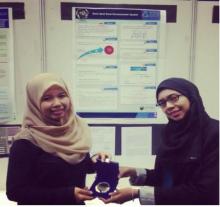
University of Malaya won two Gold and four Silver medals at the International Engineering Invention & Innovation Exhibition (i-ENVEX) 2015 held on April 17 – 19, 2015 at Universiti Malaysia Perlis.
17 Apr 2015
Asia Research News
Singapore 13 April, 2015 - Thermo Fisher Scientific Inc., the world leader in serving science, and the National University of Singapore (NUS) on 13 April announced three research projects, which are supported under their strategic alliance. Each project could receive a grant of up to S$300,000 per year.
15 Apr 2015
The Hong Kong Polytechnic University (PolyU)
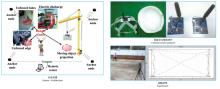
A summary by scientists at Hong Kong Polytechnic University about a newly developed system for construction site safety monitoring.
Giants in history

Turkish astrophysicist Dilhan Eryurt (29 November 1926 – 13 September 2012) conducted research on how the sun affects environmental conditions on the moon.
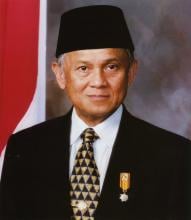
Bacharuddin Jusuf Habibie (25 June 1936 – 11 September 2019) was an Indonesian engineer who was President of Indonesia from 1998 to 1999.
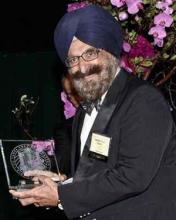
Physicist Narinder Singh Kapany (31 October 1926 – 4 December 2020) pioneered the use of optical fibres to transmit images, and founded several optical technology companies. Born in Punjab, India, he worked at a local optical instruments factory before moving to London for PhD studies at Imperial College. There, he devised a flexible fibrescope to convey images along bundles of glass fibres.
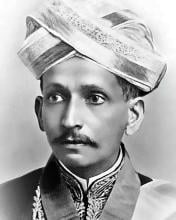
Sir Mokshagundam Srinivasa Shastry Vishveshwarayya (15 September 1860 – 14 April 1962) is widely regarded as India’s most outstanding engineer. In a career that spanned almost his entire life, Vishveshwarayya played a pivotal role in several engineering projects, including designing the Krishnarajasagara dam that is still the source of irrigation and drinking water for parts of Karnataka today.
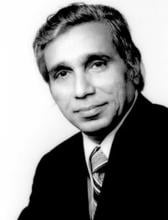
Fazlur Rahman Khan (3 April 1929 – 27 March 1982) was a Bangladeshi-American structural engineer and architect who invented the tube principle, which formed the basis for modern skyscraper design.
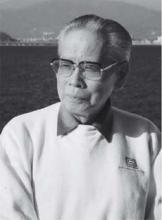
A Japanese surgeon, Tetsuzo Akutsu (20 August 1922 – 9 August 2007) built the first artificial heart capable of keeping an animal alive.

Lin Lanying (7 February 1918 – 4 March 2003) was a Chinese material engineer remembered for her contributions to the field of semiconductor and aerospace materials. Lanying was born into a family who did not believe in educating girls and she was not allowed to go to school.
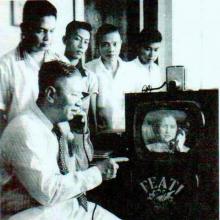
Gregorio Y. Zara (8 March 1902 – 15 October 1978) was a Filipino engineer and physicist best remembered for inventing the first two-way video telephone. Zara’s video telephone invention enabled the caller and recipient to see each other while conversing, laying the foundation for video-conferencing