A team of Business Faculty students from Lingnan University led by Prof Nancy Chen Yifeng, Associate Dean of the Faculty of Business, represented Hong Kong, China in the "National Sales Challenge," the longest-running university sales competition in the US, winning the championship in the final round of competition on 17 November 2023.
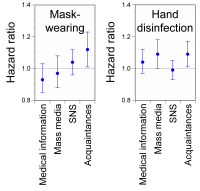
Researchers from Osaka University found that Japanese people who used medical information were more likely to wear masks and disinfect their hands even before the COVID-19 outbreak, while those who exchanged information with acquaintances were more likely to newly start mask-wearing and hand disinfection post outbreak. This will assist in the development of risk communication strategies to promote infection-preventive behavior in a timely manner.
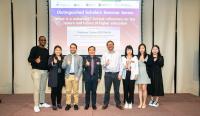
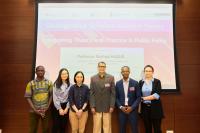
Riding on the success of the previous two seminar sessions, the Distinguished Scholars Seminar Series organised by Lingnan University’s School of Graduate Studies continues with the delivery of its third seminar. The seminar series takes place between November and December 2023 and features world-renowned scholars sharing their insights and expertise on various topics.
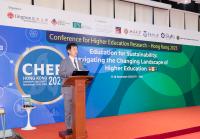
The School of Graduate Studies at Lingnan University recently kicked off its much-awaited Conference for Higher Education Research (CHER) – Hong Kong 2023. This year, over 180 participants from 12 regions registered for this two-day conference, including scholars from Australia, United States, Finland, England, Turkey, Singapore, Kazakhstan, China.
Asia Research News monitors the latest research news in Asia. Some highlights that caught our attention this week are sea cucumbers that glow in the dark, a needle that softens at body temperature, and the real size of our sun.
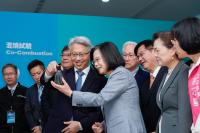
To reach the goal of net-zero emissions by 2050, on November 14, Academia Sinica and the Taiwan Power Company (Taipower) held a technology conference on Methane Pyrolysis to Power (MPTP) power generation at the Taiwan Power Research Institute (TPRI). Emerging from the laboratories of Academia Sinica, methane pyrolysis technology has recently been successfully applied in Taipower’s small-scale power generation units!
Analysis of more than 80,000 diabetes patients in Singapore links elevated systolic pressure and very low diastolic pressure to higher cardiovascular mortality. Underscores need to control high systolic levels while exercising caution with low diastolic levels.
The winners of the Applied Microbiology International Horizon Awards were announced at the prestigious Environmental Microbiology lecture 2023, held at BMA House in London on November 16.
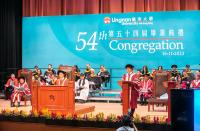
Lingnan University in Hong Kong held its 54th Congregation for the Conferment of Degrees today (16 November) with Council Chairman Mr Andrew Yao Cho-fai and Deputy Council Chairman Mr Augustine Wong Ho-ming presiding. This year the University conferred degrees on 2,473 graduates, of whom 719 were undergraduates, 1,721 masters, 30 doctors, and 110 postgraduate diploma holders (of whom 107 graduates were awarded both a Master of Accountancy and a Postgraduate Diploma in Accountancy).
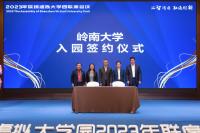
On 14 November 2023, Lingnan University and the Shenzhen Technology and Innovation Commission signed an agreement at the 2023 Assembly of Shenzhen Virtual University Park, announcing that Lingnan University will officially become a member of the Shenzhen Virtual University Park.
Riding on the success of the first seminar on 2 November 2023, the Distinguished Scholars Seminar Series organised by Lingnan University’s School of Graduate Studies continues with the delivery of its second seminar. The seminar series takes place between November and December 2023 with world-renowned scholars sharing their insights and expertise on various topics.
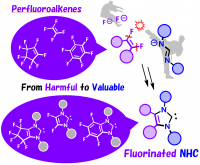
Osaka Metropolitan University researchers have successfully synthesized ligands called fluorinated N-heterocyclic carbenes (NHCs) from environmentally harmful perfluoroalkenes, a type of synthetic chemicals also referred to as PFAS. These NHCs are valuable for stabilizing unstable molecules and enhancing catalytic efficiency. Through further structural modification, these NHCs are expected to find applications in a wide range of substances, including catalysts and light-emitting materials.
Lithium-oxygen batteries utilize oxygen in the surrounding air to generate energy. They have shown a high degree of theoretical potential, but the technology has stymied due to the specially designed carbon cathodes lacking certain characteristics. Researchers have made a breakthrough in this regard, developing a special type of porous carbon sheet called graphene mesoponge sheets.
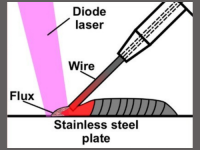
Steel and aluminum are key players in supporting economic growth, yet materials joining them remain unexplored due to their fusion zones’ brittleness. A new 3D printing method’s fix may be a step toward a steel-aluminum hybrid renaissance.
Most Chinese-language media reports concerning migrant domestic workers (MDW) in Hong Kong fail to report their mistreatment factually, independently and critically, and focus on news appeal while neglecting the deeper roots of this important issue, related to power and the interplay of gender, race, ethnicity, and class, according to a recent study by Lingnan University.
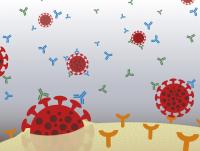
New insights on how individual immune responses to the SARS-CoV-2 virus, particularly in mutant strains, can influence the efficacy of COVID-19 vaccines
A new study suggests that self-deception is the key to understanding irrational actions of national leaders in war, as exemplified by Vladimir Putin's invasion of Ukraine.
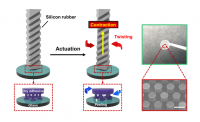
Researchers develop a technique to allow fragile objects to be transferred and released by robotics, without damage, while using a gecko inspired adhesive.
Asia Research News monitors the latest research news in Asia. Some highlights that caught our attention this week are how mice help disperse seeds of a centennial blooming plant, a new isle created by recent volcanic activity, and how organisms breaking up microplastics is not always a good thing.
A significant breakthrough in developing a passive radiative cooling (PRC) material has been announced by researchers at City University of Hong Kong (CityU). The findings have just been published in the prestigious scientific journal Science titled “Hierarchically structured passive radiative cooling ceramic with high solar reflectivity.”
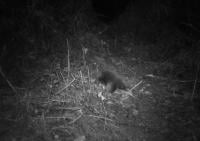
Expedition led by Indonesian NGO YAPPENDA with Cenderawasih University students finds two species lost to science: Attenborough’s long-beaked echidna—one of Re:wild’s most wanted lost species—and Mayr’s honeyeater.
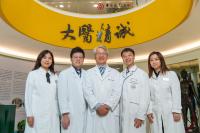
The School of Chinese Medicine at Hong Kong Baptist University (HKBU) found that 55% of the patients who sought medical treatment from the “HKBU Chinese Medicine Telemedicine Centre Against COVID-19” during the fifth wave of the COVID-19 pandemic continued to experience at least one long COVID symptom for six months to a year after diagnosed with an infection. The most common symptoms are fatigue, brain fog and cough.
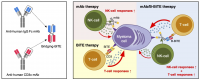
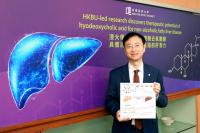
A research led by Hong Kong Baptist University (HKBU) has discovered that hyodeoxycholic acid (HDCA), a bile acid generated in human intestine, can reduce fat accumulation and inflammation in the liver, demonstrating its strong therapeutic potential for non-alcoholic fatty liver disease (NAFLD). The research also found that HDCA’s intervention in NAFLD works by reshaping the population of beneficial gut bacteria, which affects the metabolic interactions between the gut and the liver.
New shrimp species in ancient hot spring, Super sprouts, How "warm-ups" work, New antiviral candidate, Solving voltage decay and from our blog: A sustainable future shines in TIE 2023. Read all in the latest Editor's Choice.
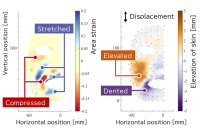
A research team led by Osaka University used 125 physical markers to understand the detailed mechanics of 44 different human facial motions. The aim was to better understand how to convey emotions with artificial faces. Beyond helping with the design of robots and androids, this research can also benefit computer graphics, facial recognition, and medical diagnoses.