Managing a massive research news story
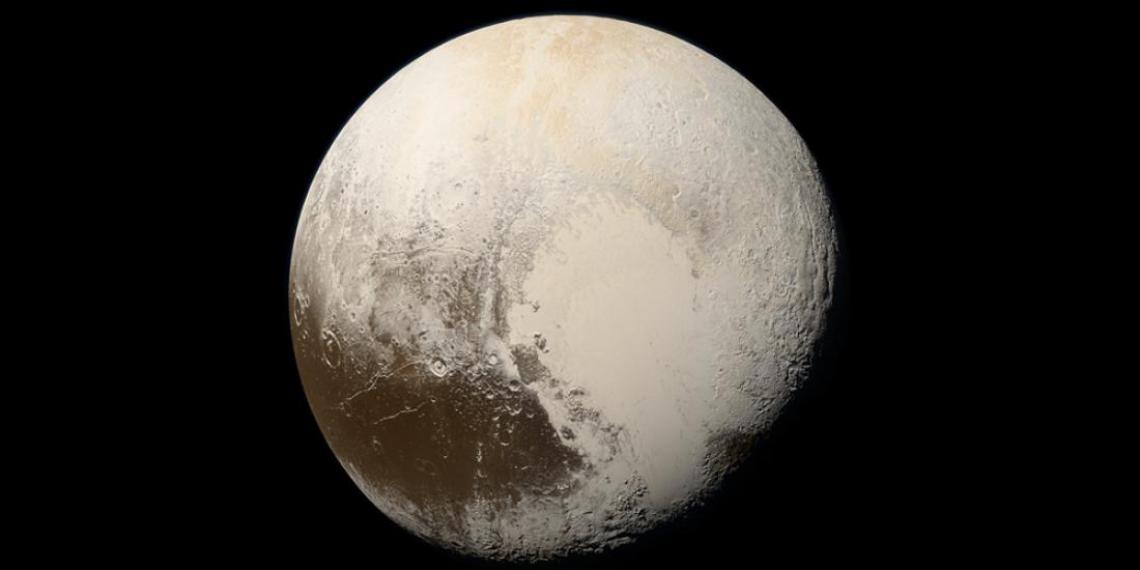
Pluto
By Ruth Francis
In May, Hokkaido University researchers and colleagues announced that they believe an insulating gas layer is keeping an ocean from freezing inside Pluto. Asia Research News worked with the international communications team at Hokkaido, writing a press release which was sent to selected journalists under embargo and more broadly after embargo lift. News coverage appeared in hundreds of media outlets in more than 50 countries and in 20 languages.
We spoke to lead researcher Associate Professor Shunichi Kamata and Naoki Namba in Communications at Hokkaido University about their preparations and whether they expected quite such a huge response:
Q. Did you know it would be such a big story?
Shunichi Kamata: As I never did a press release before, I couldn't even imagine what the responses to our research would be like. However, my co-authors and myself are confident that not only our study has a scientific significance, but also this is something a lot of people would be interested if we can successfully convey the message to the public.
Naoki Namba: We thought it would be big, but not this big as it’s a simulation! But yes, because it’s about Pluto people do pay attention. Most of our releases come out after the work is published and the embargo lifts, but here we worked hard to make sure we sent out the press release under embargo. We treated this press release differently.
Q. In what way differently?
NN: Usually we post releases on distribution sites after research is published by a journal. Here we searched for relevant journalists to contact directly, and asked Asia Research News to do a targeted distribution under embargo. We made a little more effort.
Q. How did you prepare for the media?
NN: Although we work on the international press releases, there is a local team who work with Japanese materials and media. They organised a press conference in Hokkaido and worked with the researcher on that side of preparations though I was able to make some suggestions.
SK: One of the co-authors who has some experiences in press releases and press conferences gave me a lot of good advice. In addition, by having my family who are not researchers listen to my presentation and read the release statement, I tried to replace the highly technical terms with more regular words.
Q. How much time did it take up?
NN: Compared to other press releases we handled a lot of media requests. We posted the release on Friday and the embargo lifted on Monday so there were a lot of enquiries over the weekend and many in the night because of time differences for international media. We had prepared for that in advance and the researcher responded very quickly.
SK: The month from the acceptance of the paper till the press release was mostly spent for the preparation. Just like research itself, the more time you take, the better presentation you can give. As a result, I ended up spending a lot of time. I didn't plan in advance how much time to spend.
Q. Were you pleased with the coverage?
NN: Yes, really pleased! This had the most coverage in the two years since I joined the university. With a big story like this you throw everything at it. The journal Nature Geoscience highlighted it in their release, but sending out our own press release meant people quoted Hokkaido.
Q. What are the next steps for the research?
SK: The idea our research suggests is not only new, but also universal. We applied this idea to Pluto and solved the mystery of it. The mystery of the universe exists just as many stars there are, so I would like to solve many more of those by applying our versatile idea to other celestial objects.
----------------------------------------------------
Ruth Francis is a communications expert with 20 years of experience working in academia and publishing, including Springer Nature, BioMed Central, Cancer Research UK and King's College London.