
High-pressure communications and stress management
By Ruth Francis
The COVID-19 pandemic has added to everyone’s pressure. There was -- and in many places still is -- isolation, home working, and juggling homeschooling, and plus an increased workload for university communications officials fielding media requests for virologists and epidemiologists, or responding to uncertainty over whether events will take place, how to help students and staff, how and when campuses will reopen… The list goes on.
Whatever our personal circumstances at the moment, we need to be able to manage stress more than usual. Personally, I’m juggling more responsibilities and have fewer opportunities to let off steam. Day-to-day, my biggest challenge seems to be the lack of “me” time, by which I don’t mean I need to do my nails - though they could do with a good trim - I’m thinking about headspace.
A colleague once told me that the most important thing he’d learned from working with me is that even in the thick of a crisis it is ok to say: I need to step back for a few minutes and clear my head. When a particular publishing crisis was unfolding, and colleagues and journalists were calling, emailing and coming by my desk for answers, I stood in a stairwell for a few minutes breathing deeply before calling my boss from outside the building where I was less likely to be interrupted with an outline of next steps we should take.
It is not sustainable to work intensely for long periods without a break, and self-discipline is needed if we are to step away from wherever we are working at the moment. In an office environment, it is easy to walk to the kitchen or step outside briefly, but with many of us continuing to work from home either full time or several days a week, this is not so simple. Still, it is getting up and walking away for ten minutes, or moving to a different room or environment can help you restore some clarity.
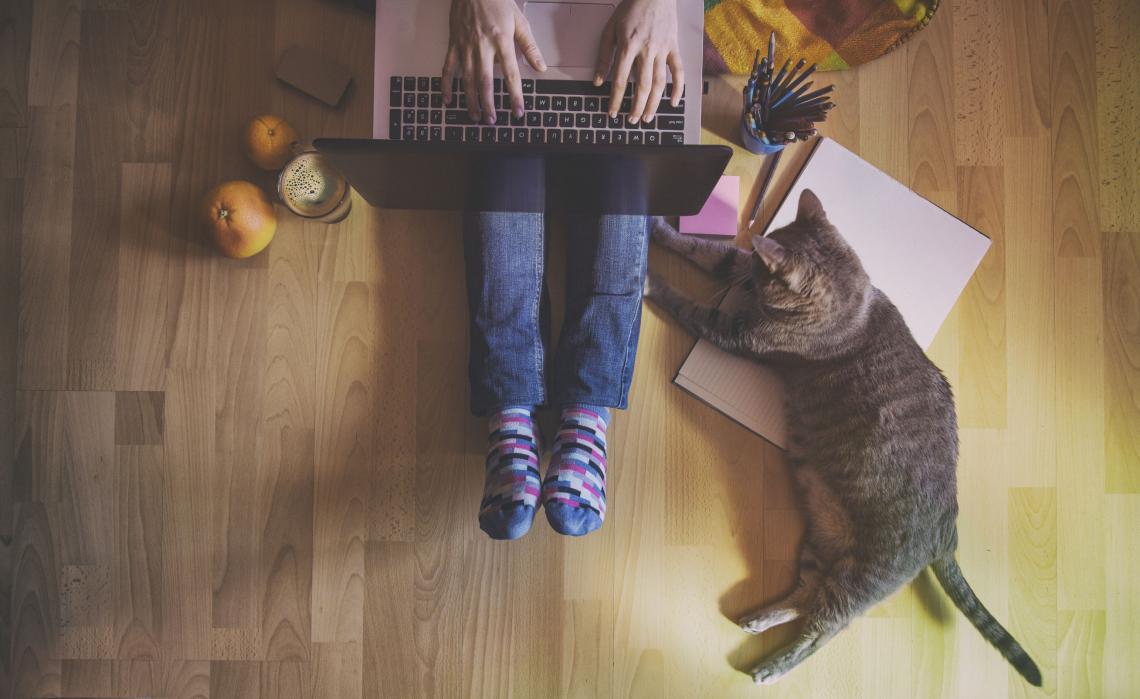
For those of us working at home, boundaries are crucial. Set a schedule and try to stick to it. If you can work away from distractions, do that, then switch off from work during personal or family time. If you have to work in a living room, could you sit on the opposite side of the table or a different part of the room to create a division between work and personal life?
When under pressure, it is easy to try to keep going even when issues arise that challenge us. It could be a lack of clarity about something, a difference of opinion with a colleague, or something that is blocking you from achieving an aim. Try to discuss issues as they arise, rather than letting them build up. Doing this remotely is harder than in person; it can be harder to read people on the phone or even by video, but it is important not to ignore concerns.
If you’re feeling out of your depth or overwhelmed, then ask for help. In communications, mistakes can be visible and can have consequences for the reputation of the organisation. Chances are someone else can offer advice, a new perspective or an extra pair of hands. This is what teamwork is about.
Following the above advice may help manage some of the stress we are currently enduring and as we get back to “the new normal”. Though many of us thrive in high-pressure, we will not sustain it for long periods. Take care of yourself, so you can take care of your team.
----------------------------------------------------
Ruth Francis is a communications expert with 20 years of experience working in academia and publishing, including Springer Nature, BioMed Central, Cancer Research UK and King's College London.