
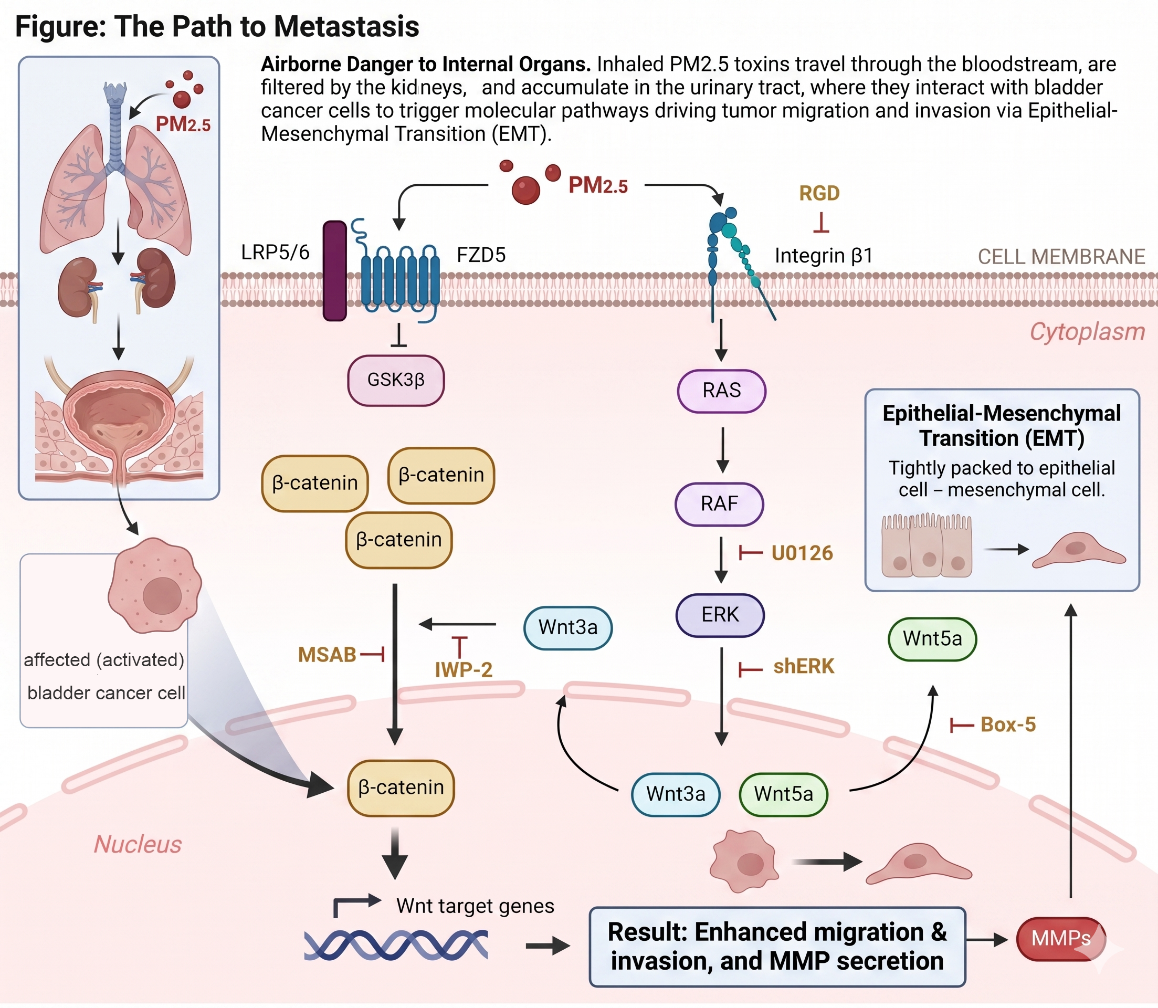

A groundbreaking study reveals how fine particulate matter (PM2.5) fuels bladder cancer malignancy by triggering Epithelial-Mesenchymal Transition (EMT) via the ERK/WNT/beta-catenin pathways. These findings provide critical evidence of air pollution's destructive molecular reach far beyond the respiratory system, promoting tumor metastasis.
How Air Pollution Fuels Bladder Cancer Spread. This diagram illustrates the systemic journey of inhaled PM2.5 particles from the respiratory system down to the bladder. Upon entering bladder cancer cells, PM2.5 activates internal molecular chain reactions (beta-catenin and ERK pathways). These signals command the cell nucleus to trigger Epithelial-Mesenchymal Transition (EMT), a process where normal, stationary cancer cells transform into highly mobile shapes. This transformation significantly accelerates the cells' ability to migrate, invade neighboring tissues, and secrete destructive enzymes (MMPs), leading to advanced tumor malignancy.
National Taiwan University
Introduction
Air pollution is globally recognized as a silent killer, with its detrimental impacts on the respiratory and cardiovascular systems well-documented. However, a pioneering study from Taiwan sheds light on a less visible but equally critical threat: the profound impact of fine particulate matter (PM2.5) on the urinary tract.
The research team has successfully uncovered the precise molecular mechanisms by which PM2.5 exposure fuels the aggressiveness of bladder cancer, offering a vital breakthrough in environmental toxicology and oncology.
The molecular cascade of malignancy
While long-term exposure to PM2.5 has been statistically correlated with systemic cancers, the exact biological pathways driving bladder cancer progression have long remained elusive. Through rigorous experimental models, the research team demonstrated that PM2.5 does not merely sit in the body; it actively reprograms bladder cancer cells.
The study published in Particle and Fibre Toxicology reveals that PM2.5 triggers a cellular transformation known as Epithelial-Mesenchymal Transition (EMT). In simple terms, this process allows tightly anchored cancer cells to loosen their bonds, change their shape, and gain a highly mobile character. As a result, the exposed bladder cancer cells exhibit a significantly accelerated rate of migration and invasion into surrounding tissues, which is a critical prerequisite for cancer metastasis (the spread of cancer to other organs).
A global public health wake-up call
"Our findings provide a critical piece of the puzzle regarding how environmental pollutants impact internal organs far beyond the point of inhalation," the research team explains. Because water-soluble components of inhaled particulates are eventually filtered by the kidneys and stored in the bladder, the urothelium, the inner lining of the bladder, suffers prolonged, direct exposure to these concentrated toxins.
By identifying the specific signaling pathways and molecular targets activated by PM2.5, this research provides a new framework for developing targeted therapeutic interventions. It suggests that blocking these specific pathways could potentially counteract pollution-induced cancer aggressiveness in patients living in high-exposure areas. Ultimately, the study delivers a powerful, data-driven warning that highlights the urgent need for stricter global air quality standards to mitigate cancer risks.
Corresponding author- Prof. Hsiu-Ni Kung's email address: [email protected]
Advertisement