

Peer Reviewed
News

14 Jun 2024
Mahidol University
Researchers created a strong, plastic-free, eco-friendly leather alternative from pineapple leaf fiber and natural rubber, outperforming other plant-based leathers and even mushroom leather in strength and sustainability.

14 Jun 2024
Tohoku University
Researchers from Tohoku University and Kyoto University have succeeded in developing a DNA–based molecular controller. Crucially, this controller enables the autonomous assembly and disassembly of molecular robots, as opposed to manually directing it.

14 Jun 2024
Osaka Metropolitan University
Theoretical simulations and synchrotron experiments reveal the hidden fingerprint of new magnets

13 Jun 2024
Tohoku University
In the same way that the number of rings in a tree can tell us its age, the characteristics of rocks such as breccia can tell us about the history of a region. The breccia around Ichinokawa Mine (located in Ehime prefecture) are of particular interest, as the mine is located south of the Median Tectonic Line. Researchers at Tohoku University uncovered how breccia can provide valuable evidence to estimate the energy of past earthquakes in the area.

12 Jun 2024
The University of Osaka
Researchers from Osaka University found that germ cells, which develop into eggs and sperm, drive sex-dependent differences in lifespan in vertebrates. Female and male germ cells increase and reduce lifespan, respectively. These effects are controlled via estrogen and growth factor hormones in females and vitamin D in males. Vitamin D supplementation extends lifespan in both males and females. The results clarify the link between reproduction and aging and show that vitamin D may improve longevity in vertebrates.

12 Jun 2024
Singapore University of Technology and Design
Silicone-based elastomeric 3D microchannel networks were created using direct ink writing 3D printing with simultaneous incorporation of electronic components into the microchannel. By injecting liquid metal into the coil-shaped multilayered microchannel, flexible and stretchable microfluidic antenna coils with a high Q factor were developed.

11 Jun 2024
Hokkaido University
The selective bond-breaking powers of enzymes bring new versatility for building nanoparticles with a wide range of technical and medical potential.

11 Jun 2024
Osaka Metropolitan University
Conversion to health care facilities shows correlation to population change

10 Jun 2024
The University of Osaka
In interpersonal relationships, people sometimes perceive that the other person understands them. When people feel this way, they are more willing to engage with the other person, but the reasons for this were not well understood. This study reveals that the psychological process for this feeling largely depends on a reduction in prejudice towards the other person. The results of this study may help us understand the psychological process behind reducing discrimination.

10 Jun 2024
The University of Osaka
Researchers from Osaka University used omnidirectional photoluminescence measurements to study the effect of carbon impurities in pure gallium nitride crystals. They found that the type of energy losses depends can switch at a critical value, which can help in the manufacture of more efficient devices.

07 Jun 2024
Osaka Metropolitan University
Machine learning helps find advantageous combination of salts and organic solvents

06 Jun 2024
Tohoku University
A new material developed by researchers at Tohoku University may be the key to quickly flag damaged infrastructure. This material offers a way to reduce the manpower required to regularly monitor structures that undergo daily use such as bridges. Compared to previous methods, this environmentally friendly material boasts the ability to operate without a power supply, and store information about previous incidents of mechanical stress. The application of this mechanoluminescent material is expected to make it easier and less costly to assess the safety of structures we may use in our everyday lives.

05 Jun 2024
The University of Osaka
Osaka University researchers discovered a correlation between high GDF15 levels in steatotic liver patients and increased liver cancer risk. Steatotic liver disease cases, fueled by lifestyle-related issues, have surged globally, with Japan reporting a significant prevalence. Elevated GDF15 levels also signify complication risks associated with liver cirrhosis. Combining GDF15 levels and FIB-4 index aids efficient liver cancer detection, potentially improving prognosis through early intervention.

05 Jun 2024
Ehime University
Experimental investigations on partition coefficients of first-transition row elements between olivine and silicate melt

05 Jun 2024
Hiroshima University
Fifteen years after Japan initiated efforts to attract younger people to rural areas, researchers assess its impact and the lessons it offers for global rural revitalization policies.

04 Jun 2024
Tohoku University
Previous research has demonstrated that adding tin to beta-type titanium alloys improves their strength. But scientists have yet to understand the reasons for this. Now, a research team from Tohoku University has pinpointed the exact mechanisms behind this phenomenon.

04 Jun 2024
Osaka Metropolitan University
Online group discussions, active learning help sustain healthy habits among countryside residents

04 Jun 2024
The University of Osaka
A research group at Osaka University developed a mixed reality (MR) system to intuitively share flooding forecasts, which can be visualized on mobile devices via server rendering. This system addresses the challenge of displaying detailed flood risks, enhancing understanding among both experts and the public. By offloading computational tasks to servers, the system allows for real-time MR visualization over large city areas, potentially integrating advanced features like deep learning to improve disaster resilience and public safety.

03 Jun 2024
The University of Osaka
A research group at Osaka University has developed an innovative positioning system that enhances the versatility and accuracy of drone-viewpoint mixed reality (MR) applications by aligning real and virtual world coordinates without predefined routes. By integrating visual positioning systems and natural feature-based tracking, this technology is expected to be applied to urban landscape simulation, maintenance, and inspection work.

31 May 2024
Singapore University of Technology and Design
To overcome issues associated with real-life testing, SUTD researchers successfully demonstrated the use of digital twin technology within robot simulation software in assessing a robot’s suitability for deployment in simulated built environments.

30 May 2024
The University of Osaka
Research collaboration between Osaka University and Otsuka Pharmaceutical Co., Ltd. revealed that deletion of mRNA endonuclease Regnase-1 promoted NK cell anti-tumor activity via OCT2-dependent transcriptional up-regulation of Ifng mRNA. Associated with the deletion of Regnase-1 in NK cells, NK cells showed a high expression of OCT2 and CXCR6 in those that escaped from mRNA decay from Regnase-1, and they contributed to the transcriptional regulation of Ifng and NK cell persistence inside the tumor microenvironment, respectively. The loss-of-function strategy targeting Regnase-1 potentially enhances the production of cytotoxic proteins such as IFN-γ, granzymes, and perforin. This approach also promotes NK cell infiltration and persistence within the tumor, thereby facilitating the development of effective anti-tumor immunotherapy against solid tumors.

30 May 2024
The University of Osaka
Researchers from Osaka University probed the transit of cations across a nanopore membrane for the generation of osmotic energy. The team controlled the passage of cations across the membrane using a voltage applied to a gate electrode. This control allowed the cation-selective transport to be tuned from essentially zero to complete cation selectivity. The findings are expected to support the application of blue energy solutions for sustainable energy alternatives worldwide.

30 May 2024
The University of Osaka
Researchers from Osaka University combined computer simulations and transmission electron microscopy experiments to better understand the ordering mobility and formation of microstructure domains in Fe3Al alloy. They were able to correlate structural changes with heat treatment to understand how particular mechanical behavior can be achieved. This is expected to allow the superelastic properties of Fe3Al to harnessed for the 3D printing of construction materials for absorbing seismic activity.

29 May 2024
Singapore University of Technology and Design
An SUTD professor and his collaborators propose a new tree-inspired one-time password scheme that provides security and privacy while supporting changing user environments.
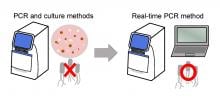
23 May 2024
Osaka Metropolitan University
Novel real-time PCR method might become diagnostic tool targeting emerging bacterium responsible for food poisoning outbreaks

22 May 2024
The University of Osaka
Researchers from Osaka University have found that a specific pattern of brain activity, known as “sharp-wave ripples,” is associated with thoughts that wander from the present situation. This activity begins in the hippocampus, a crucial brain region for memory formation and recall, and is linked to more vivid and less desirable thoughts. A better understanding of the relationship between sharp-wave ripples and these kinds of thoughts might be helpful for treating related conditions.

21 May 2024
The University of Osaka
Researchers at Osaka University analyzed data from the Japan Gerontological Evaluation Study and found that socioeconomic status (SES) transitions affect dementia risk. Specifically, upward SES mobility is greater associated with reduced dementia risk and extended healthy aging with dementia-free lifespan, while downward mobility increases risk. The study of 9,186 participants found that lifestyle, comorbidities, and social factors mediate this relationship, highlighting the importance of SES in cognitive health and preventing dementia.
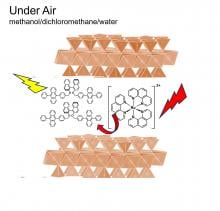
21 May 2024
Ehime University
Achievement of stereoselective up-conversion processes using a chiral donor/acceptor pair in the presence of synthetic saponite
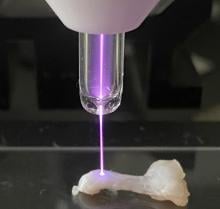
21 May 2024
Osaka Metropolitan University
Promising results of helium plasma jet therapy on rats after surgery widen scope of method’s medical applications

20 May 2024
Daegu Gyeongbuk Institute of Science and Technology (DGIST)
DGIST-Yonsei University-Korea University Collaborative research team has developed a suture-type electronic component that can wirelessly monitor vital signs in the body
This new technology is expected to be easily applicable in orthopedic/medical rehabilitation, including personalized rehabilitation
Events
Sorry, no events coming up for this topic.
Researchers
Sorry, no researchers coming up for this topic.
Giants in history
Sorry, no researchers coming up for this topic.