
Peer Reviewed
News
01 Jun 2023
Singapore University of Technology and Design
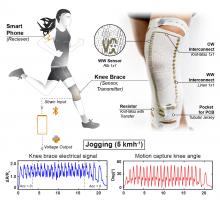
SUTD researchers developed a fully knitted, circuit-embedded knee wearable for wireless sensing of joint motion in real-time. Compared to other knitted electronics, this model has fewer externally integrated components and a more sensitive sensor, making it less error-prone.
01 Jun 2023
Duke-NUS Medical School
Tests could soon identify patients who will respond well to the available treatment for chronic myeloid leukaemia and those who will be resistant to it—which could improve their chances of survival.
01 Jun 2023
Tohoku University
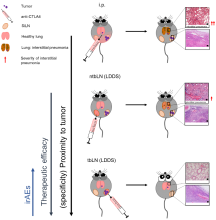
Scientists at Tohoku University have discovered a novel approach that improves the efficacy of immune checkpoint blockade - a novel form of cancer treatment utilizing immune checkpoint inhibitors - and minimizes the associated side effects. Using immune checkpoint blockades to target tumor-positive lymph nodes, they generated a robust anti-tumor response against both local and systemic metastases.

31 May 2023
Hiroshima University
Truck drivers unintentionally taking ‘microsleeps’ of a few seconds can cause terrible traffic accidents, but efforts and technologies aiming to prevent the problem have focused mainly on monitoring driver eye activity while missing a host of other key indicators of the problem.

30 May 2023
Osaka Metropolitan University
Osaka Metropolitan University scientists found that Japanese and Chinese, who are considered to have high-context cultures with a high degree of reliance on information shared by the speaker and listener, are code-switching from high-context cultures to low-context cultures when communicating with people from each other’s country. Furthermore, the scientists found that the Japanese do not engage in much code-switching with Chinese students in Japan.

29 May 2023
The University of Osaka
Researchers from Osaka University show how their multilegged walking robot can be steered by inducing a dynamic instability. By making the couplings between segments more flexible, the robot changes from walking straight to moving in a curved path. This work can lead to more energy-efficient and reliable robotic navigation of terrain.
26 May 2023
The University of Osaka
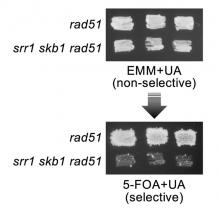
A research team, led by researchers from Osaka University, performed genetic screening of fission yeast lacking DNA repair gene Rad51 to identify genes that play a role in gross chromosomal rearrangement (GCR), a type of mutation that occurs at the centromere. Cells lacking Srr1 or Skb1 exhibited reduced GCR, indicating that these genes are important to the occurrence of GCR. These findings advance our understanding of the mechanisms underlying centromeric GCR.

26 May 2023
Osaka Metropolitan University
Eating fermented foods might be the secret to a healthy and long-lived society
26 May 2023
Tohoku University
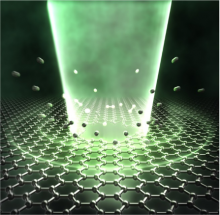
Graphene has revolutionized materials science since its discovery in 2004, with its high electron mobility, mechanical strength, and thermal conductivity. But processing graphene at the micro/nanoscale is a challenging process that often involves large-scale equipment and complex operations. Now, Tohoku University researchers have applied their simple femtosecond laser technique to ultra-thin atomic layers of graphene, resulting in multi-point hole drilling without damaging the graphene film.
23 May 2023
National Institute for Materials Science (NIMS)
Two key challenges in chemistry innovation are solved simultaneously by exploring chemical opportunities with artificial intelligence.

23 May 2023
Hokkaido University
Acoustic signals can be effectively used for monitoring glacial runoff and provide a cheaper and more accessible alternative to existing methods.
23 May 2023
Tohoku University
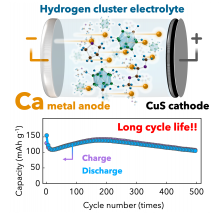
With the use of electric vehicles and grid-scale energy storage systems on the rise, the need to explore alternatives to lithium-ion batteries has never been greater. Tohoku University researchers have recently developed a prototype calcium metal rechargeable battery capable of 500 cycles of repeated charge-discharge - the benchmark for practical use. The breakthrough was made thanks to the development of a copper sulfide nanoparticle/carbon composite cathode and a hydride-based electrolyte.

23 May 2023
Institute of Industrial Science, The University of Tokyo (UTokyo-IIS)
Researchers from the Institute of Industrial Science, The University of Tokyo, discover how certain colloids can form a solid-like gel and reveal how the mechanism differs from glasses.
19 May 2023
Institute of Industrial Science, The University of Tokyo (UTokyo-IIS)
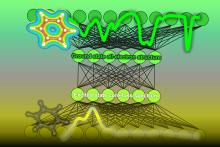
Researchers at the Institute of Industrial Science, The University of Tokyo, use artificial intelligence to help interpret data generated by material science spectroscopy experiments, which can aid in the development of new drugs and organic conductors.
18 May 2023
Tohoku University
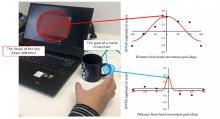
It’s not unusual for many of us to reach for a cup of coffee or cup of tea whilst focusing our attention on a screen. Scientists have long pondered whether our hand movements influence our spotlight attention. And now a group of researchers from Tohoku University have discovered that our spotlight attention and the attention paid to our moving hands operates via independent mechanisms.
17 May 2023
The University of Osaka
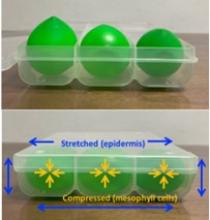
A research group led by Osaka University has found that plant cells may be able to detect mechanical forces to determine their own position within the leaf—whether they are on the surface or in the inner tissues—and therefore differentiate into appropriate cell types after damage. These findings reveal how plants regenerate the correct type of tissues when damaged, and may improve our understanding of the mechanisms underlying the high regeneration potential of plants.
17 May 2023
Tohoku University
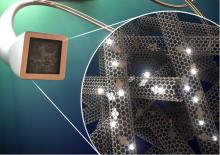
To improve the therapeutic techniques to treat those with brain disorders, researchers have developed microscopic, thermally-drawn microelectronic fiber-based neural probes as a means to manipulate both electrical and chemical signals in the brain. Now, a researcher from Tohoku University’s Frontier Research Institute for Interdisciplinary Sciences has led a group that increased the functionality of these fibers by equipping them with neurochemical sensing aptamers.
16 May 2023
Hiroshima University
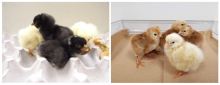
Researchers have created a genetically edited allergen-free chicken egg that may be safe for those with egg white allergies.
16 May 2023
Kanazawa University
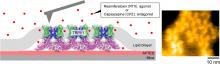
Researchers at Kanazawa University report in the Proceedings of the National Academy of Sciences of the United States of America (PNAS) high-speed atomic force microscopy experiments that show how ligands associated with stimulating and suppressing activation of the TRPV1 protein increase and decrease the molecule’s structural variations. The observations provide insights into how these heat- and chilli-sensing proteins function.
16 May 2023
The University of Osaka
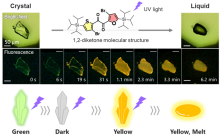
Researchers at Osaka University discovered a new class of photo-responsive crystal compounds, heteroaromatic 1,2-diketones. Certain light irradiation causes the crystals in these materials to melt, dramatically changing the materials’ properties. One member of this class, SO, shows luminescent changes while melting, which enabled the research team to visualize the crystal-melting process at the molecular level. These findings provide fundamental insights into the mechanisms behind crystal melting and will enable future designs of light-responsive materials.
12 May 2023
National Institute for Materials Science (NIMS)
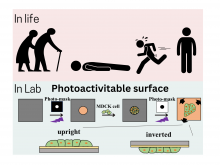
Specially coated surfaces help scientists investigate what happens when cell clusters are turned upside down.
12 May 2023
Tohoku University
An international research group has developed a new surface coating technology that is capable of significantly increasing electron emission in materials. Their breakthrough is expected to improve the production of high-efficiency electron sources, and lead to increased performances in electron microscopes, electron beam lithography systems, and synchrotron radiation facilities.
12 May 2023
Tohoku University
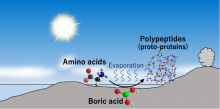
Understanding how catalytic organic polymers emerged on prebiotic Earth is vital to understanding the origin of life. Now, a team of scientists at Tohoku University have recently found a potential environment for the reaction that produced catalytic organic polymers.

11 May 2023
Duke-NUS Medical School
A protein that helps bats survive viral diseases might offer lessons for developing new anti-inflammatory treatments.
11 May 2023
Daegu Gyeongbuk Institute of Science and Technology (DGIST)
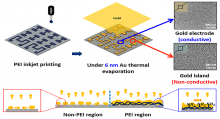
- DGIST Professor Hongki Kang’s team developed technology for selective photothermal layer formation and a transparent electrode based on a fine inkjet printing solution process.
- This has potential to efficiently measure various body signals through a flexible fine electrode array customized for patients.
- The research results are published in ACS Applied Materials & Interfaces.
11 May 2023
Daegu Gyeongbuk Institute of Science and Technology (DGIST)
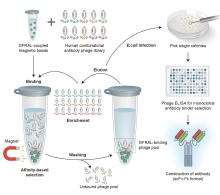
- In a groundbreaking study, Professor Yea’s DGIST research
team verified the effectiveness of the anti-GFRAL human
antibodies in improving chemotherapy-induced cancer cachexia
- The team presents a candidate antibody for managing cancer cachexia, a condition without an approved and effective
therapy worldwide
11 May 2023
Hokkaido University
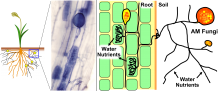
A new group of mitochondrial viruses confined to the arbuscular mycorrhizal fungi Glomeromycotina may represent an ancestral lineage of mitoviruses.

11 May 2023
Daegu Gyeongbuk Institute of Science and Technology (DGIST)
Two undergraduate students publish papers as lead authors in the prestigious international academic journal ChemSusChem, proposing methods to improve eco-friendly hydrogen production through photoelectrochemistry
11 May 2023
Daegu Gyeongbuk Institute of Science and Technology (DGIST)
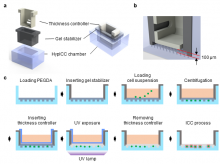
- The DGIST team of Professor Minseok Kim is jointly developing a platform that can analyze rare cells without loss with CTCELLS, Inc.
- A high cell preservation rate and reproducibility have been achieved as well as accurate immunocytochemistry technology implementation.
- Research results have been published in ACS Applied Materials & Interfaces.
11 May 2023
Daegu Gyeongbuk Institute of Science and Technology (DGIST)
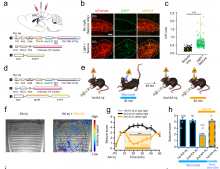
- Prof. Jung Ho Hyun’s research team at DGIST has developed a tool to verify the causal relationship between specific neurons and circuits and behavior
- This will provide new information for the development of treatments using light for neurological ad psychological disorders
Events
Sorry, no events coming up for this topic.
Researchers
Sorry, no researchers coming up for this topic.
Giants in history
Sorry, no researchers coming up for this topic.