
This story is featured in the Asia Research News 2026 magazine. Book space in the next issue now.
Get the news in your inbox
Inhalation of nitric oxide gas is a life-saving therapy used in advanced hospitals to treat severe heart and lung conditions. It works by relaxing blood vessels in the lungs, helping increase oxygen levels in the bloodstream without lowering blood pressure in the rest of the body. This makes it especially effective for treating critically ill newborns with persistent pulmonary hypertension, as well as adults suffering from pneumonia, acute respiratory distress, or other serious breathing problems.
Despite its medical importance, inhaled nitric oxide therapy is often out of reach for many patients. The gas is typically delivered in heavy storage tanks and requires complex medical devices that are expensive and difficult to operate. In the United States, a five-day course of treatment for a newborn can cost around $14,000. This has made the therapy inaccessible to many hospitals, particularly those in developing countries or remote areas.
A team of researchers from the Research Center for Materials Nanoarchitectonics (MANA) at Japan’s National Institute for Materials Science (NIMS) has developed a small tablet that can produce therapeutic nitric oxide gas when exposed to air. The tablet is lightweight, affordable, and requires no power, sensors, or machinery to operate. The team’s findings were published in the journal Science and Technology of Advanced Materials.
“We designed the tablet to be portable, simple, and ready to use,” says lead researcher Shinsuke Ishihara of NIMS-MANA. “In clinics without electricity or gas tanks, a health worker could just open the package and start treating a patient. Our goal was to remove the need for costly equipment and make this therapy accessible to people everywhere.”
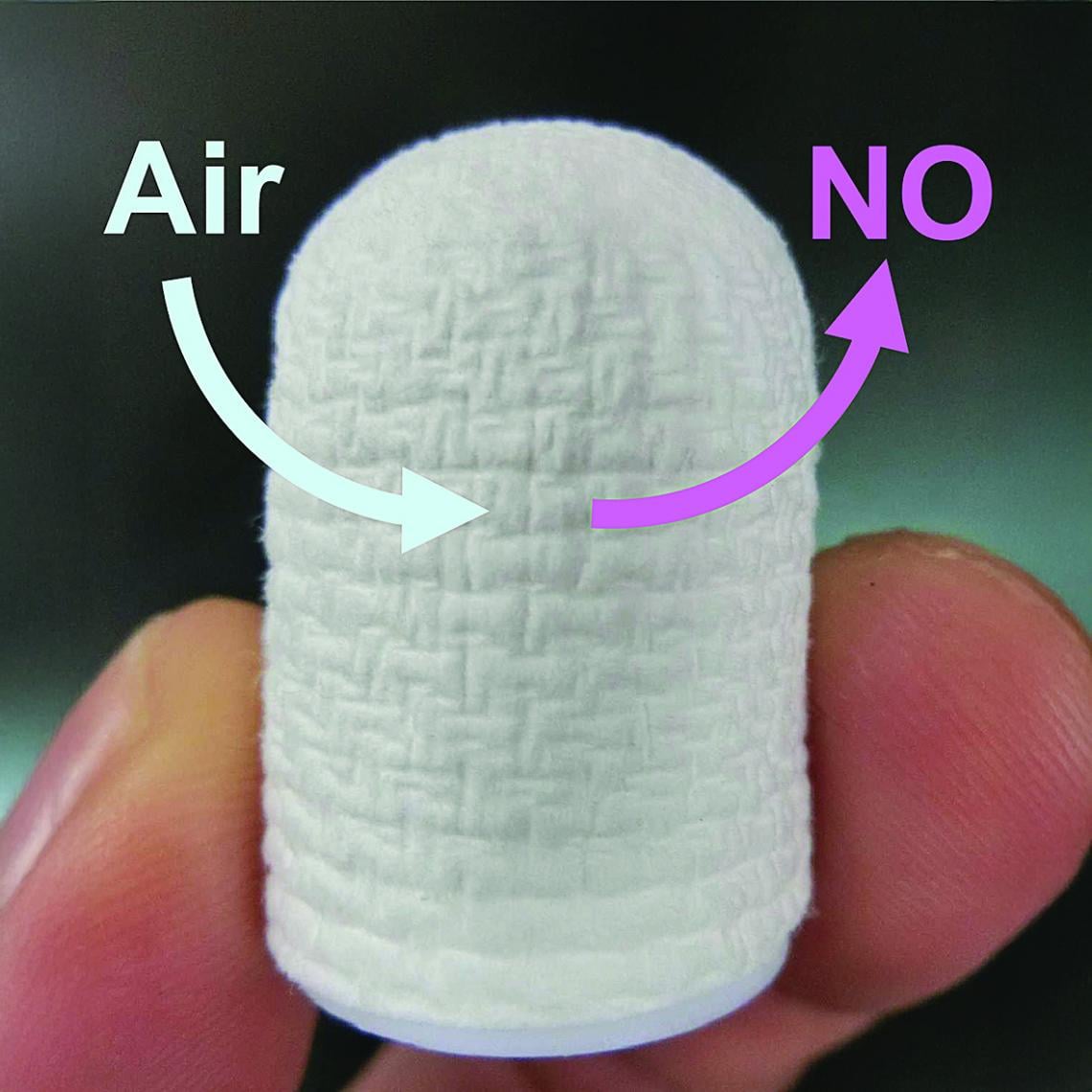
A small, low-cost tablet, the size of a thimble that creates nitric oxide (NO) gas from air could offer a simple new way to treat serious heart and lung conditions.
The tablet, about the size of a thimble, contains a powdered mix of a special mineral compound and vitamin C, which is loaded onto silica gel and enclosed in filter paper. When it’s exposed to air, carbon dioxide and moisture trigger a chemical reaction that releases nitric oxide gas at safe, therapeutic levels. Each tablet can produce gas continuously for up to 24 hours, which is enough to treat critical conditions like persistent pulmonary hypertension in newborns. When activated by a patient’s exhaled breath, it can deliver higher doses suitable for other severe cases, such as viral pneumonia or acute respiratory distress syndrome.
To ensure safety, the researchers tested the gas using a variety of sensors. They found that levels of nitrogen dioxide, a harmful by-product, remained well below safety limits set by international health guidelines. The tablet is stable at room temperature and can be stored for long periods without losing effectiveness.
“The tablet is really easy to use, so it could be helpful in places like ambulances, rural clinics, or emergency settings where bulky gas equipment isn’t available,” says Ishihara. “It could also be a practical and affordable option for hospitals in developing countries. I look forward to working with medical doctors in developing countries to advance global health.”
Read the paper
Science and Technology of Advanced Materials: https://doi.org/10.1080/14686996.2025.2474788
Further information
Shinsuke Ishihara
[email protected]
National Institute for Materials Science (NIMS)
STAM Inquiries
[email protected]
STAM Editorial Office
Download this story

Advertisement