
Researchers at Kanazawa University identified dopamine-driven neural mechanisms of motivation in a mouse model of behavioral addiction, offering insights into treatment.
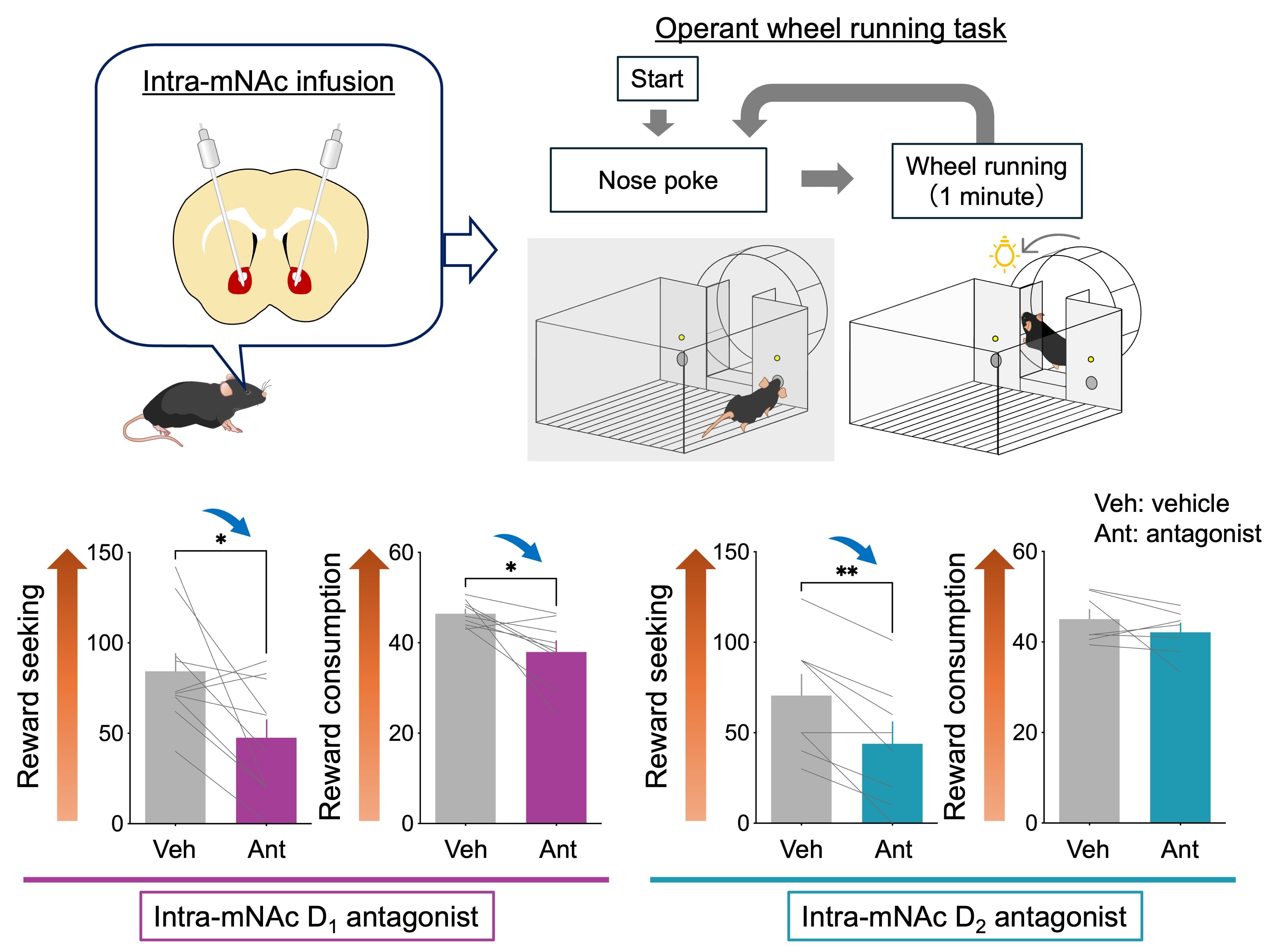
Figure1. Effect of mNAc dopamine receptor inhibition on reward seeking and reward consumption.
In the operant wheel running task, intra-mNAc administration of a D1 receptor antagonist reduced reward seeking and reward consumption (bottom left). Intra-mNAc administration of a D2 receptor antagonist reduced reward seeking (bottom right).
Adapted from Nishitani et al. (2025), Neuropsychopharmacology, CC BY 4.0
Assistant Professor Naoya Nishitani and Professor Katsuyuki Kaneda of Kanazawa University have identified how dopamine-driven neural mechanisms regulate motivation in a mouse model of behavioral addiction. The findings, published in Neuropsychopharmacology, provide new insights into brain circuits underlying abnormal motivation and may inform treatments for behavioral and psychiatric disorders.
Motivation to seek rewards is a fundamental behavioral principle seen across species. However, excessive motivation toward rewards can result in addictive behaviors such as substance use disorder and pathological overeating. In recent years, behavioral addictions related to specific activities—such as internet use, gambling, and video gaming—have become of increasing social concern. However, since laboratory animals like rodents do not naturally engage in these behaviors, it has been challenging to develop appropriate animal models that replicate behavioral addiction, leaving the underlying neural mechanisms poorly understood.
Previous studies have demonstrated that "wheel running" is highly rewarding for rodents and shares behavioral and neural features with drug addiction models. As such, wheel running is considered a natural reward that can induce strong motivation, similar to addictive drugs.
The medial nucleus accumbens (mNAc), a central brain region involved in reward processing, receives dense dopaminergic input and plays a role in motivation toward both addictive drugs and food. Motivation is generally divided into two components: “reward seeking” and “reward consumption,” each thought to be governed by distinct neural circuits. Traditional methods, however, have been inadequate for isolating these two components in the context of wheel running, and their neural bases have remained unclear.
In this study, the researchers developed a novel operant task using wheel running as a reward to investigate the neural basis of motivation for specific behaviors. In this task, mice gained access to one minute of wheel running by inserting their nose into a hole (nose poke). The number of nose pokes served as a measure of “reward seeking,” while the duration of wheel running per minute served as an indicator of “reward consumption.”
Pharmacological experiments revealed that dopaminergic neurotransmission via dopamine D1 and D2 receptors in the mNAc is essential for “reward seeking,” while D1 receptors also play a role in “reward consumption” (Figure 1).
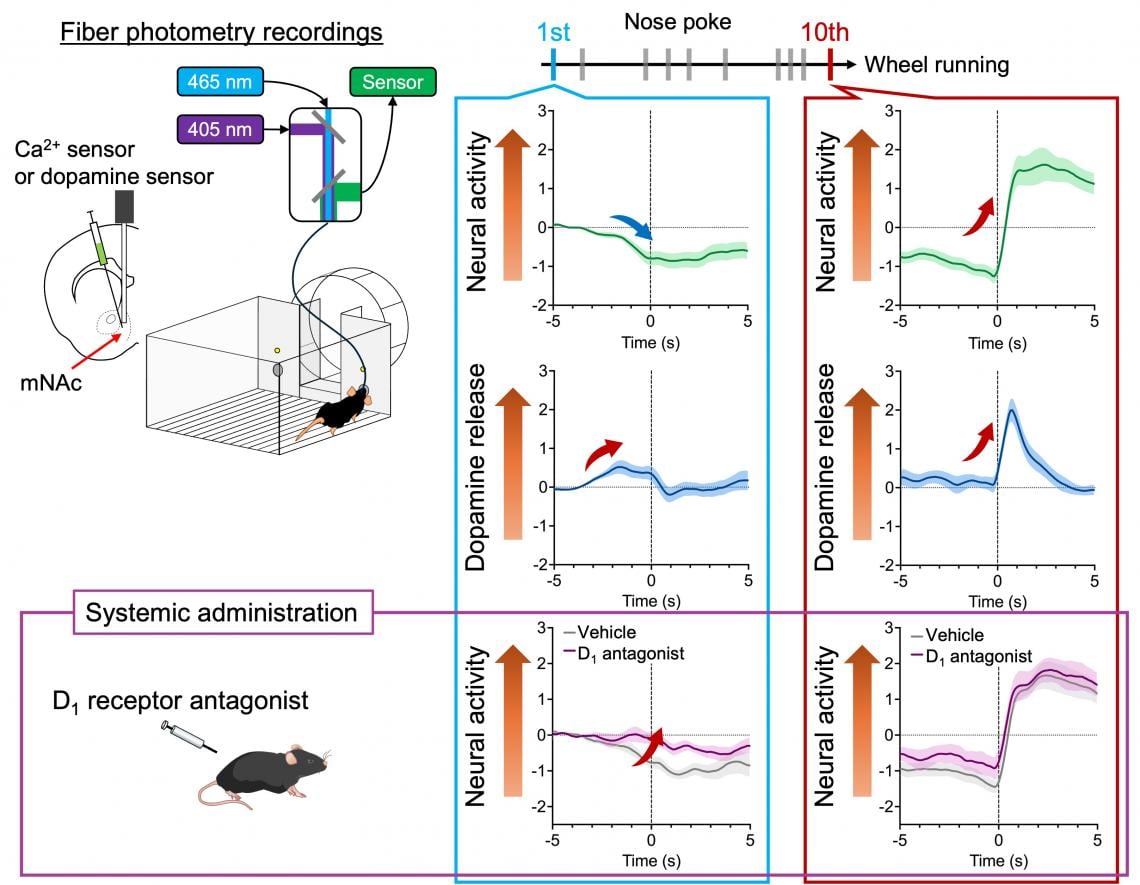
Figure2. Effect of dopamine receptor inhibition on mNAc neural activity.
In the operant wheel running task, mNAc neural activity decreased and dopamine release increased at the onset of nose poke (blue box), while both increased at the onset of wheel running (red box). Systemic administration of a D1 receptor antagonist suppressed the decrease in mNAc neural activity at the onset of nose poke (purple box).
Adapted from Nishitani et al. (2025), Neuropsychopharmacology, CC BY 4.0
Using fiber photometry, the researchers monitored real-time neural activity in the mNAc during task performance. In tasks requiring ten nose pokes to earn one minute of wheel running, mNAc activity decreased prior to the first nose poke—indicating the onset of “reward seeking”—and increased after the tenth nose poke, once the reward was obtained (Figure 2, upper panel).
Fiber photometry recordings of dopamine release in the mNAc showed increases both before the first and after the tenth nose poke (Figure 2, middle panel). These results suggest that dopamine release increases before “reward seeking” and again after the reward is acquired, while mNAc neural activity decreases during “reward seeking” and increases upon reward delivery.
Finally, using D1 or D2 receptor antagonists, the researchers examined how dopamine signaling relates to changes in neural activity. Mice treated with a D1 receptor antagonist did not exhibit the reduction in mNAc activity before the first nose poke (Figure 2, lower panel).
Taken together, these findings suggest that increased dopamine release, followed by D1 receptor-mediated suppression of neural activity in the mNAc, plays a crucial role in driving the expression of motivated behavior toward wheel running.
This study demonstrates that wheel running in mice can serve as a model for behavioral addiction and clarifies the neural mechanisms underlying motivation for specific behaviors. Future research focusing on the mechanisms driving changes in neural activity may provide deeper insight into psychiatric disorders that are characterized by abnormal motivation toward natural rewards, such as major depressive disorder and behavioral addictions.
Advertisement